
Big Interview: Shoib Khan, Prudential Regulation Authority
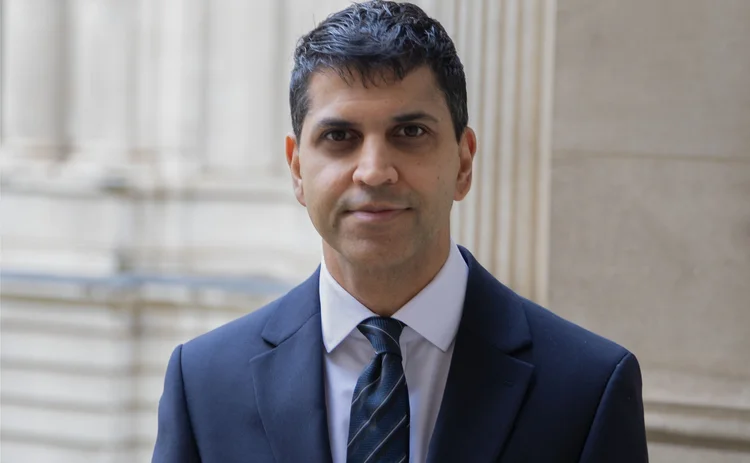

As the Prudential Regulation Authority kicks off its first dynamic stress test for general insurance today (5 May), the watchdog’s director of insurance supervision Shoib Khan speaks exclusively to Insurance Post about how it is checking the way insurers cope under pressure.
Shoib Khan, director of insurance supervision at the Prudential Regulation Authority, is about to put the UK general insurance market through one of its most ambitious regulatory exercises to date.
The PRA’s dynamic stress test, which starts today (5 May) will assess how the general insurance industry responds in real-time to unfolding shocks.
“It’s a really exciting and innovative exercise that we’re going to be running,” he says.
“This [live phase] is why this is a different exercise for us. We’ve done general insurance stress testing before, but it’s been static stress testing. This is a live exercise; hence it’s called dynamic [stress test].
“Throughout that live period, we are going to release different stress scenarios. We’re not telling anybody the scenario. In fact, we’ve kept it so tight that even my own seniors and colleagues of mine within the PRA don’t know the details of it.
Obviously in the world, at the moment, which is quite unpredictable and risky, it’s a good exercise to test firms’ ability to assess market conditions or various stresses and think about how they might respond to that. I think that’s a good thing to be doing.
Shoib Khan, Prudential Regulation Authority
Broadly, Khan shares the scenarios will cover events like an economic shock, a natural catastrophe, and cyber-attacks.
“We’ll release those scenarios in the live phase and then we will wait to see how firms make an assessment of the impact of those scenarios during that live period,” he says. “That’s going to be quite rough and ready. We want to see what the implications are.
“More importantly, and this is why this [live test] is different, in addition to assessing firms’ resilience, which is what we’ve done in the past, we’re also much more focused on how firms think about it from a risk management perspective and what is their management response to the scenarios.
“We will see and hear from them live during that period – how they are, what are their management responses. That’s going to be quite interesting.”
Dygist marks a clear shift from the regulator away from paper-based, theoretical exercises of the past to a far more dynamic, real-time simulation of how firms respond under pressure in real-time.
Preparing the market
In the run-up to today’s launch of the live stress test, which runs until 27 May, Khan shares the PRA has been offering guidance to the 26 of the UK’s largest general insurance entities that are taking part.
As this is a very different way to kick the sector’s tires from past static stress tests, the PRA has held workshops and conferences in recent months to explain to the industry’s leaders the way their businesses will be assessed.
CV
October 2022 – Present Director at Bank of England and director of insurance supervision at the PRA
September 2020 – October 2022 Head of division for major life insurers at the PRA
November 2018 – September 2020 Head of division for UK deposit takers at the PRA
January 2016 – November 2018 Financial policy assistant to governor of the Bank of the Bank of England Mark Carney
December 2009 – January 2016 Various roles including senior manager of UK deposit takers at the Bank of England
2005 – 2009 Transaction advisory services at EY
“The engagement we’ve had from the industry has been really positive,” Khan says. “They’re really engaged. They know it’s something different. They know it’s something innovative.
“They want to understand how the process works. We’ve explained operationally how things will work, how can they respond.
“That covers how are we going to release the scenarios, when are we going to release the scenarios, when do they need to come back to us? How do they engage with supervisors during the phase?
“Also, what’s the difference between engaging with us from this exercise versus [in] real life and how that will work?”
Given how busy insurers currently are with real-life shocks, such as the conflict in the Middle East pushing up the cost of claims, Khan says the PRA is aiming to keep the exercise “as proportionate as possible”, and cites co-ordinating the testing of the London market through Lloyd’s as an example of this approach.
“We’re trying to be as proportionate as we can with this exercise. We know firms are busy. So, for example, with the London market, we are effectively working through Lloyd’s through this exercise,” he continues.
“They will engage with the managing agents themselves and we will engage through [Lloyd’s] because we’re trying to avoid duplication with Lloyd’s. [There has been] really good engagement from Lloyd’s.
“We’ve also talked to them about the importance of their risk management and their management responses. and what we expect to see around that, the level of governance, the level of sign-off. We’re trying to be proportionate there as well.
“We’re not expecting everything in the live exercise to go to their board. We’re trying to be proportionate there as well. So, we’ve had those conversations.”
Challenging times
As well as checking how insurers cope under pressure, Khan wants Dygist to stress test the PRA too.
He likens Dygist to a fire drill, where everyone knows the rules in advance, but the sounding of the bell will show if insurers follow the procedures put in place to ensure they emerge safely or remain sat at their desks placing themselves in danger.
“It [Dygist] will tell us a lot of things,” he says. “It will tell us about firms’ vulnerabilities, their business models. The sector is so diverse. The different scenarios will affect different firms in different ways.
“There’s not one scenario which captures all the firms. We’ll look to see, from a supervisory perspective, what is the impact on individual institutions and on the market and how do we deal with that from a supervisory perspective?”
Once the live phase ends later this month, Khan says the PRA will analyse how his organisation coped, insurers responded, consider the implications and then aggregate the data to share with the market how resilient it is to different shocks.
Three words to describe yourself
- Pragmatic
- Authentic
- Dynamic
Khan says while the PRA will assess how it responded to individual institutions and the GI market generally during the test, it won’t be sharing with the industry whether supervisors got an A* or told to do better.
“That’s more for ourselves to think about,” he adds. “We will speak with firms as well to get their perspective on how it’s gone for them.”
Unlike the life insurance stress test, conducted last year, Khan asserts the PRA also won’t publicly share how well individual firms performed.
“This is a market-wide exercise. We’ll only be disclosing aggregate analysis,” he says. “That’s an important difference. We’ll publish something at the end of the year, which sets out our observations from the exercise [about the market’s resilience].
“What’s really going to be important is the lessons we learn about how firms respond. That’s where we will set out things. We will also engage with firms bilaterally as well, where we think there are lessons to be learned bilaterally but that won’t be public.
Khan explains the PRA will set out some of the themes it saw, good and bad.
“I think that will be interesting and useful for the market to see,” he says. “But I think a lot of the value will be having those private bilateral supervisory conversations.”
The timing of the test comes amid global uncertainty, but Khan is clear the long-planned assessment – which was originally supposed to take place last year – is set to go ahead now no matter what is going on elsewhere in the world.
“We are not doing this because of what’s happening in the Middle East at the moment. This was always planned,” he says.
“Obviously in the world, at the moment, which is quite unpredictable and risky, it’s a good exercise to test firms’ ability to assess market conditions or various stresses and think about how they might respond to that. I think that’s a good thing to be doing.”
Indeed, even before the US and Israel launched strikes against Iran in February, some in the sector questioned the timing of the test.
Part way through Dygist, the sector’s leaders will be on their stands at the British Insurance Brokers’ Association Conference in Manchester.
What happens if a real-life economic shock happens during the testing period, just as the sector’s great and good are catching up with brokers at Biba’s event, and Dygist is going on?
“We’ll obviously be sensitive,” he comments. “We’ve done a lot of preparation with the firms, with the industry, for the exercise. Our expectation is firms are ready to do this exercise.”
Core priorities
While the focus is on Dygist this month, Khan is clear day-to-day the PRA’s priority is ensuring firms have strong underwriting standards, risk management and modelling capabilities, and ultimately “are resilient in light of current market conditions.”
“The main thing is to make sure, from a prudential perspective, is that pricing appropriately reflects the risks that the firms are taking on, because [if that is wrong] that can lead to losses,” he says.
To make sure insurers are appropriately reserving for inflationary pressures as a result of the Iran conflict, softening market, etc, Khan says the PRA will look to make sure risks are being properly captured by insurers.
“The primary lens that we will look at that will be through reserving capital. That is where our focus is,” he says.
“In terms of pricing decisions and competition in the market, that is more for firms themselves to think about. We will be asking questions about how that flows through in terms of resilience and appropriate levels of risk management.”
Hobbies
- Family and friends time
- Cooking
- Liverpool FC supporter
As Post revealed earlier this year, in their day-to-day work the PRA is also addressing the concerns it has about MGAs.
Khan notes the PRA uncovered “some instances of optimism in future underwriting projects, which can overstate SCR [solvency capital requirement] coverage ratios.”
“Ultimately, it’s for firms themselves to make sure they are being realistic and prudent in their assumptions and in their modelling,” he says.
“We can observe things, but we won’t necessarily intervene ourselves directly. We will raise those issues with firms. We can pick those things up through day-to-day supervision.”
On how the PRA is currently addressing the concerns it has about delegated authority, he says: “When it comes to individual firms, first port of call is always the firms themselves and their own boards and their own risk management.
“Where we spot something, we will start having conversations bilaterally between supervisors and firms.
“What we’re looking for there [with delegated authority] is for firms to make sure that they’ve got a clear strategy around that, they’ve got clear oversight of that, and making sure there’s clear accountability there.”
Khan shares the PRA wants to see that carriers can exit delegated authority arrangements “where it’s not working for them.”
When asked to quantify the scale of the PRA’s concerns about MGAs - specifically the number of firms the watchdog has engaged with to-date about these concerns - Khan won’t put a number on it at this stage.
Instead, he points out the PRA has spotted a problem, flagged it with the market “so hopefully everyone’s aware of the issue” and now he wants boards to ask their management teams if these are concerns have been addressed in their business.
“They can ask questions,” he says. “So hopefully it’s helpful in that way. That’s what we’re really looking for – for firms to take responsibility themselves.
“Having said that, in our own analysis, in our own thematic reviews, because we have a lot of data, where we spot things at an individual firm level, supervisors may well raise it with the firms bilaterally.”
Pushed for whether the PRA has a date in mind to revisit delegated authority to check if the issues it raised have been tackled, he says: “No, not at this stage. It’s more just raising the issue for firms to make sure they’ve got a clear strategy, clear management information.
“Boards are asking the right questions of their teams, thinking about the implications for pricing, reserving, and also making sure they’re clear when that strategy is working for them and when it’s not.
“At the moment, I would say, it’s at that early stage of raising the issue at that level.”
Growth and protection
In recent years the PRA’s own goals have been shifted.
The government has given both the Financial Conduct Authority and PRA a secondary objective to foster growth and competitiveness as well as ensure the safety and soundness of the firms it regulates.
Khan says the competition and growth objective “is really important for us,” but echoes PRA CEO Sam Woods words from last year that it can’t come at the cost of the stability of the industry.
“We’re looking to deliver on our primary objective in a way that facilitates growth,” he continues. “We think they’re not mutually exclusive. They can work together.”
The PRA he points out is focused on delivering the captives regime, with promises of a consultation paper by the middle of this year following on from the government’s consultation.
Led by HM Treasury, the PRA, and FCA, the captives framework aims to allow corporate groups to self-insure risks. It is expected to be operational by mid-2027.
“We’re working on what a regime could look like,” he says. “To make sure that it’s competitive, to make sure that it’s proportional, to make sure that it’s responsive. That’s something to look forward to in coming months.”
Reforms to the insurance special purpose vehicle regime are also imminent.
ISPVs are authorised entities used to transfer insurance risk (such as catastrophe bonds, reinsurance) from insurers to capital markets.
These vehicles provide a structured, legally robust framework for investors to access specific insurance risk, enhancing capacity and portfolio diversification.
“We’re looking to deliver on our primary objective in a way that facilitates growth,” he says. “We think they’re [the primary and secondary objective are] not mutually exclusive. They can work together.”
Technology and supervision
Alongside these consultations and Dygist, Khan shares the PRA is closely monitoring developments such as the use of artificial intelligence in the financial services industry generally.
“We recognise the benefits that it [AI] could bring to the insurance market,” Khan explains. “We’re very much supportive of it, but we just need to make sure that there are appropriate safeguards in place.”
As the likes of Aviva announce plans to launch a ChatGPT insurance app, Khan shares the regulator’s support for innovation in the general insurance industry means emphasising strong governance, oversight and accountability.
At the same time as the sector is embracing AI, Khan says the PRA is also looking to use data and analytics to enhance the way it supervises the sector.
He points to reserving in general insurance as an example of how AI and data analytics is improving regulation.
“In the past, our approach to looking at reserving across the sector has been very manual, labour intensive, and can take individuals many weeks and months to put the data in and then to run the models and the checks.
“We’re now using software which can help us speed that up, that can turn weeks and months of works into days. It’s really helpful to see that analysis, but we do have the oversight with it. So that hasn’t changed.
“That’s the same principle that I’ve been talking about at firms as well. We need to be as efficient as we can be. Where there are jobs that can be done using analytics, that allows us to be more efficient as an authority, which is good for the industry.
“It also allows us to focus our attention on some of the more judgment-based things. Not only is it more efficient, but I think it helps us enhance the delivery of our objectives as well.”
But Khan is clear when it comes to regulation, and the way the general insurance industry reaches decisions, human judgement remains essential.
“We are using more and more analytics in our supervision, whether it’s looking at models or reserving,” he says. “That’s really helpful for us to look at trends and to look for outliers.
“But ultimately, you do need that kind of human overlay to make sure that what’s coming out of these models makes sense.”
Looking ahead
Turning to what the future holds for general insurance regulation, Khan is clear the watchdog is listening to the industry about the need for regulation that allows for growth as well as consumer protection.
“We’re trying to work as closely as we can with Lloyd’s as well to minimise regulatory duplication because we want firms to be able to be spending time on their businesses and then innovation. We’re doing that,” he adds.
“In terms of our speed of model approvals, speed of authorisations of models of firms, offers to branches as well… we’re doing quite a lot there.”
It is vital that in the years to come the role of the regulator evolves alongside the market, he continues.
“It’s a fast-moving market. It’s about making sure that we are well sighted on where the market is moving,” he says. “I think things like stress testing are really important for us to pick out themes.
“Those exercises are important, but also, good engagement with the firms so that they’re coming to us with their new ideas and for us to kind of speak to them about it and understand what’s happening.
“The main thing is for us to know what’s happening in the market so we can make an assessment.”
Khan is also clear about the need for regulators to know where general insurance sits within the wider industry and country’s financial resilience.
“We’re doing a system-wide exploratory scenario at the moment,” he shares. “Insurance is included in it, but it’s looking at the whole financial system. We look at the kind of the resilience of the overall financial system, financial system, all elements of it.
“We did that for the first time in 2020. We’re doing another. We’re currently working on another iteration of it now. Things are moving and we have to [move too] because, you know, risks are changing.”
As the starting gun fires on Dygist, now is a defining moment for Khan - one that blends today’s live test with his longer-term vision for more dynamic, forward-looking supervision.
Dygist is more than a one-off exercise; it is a statement of intent about how insurance regulation needs to evolve.
As firms begin navigating the scenarios, Khan will be watching closely - not just for results, but for insights that will shape the PRA’s next chapter.
Only users who have a paid subscription or are part of a corporate subscription are able to print or copy content.
To access these options, along with all other subscription benefits, please contact info@postonline.co.uk or view our subscription options here: https://subscriptions.postonline.co.uk/subscribe
You are currently unable to print this content. Please contact info@postonline.co.uk to find out more.
You are currently unable to copy this content. Please contact info@postonline.co.uk to find out more.
Copyright Infopro Digital Limited. All rights reserved.
As outlined in our terms and conditions, https://www.infopro-digital.com/terms-and-conditions/subscriptions/ (point 2.4), printing is limited to a single copy.
If you would like to purchase additional rights please email info@postonline.co.uk
Copyright Infopro Digital Limited. All rights reserved.
You may share this content using our article tools. As outlined in our terms and conditions, https://www.infopro-digital.com/terms-and-conditions/subscriptions/ (clause 2.4), an Authorised User may only make one copy of the materials for their own personal use. You must also comply with the restrictions in clause 2.5.
If you would like to purchase additional rights please email info@postonline.co.uk
More on Regulation
Most trusted insurers across personal lines revealed
Consumer trust in insurance providers has risen for the third consecutive wave, according to Fairer Finance.

FCA outlines next steps with delegated authority deep dive
The Financial Conduct Authority is preparing to take a closer look at delegated authority arrangements, with an information request being sent out to get a clearer picture of how outsourcing is being used across the insurance market.

FCA vows to keep pressure on premium finance APRs
The Financial Conduct Authority has said it will “continue to put pressure” on companies offering premium finance in a bid to continue lowering annual percentage rates after revealing the impact its enforcement action has had so far.

Lady Mayor warns culture is outpacing regulation
Lady Mayor of the City of London Dame Susan Langley has said firms are over-interpreting the watchdog's rules, and that leaders must be braver as uncertainty grows
FCA’s Knight insists CPD changes are not a relaxation
The Financial Conduct Authority’s decision to ditch its 15-hour-per-year continuing professional development requirement for insurers should not be viewed as a relaxation of standards, according to the regulator’s director of insurance, Chris Knight.

Why culture, not just regulation, drives good customer outcomes
View from the top: Andrew Otter, head of regulatory engagement at Markerstudy, argues that a healthy culture and strong governance, not just regulation itself, are what ultimately drive good customer outcomes.

Contents insurance flagged for causing ‘greatest consumer harm’
The Treasury Committee has warned that contents insurance is among the areas where financial exclusion can cause the “greatest consumer harm”, with urgent action needed to protect customers.
Insurance Compliance’s Allison questions insurance regulation
David Allison, head of intermediary consultancy south at Insurance Compliance, said improving customer understanding is an unsolvable problem, and questioned whether general insurance should ever have been regulated by the Financial Conduct Authority.