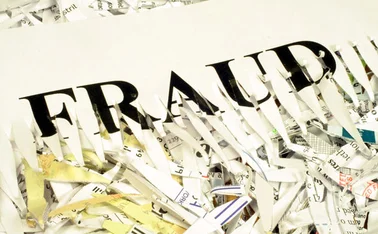
Application fraud: deliberate use of inaccurate information on the rise

company-car

The number of opportunistic fraudsters has rocketed with the use of aggregator sites, as some customers deliberately provide inaccurate information in an attempt to get cheaper premiums.

It is widely acknowledged that insurance fraud is on the increase, with the industry citing the seemingly unending adverse economic climate and the increased use of the internet as a purchasing tool as major factors.

For insurers, fraud has long been a grave concern, and much of the attention is focused on claims. However, there is a real determination to get to grips with application fraud, particularly in motor where the issue is at its most acute.

Part of the problem is public perception. A recent article in the Evening Standard urged consumers to “try different data in responses to some questions” when filling in a motor policy application to see if it resulted in a lower premium.

While the article told consumers that they must tell the truth or risk acting illegally, the balance between what is right and wrong is clearly a fine one.

Research compiled by Groupama also highlights the scale of the problem. According to the insurer’s study, almost one in 10 of its customers provided inaccurate information at the application stage. The issue for insurers is the split between those who deliberately mislead to reduce their premiums and those who fail to grasp the question set.

While those who make genuine errors differ greatly from the deliberate fraudster, both groups are costing the insurance industry dear.

Martyn Holman, chairman of broking at Brightside Group, says the industry spends around £200m every year investigating fraud, a cost ultimately borne by policyholders.

He warns: “Our own statistics show that drivers who lie on their initial application are 66% more likely to make a claim in the future and, as such, carry a very high level of risk for insurers.”

Surging numbers
The number of opportunistic fraudsters have surged with the increasing number of sales through aggregator sites. Consumers ‘try’ different answers to see which reduces their premium – this might include ‘forgetting’ a previous claim, changing the number of years' driving experience, changing addresses, job titles, or even putting a different name on the application.

Alanda Reynolds, head of underwriting fraud at Zurich, says: “The step change in motor insurance sales moving online through websites and aggregators has created a perfect market and an opportunity for customers to understand what factors will increase or decrease their premium.

“In our experience, one in 10 motor customers will fail one of our checks and, while we recognise that in some cases this is simply an oversight by the customer, there will be cases of deliberate misrepresentation. We owe it to our honest customers to deal with these appropriately.”

Insurers see the growth of comparison sites as a critical factor in enabling fraudsters to perpetrate their crimes. However, the work aggregators are doing to minimise the problem is not going unnoticed.

Adam Clarke, underwriting director at Ageas, says: “Insurers are definitely more aware of application fraud. Aggregators have got better too - there are more prompts around information and brokers are velocity checking a certain number of fields.”

Ageas has set up a dedicated team to deal with application fraud, validating as many policies as possible.

“There is still an issue, however. Even if we detect fraud and go back to the customer and cancel the policy, we are still left with the third-party risk on our books," Glen Marr, director of fraud at 1st Central says.

The only way to stop this is at the point of sale, according to Kevin Reid, head of analytics at the Insurance Fraud Bureau.

"From a technical point of view it is difficult, because customers expect instant gratification in terms of an underwriting decision, so there is only a split second in which to decide whether to trust the data," he says.

"You have to remember that when a customer clicks on a quote, they move from the aggregator site to the insurer’s back office, so the aggregator is merely the gateway. It is very complicated.

"The good news is that, while it is still early days, aggregators are receptive to tackling fraud. They too see the value in being able to deliver a clean quote.”

The Association of British Insurers’ well-publicised research into the cost of fraud puts estimates at £2bn a year, adding, on average, an extra £44 a year to the insurance bill for every UK policyholder.

However, there are hopes that the introduction of the ABI’s Insurance Fraud Register will be a useful tool in tackling the issue. Meanwhile, the new City of London Insurance Fraud Enforcement Department, which became operational at the beginning of the year, is already showing results.

Within its first month of operation, IFED successfully completed an investigation into the sale of suspected fraudulent Groupama motor policies, resulting in the arrest of three individuals on suspicion of conspiracy to defraud.

Andrew Pagett, Groupama’s counter-fraud manager, says: “The arrests are the culmination of a six-month intelligence-led investigation carried out by Groupama that was ultimately passed to IFED ahead of its launch.

"The victims of the suspected fraud were motorists who purchased the false motor insurance policies, mainly young drivers in and around Greater Manchester.”

A major headache
Ghost broking, as it is known in the industry, is causing a major headache for the players in the motor space. For the IFB, targeting ghost brokers - or illegal financial advisers as they are officially called - is critical, not least because it involves organised crime.

“These people target vulnerable groups, like overseas students. The student may be directed to this ‘broker’ as someone who can help sort their insurance to drive in the UK,” says Reid.

“The student may fill in a form and be charged a fee by the ‘broker’, who then completely misrepresents them to the insurer. They will also have credit card details and can go on to commit identity fraud.”

Reid adds: “Even if an insurer gets lucky and stops the policy, that student is left driving around unaware that they have no insurance and the insurer will still have the third-party liability to contend with.”

The IFB is recruiting a specialist application fraud analyst to help insurers identify these type of risks and is working on systems allowing it to alert insurers to risks at an early stage, such as identifying a private address where there are more than 10 motor policies bought within three months.

Marr says: “There is an opportunity to increase consumer education. The IFB has opened a cheat line where cases can be reported and the ABI is doing a lot to improve consumer awareness.

“The IFR will help insurers stop fraudulent applications quickly and the IFED is already showing that it is keen to get involved. The industry is starting to think, and move, differently on application fraud.”

Clarke says that all insurers should put more time and money into tackling fraud to back up the efforts of the IFR and IFED: “Whatever investment you make you will see a return within a year in terms of a reduction in fraud. The business case is very sound on this.”

Ursula Coulibaly, head of financial crime intelligence and prevention at LV, adds: “If you go back 10 years you might find that insurers had specialist investigation teams for claims. You might have found one or possibly two insurers starting to develop their thinking around policy validation.

“Now it is not difficult to convince the executive that it makes a difference. To be honest, just having a specialist team drives some fraud from the door in the first place.

"Desktop investigations at the policy stage are a lot less expensive than claims validation. So, if you can reduce claims at a low cost, why would you do not do it?”

Protecting policyholders
Meanwhile, the industry as a whole must ensure it is protecting innocent policyholders. Ghost brokers are targeting people who genuinely believe they have bought valid insurance.

Coulibaly concludes: “We know there are many innocent parties who are falling victim to ghost brokers.

"Whenever a case comes to court, we are using local and national media to highlight the problem. For the victims it is more than just insurance; their credit cards may be used elsewhere and their identities stolen.”

In numbers: Application fraud

£50m
Allianz targeted saving in 2011 through better detection of application fraud

£2m
Amount Groupama has turned down in premiums since it started using new fraud technology in December 2011

92%
Percentage of Insurance Fraud Bureau members that wanted the body to expand to cover application fraud last year

60%
Percentage increase in application fraud in the first quarter of 2011

50%
Percentage of application fraud committed by ‘gaming' the question set

Sources: SAS, Cifas, Allianz, MIB, Groupama


Tales from the archives: 2008
While the insurance industry is still formulating ways to tackle application fraud in 2012, the problem in 2008 was continuing to grow.

The UK's fraud prevention service has found that the number of people lying on application forms to obtain credit and insurance products has risen by 24% in three years.

Research published by Cifas, which compared fraudulent application forms in 2004 and 2007, has revealed that the number of cases involving lying or the supply of false or altered documents to support an application form increased to 77 000 last year.

Cifas also discovered an increase in the success rate of application fraud. In 2004, one in every 10 fraudulent applications was successful, but by 2007 this had risen to almost one in five - resulting in 14 500 successful cases. The most frequent falsifications include concealing a poor credit history and exaggerating the length of time the applicant was resident at an address.

The research found a slight re-balance in the number of men and women making fraudulent applications, just over a third (34%) being made by women in 2007. It also discovered that application fraudsters are getting younger, the average age falling to 35 for men and 34 for women.

The most prolific locations for application fraudsters are south east London, east London, north London, Birmingham, Manchester and Glasgow.

Cifas chief executive Peter Hurst said: "This research shows very clearly that all organisations need to be vigilant when looking at applications. The increased use of false documents means that front-line staff must be trained to spot them."

Cifas head of communications Kate Beddington-Brown added that the research revealed socio-economic problems. "It is clear that people are getting into financial difficulties and turning to fraud earlier," she said.

Only users who have a paid subscription or are part of a corporate subscription are able to print or copy content.

To access these options, along with all other subscription benefits, please contact info@postonline.co.uk or view our subscription options here: https://subscriptions.postonline.co.uk/subscribe

You are currently unable to copy this content. Please contact info@postonline.co.uk to find out more.

McLarens makes more changes at the top

A year after McLarens reshaped its senior team, the loss adjuster has made more changes to the top team as it aims for expansion and to “build on strong regional momentum.”

Most read articles loading...

You need to sign in to use this feature. If you don’t have an Insurance Post account, please register for a trial.

Sign in
You are currently on corporate access.

To use this feature you will need an individual account. If you have one already please sign in.

Sign in.

Alternatively you can request an individual account here