

Blog: Aon’s plan to slash pay, preserve dividend leaves a sour taste
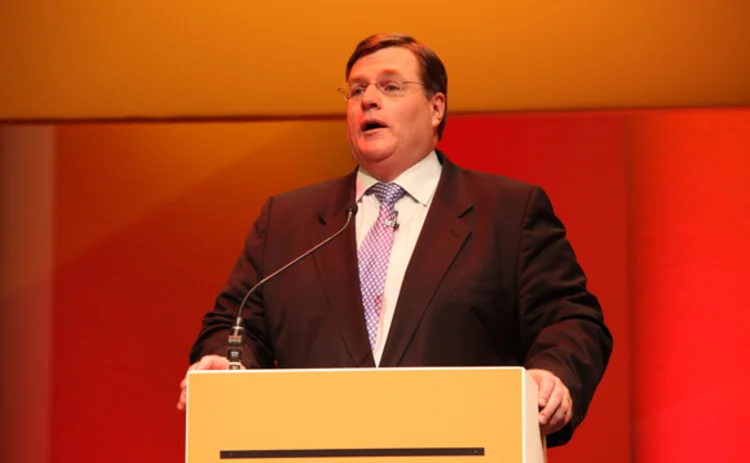

Aon will cut the pay of 70% of its staff and slice executive pay packets as it seeks to preserve jobs during the coronavirus pandemic, but the broking giant’s decision to go ahead with a May dividend payment seems at odds with its message.
In a letter to employees, Aon CEO Greg Case, pictured, described the “gravity of this crisis” and the “trauma” the Covid-19 pandemic has brought.
“We also acknowledge that we are experiencing a humanitarian tragedy at a scale that is difficult to comprehend. While we hold on to glimmers of hope that the worst of the human impact may have passed, the economic consequences are likely to play out for months, or even years to come. Which presents us with difficult decisions in the near term,” Case continued.
Case went on to reel off a raft of temporary changes. But before doing so, he said: “Paying a regular dividend is consistent with maintaining an investment grade rating and fundamental to accessing the capital markets.”
As part of the changes, the broker revealed that roughly 30% of staff will retain their full salaries, with seven in ten (70%) set to take a 20% pay cut.
Executives at the broker – including himself, Christa Davies, Eric Andersen, John Bruno, Tony Goland and the board of directors – will take a 50% pay cut.
The broker has “significantly” curtailed spending on contractors and third-party vendors, Case continued, and its business services teams is “mobilising a monumental firm-wide effort” to reduce any discretionary spend that is not related to client service. In addition, it has pushed pause on a planned stock buyback.
Case also confirmed the broker’s commitment to the acquisition of Willis Towers Watson, which will see it eclipse Marsh as the largest global firm in a deal worth $29.9bn (£24.1bn). Covid-19 redundancies may not be forthcoming, but staff are staring down the barrel of the WTW mega-merger and asking what this means for them further down the line.
Case continued: “Our objective is that everyone emerges from this challenging period in as good a place as possible; unfortunately, it is too early in this economic crisis to determine how we ultimately mitigate these actions.”
“We are going on offense to both protect our firm and prepare for the opportunity that lays ahead. Because as much as these actions reflect a principled decision consistent with our values, it is also a business decision based squarely on client need. We are witnessing a global shift in client priorities not seen in recent history and we must be ready to answer that call,” he added.
Against this backdrop, with staff pay cuts and, as Case put it, the global economy facing “the worst performance in nearly 100 years” it seems strange – one might say ill thought through – that Aon has not put pay to its 44 cent quarterly dividend in May.
In the UK alone, the Financial Times has reported that there could be £52bn put aside in shelved dividend pay outs. Within the insurance sector we’ve seen non-motor heavy insurers facing up to regulator calls to hold off on shareholder payouts for now.
Aon would be far from the odd one out if it held off on a dividend payout in solidarity with its people. Shareholders may not thank it, but surely they could understand it.
Has the broking giant missed its own memo?
Only users who have a paid subscription or are part of a corporate subscription are able to print or copy content.
To access these options, along with all other subscription benefits, please contact info@postonline.co.uk or view our subscription options here: https://subscriptions.postonline.co.uk/subscribe
You are currently unable to print this content. Please contact info@postonline.co.uk to find out more.
You are currently unable to copy this content. Please contact info@postonline.co.uk to find out more.
Copyright Infopro Digital Limited. All rights reserved.
As outlined in our terms and conditions, https://www.infopro-digital.com/terms-and-conditions/subscriptions/ (point 2.4), printing is limited to a single copy.
If you would like to purchase additional rights please email info@postonline.co.uk
Copyright Infopro Digital Limited. All rights reserved.
You may share this content using our article tools. As outlined in our terms and conditions, https://www.infopro-digital.com/terms-and-conditions/subscriptions/ (clause 2.4), an Authorised User may only make one copy of the materials for their own personal use. You must also comply with the restrictions in clause 2.5.
If you would like to purchase additional rights please email info@postonline.co.uk
More on Broker

Howden's pet launch; Brown and Brown's grad programme; Flood Re's chair
Friday Round-Up: Insurance Post wraps up the major insurance deals, launches, investments and strategic moves of the week.
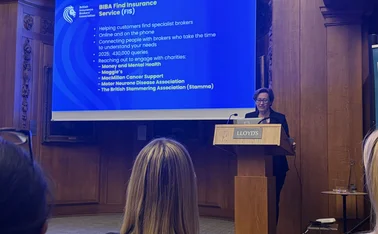
Biba chair calls on insurers to commit to signposting
Caroline Barr, chair of the British Insurance Brokers’ Association, has called on insurers to commit to signposting customers to specialist providers when the market fails to meet their needs.
Penny Black’s Social Diary: Hiscox and Howden's hole in one
Penny Black has been out and about again, notebook in one hand and canapé in the other, keeping a keen eye on the insurance industry’s more whimsical moments.

Jensten CEO Organ exits with Buesnel named successor
Rob Organ is to step down as CEO of Jensten Group, with Clive Buesnel appointed as his successor from 2 November 2026, subject to regulatory approval.

Howden chair steps down as listing edges closer
Howden has revealed that Dominic Collins will step down as executive chairman after 11 years in post.

Biba flood scheme pays £9m in claims over first decade
A specialist commercial flood insurance scheme from the British Insurance Brokers’ Association and Mi Specialty has paid more than £9m in claims to businesses over its first decade, with the scheme now covering £600m of assets.

Q&A: James O’Hara, AbbeyAutoline
James O’Hara, a Chartered insurance broker and senior manager at AbbeyAutoline, reveals how he achieved one of the Chartered Insurance Institute’s highest global accolades after topping the performance charts in his Fellowship examinations.

Marsh launches AI-powered broker tool
Marsh has launched Broker WorkBench, an artificial intelligence-powered platform designed to assist Marsh’s brokers operating in the London market in serving their clients.