Q&A: Tony Russell, Charles Taylor Insuretech
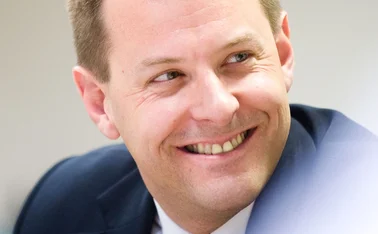
Tony Russell, chief commercial officer at Charles Taylor Insuretech, spoke to Harry Curtis about how insurance companies are upgrading their technology in London and overseas, the changing dynamics in the world of insurtech, and lessons from the coronavirus lockdown.
How has the pandemic affected businesses’ approach to upgrading their technological capabilities?
I’ve seen this play out in three phases and we’re just into the third phase. The first phase was everyone just shut up shop and said we need to assess the impact of what this is going to do to our business and therefore wanted to keep their money within the business. Everything stopped.
We then went through a phase, when people suddenly realised that maybe this is going to go on for a little longer than we anticipated, when companies started to unlock some of the programmes and projects that they were doing.
Most companies we’re talking to around the globe have effectively iced projects that haven’t started. But what they’re doing now is they’re looking at projects that are in flight, and they’re assessing where they can see potential return on investment in a year.
If a project that we’re in flight with provides an opportunity around for saving or increasing revenue, then companies are looking to actually try and work out how they can accelerate that programme, or at least keep it in flight, and a lot of the work we do in terms of implementing systems can be done remotely.
The third phase we’re coming into now is the economic phase where we’ve seen people, including big players like Aon starting to be quite savage in the way they’ve decided to deal with the situation in terms of redundancies, furloughing, cutting executives’ salaries.
Some of these companies are now approaching us and saying they want to continue projects because they can see it will add value. However, they don’t want to pay the full price for it, meaning we are having to get commercially creative in terms of how we help these companies.
Has remote working exposed any frailties in companies systems?
Many companies have been running their businesses with systems that are effectively fragmented, relying on people to effectively join the systems together by human intervention.
One of the things we’re seeing happen quite quickly is people realising that because the human intervention capability is now remote, some of those systems are failing.
Someone can’t walk to someone else’s desk and flag a problem in one area and get it sorted out. The human conduit covers up the inability of the system to provide a complete process, if that makes sense.
We’re now being asked by more and more people, to provide something that’s a bit more joined up.
Charles Taylor Insuretech developed a platform for managing delegated authorities at Lloyd’s. What role do you hope to play in the market’s proposed modernisation plans going forwards?
We initially had a three-year contract and there are negotiations over lengthening that. We’re doing whatever can to make sure we can continue that programme, but there’s no divine right. Lloyd’s might decide to go out to tender again as they did with PPL.
In terms of the wider context, Lloyd’s seem to have put on hold quite a lot of their thinking around the Future of Lloyd’s.
But we do have an opportunity to put our head above the parapet and say ‘we can help’. Think about all the data. Delegated authority accounts for about 40% of Lloyd’s premium and that’s coming in through our platform, so that’s not an insignificant amount of data and there’s a value to that. But also as a platform, it gives people something that they can build other capability on.
I’d love to see DA Sats be the fulcrum and the centre of the universe as far as Lloyd’s is concerned, but I don’t believe that will happen. I don’t want to appear to be saying that Charles Taylor is the answer to almost everyone’s problems, because together we can be, but it’s about collaboration.
You’ve just opened an office in Dubai. How do the new insurance markets overseas compare to the London market?
If you walk up and down Fenchurch Street, and you talk to them about a quote-and-bind system or a policy administration system, everyone’s got one. The whole dynamic is that we’re replacing something they’ve already got.
In London, you’re also talking to fourth or fifth generation buyers, because they’ve been buying technology for a period of time, they’ve made some mistakes and had some successes and so they’re a little bit more discerning.
When you go down the Latin America, they haven’t had as many experiences in buying technology as they have in the Western market.
We see a massive appetite down in Latin America, and, indeed, probably over 50% of our revenue will come from that part of the world this year. People are realising that in order to play on the global stage, they have to improve their technology, and what many are doing is leap-frogging stages.
It’s fascinating going down there. When you go to a meeting with any of the C-suite, they’re interested in hearing what you’ve been doing for other people in other parts of the world. That’s not always the case in Fenchurch Street.
I don’t want to single Fenchurch Street out as being arrogant, because they’ve got other fish to fry. But they will say ‘we’ve all got systems so we don’t need to do anything.’ But then you look at the fact that they’re running at a 41% expense ratio, and you think, ‘you’ve got the systems, but they’re not working too well are they?’
Then you go to Dubai, which is a good place to get to Asia Pacific, India and other places we’re currently looking at. It’s newer, so it’s got less legacy, so there’s opportunities to get involved with projects that don’t have too much integration or data.
They are, again, very keen to understand what other markets are doing. As an example, the Dubai International Financial Centre where we’re based have opened a Museum of the Future. Meanwhile in London, we’re talking about a history museum for the insurance industry.
I don’t want to be dismissive of initiatives in the market, but I would have thought we could have been a little bit more creative around what we were trying to tell people about our industry.
What does the future hold for insurtech?
We can talk about it in terms of insurtech 1.0 and insurtech 2.0. With insurtech 1.0, there were a lot of startups with great ideas, but they didn’t necessarily have a lot of exposure to the insurance market and unfortunately their size precluded them from being considered by a lot of the major insurance companies.
If you think about it, if you were a start insurtech with a fantastic bit of software, what an insurer might have done is put their arm around that piece of software because it might give them a competitive advantage.
But they wouldn’t scale it. Why would they? Why would they turn you into a multimillionaire, when you can help them cut their costs?
Where we’re going now is that we as a vendor have a duty of care to actually work with these startups, look at their technology, blend them together and go back to the insurance company with a complete solution.
Traditionally a lot of these insurance companies have bought a piece of software and they’ve been responsible for integrating into their enterprise, which is where things can fall down.
When we won the DA Sats project, we bought a company a small company that developed a system that is the foundation of the Tide platform we sold to Lloyd’s, but that business would not have been considered by Lloyd’s had it not had a big parent. It didn’t need to be us, but it needed a partner that had enough credibility and size for Lloyd’s to trade with.
A lot of these insurtechs are started by people that worked in the industry in a specific part of an insurance company and had a particular problem which they have solved with a piece of software.
They know how big a challenge it was for them when they were doing the day job, but what they can sometimes forget is in the scheme of things, while it was a big headache for them, it might turn the dial far enough so far as a company is concerned. But a collection of these things providing an end-to-end solution could.
Only users who have a paid subscription or are part of a corporate subscription are able to print or copy content.
To access these options, along with all other subscription benefits, please contact info@postonline.co.uk or view our subscription options here: https://subscriptions.postonline.co.uk/subscribe
You are currently unable to print this content. Please contact info@postonline.co.uk to find out more.
You are currently unable to copy this content. Please contact info@postonline.co.uk to find out more.
Copyright Infopro Digital Limited. All rights reserved.
As outlined in our terms and conditions, https://www.infopro-digital.com/terms-and-conditions/subscriptions/ (point 2.4), printing is limited to a single copy.
If you would like to purchase additional rights please email info@postonline.co.uk
Copyright Infopro Digital Limited. All rights reserved.
You may share this content using our article tools. As outlined in our terms and conditions, https://www.infopro-digital.com/terms-and-conditions/subscriptions/ (clause 2.4), an Authorised User may only make one copy of the materials for their own personal use. You must also comply with the restrictions in clause 2.5.
If you would like to purchase additional rights please email info@postonline.co.uk