Q&A: Nick Kelsall, Marshmallow

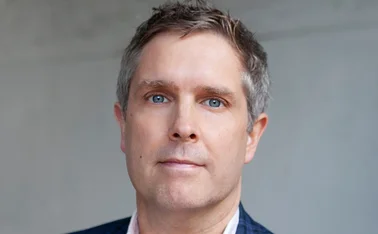
Nick Kelsall

Marshmallow’s claims director, Nick Kelsall, sits down with Insurance Post to talk about his move from Allianz, his lookout for talent while growing 'a claims team for the future', and what the company is planning regarding fraud in 2025.

Why did you decide to go from a big corporate insurer like Allianz to a unicorn?

My career has been pretty much all been in general insurance. I started at NFU Mutual, a very customer centric company.

The from there I went to Allianz, in a number of roles such as head of fraud, head of technical and large loss, and then working in Germany looking at global project and IT infrastructure harmonisation. Then I came back to the UK to head up motor and transformation.

During my return to the UK, the insurtech bubble was materialising, there were a few in the market, such as Zego, Urban Jungle and Marshmallow. I’ve been following that for a while. Mainly it is driven by the challenge for myself to just see if I can acquire a different skill set from driving and creating a claims department for the future.

I think we’d all agree that if we had a blank piece of paper, we wouldn’t create claims teams like we did in the past.

So we haven’t got our black screen system, we haven’t got policies that we were selling from the 90s – everything is from 2021 onwards.

Why Marshmallow?

Marshmallow came about looking for a claims director. The thing that I’m really aligned to is their purpose.

Our ethos is insurance for those that step outside of the norm, and I throw myself in that bucket really as an insurance professional. I think my attitude is not really conventional.  

I still think insurance can be fun, and I’m going to be playing around at work, trying new things, failing fast and have this new thinking to insurance products.

Marshmallow aims at people that are new to the UK.  But it’s also their global aspirations, or their aspirations to not just be a UK insurer. That the model is transferable into the jurisdictions as we look for people that typically look to migrate. So I thought it was a really big, scalable option to believe in.

They had a USP different from other insurtechs. Then when I looked into their financial growth plans, it was a really solid plan to grow, not just domestically but internationally.

I thought my skillset matched that, as well as offering me the opportunity to do something I’ve not really done before.

What do you mean when you say ‘build a claims team for the future’? What makes them different, or better?

When you’ve got legacy systems and historical practices, you create silos and controls. Technology could now afford us the confidence that we wouldn’t need to do that in the future.

What I mean by that is we will typically have highly technical people that are insurance experts, we need those at Marshmallow and we’ve got them. But now the ethos is that technology can really support the claims journey, which means we don’t necessarily need any more.

This siloed approach to claims handling, where ‘I’m an expert in this part, I’m an expert in that part’, doesn’t work anymore. So for me, it’s now about how we join the claims journey up end to end through a customer lens. That enables the flow of a claim, regardless of whether it’s got credit hire or personal injury on it, to feel like it’s part of the same journey.

The only way to do that really is to have teams that are truly embedded together, not siloed.

So you typically have training and quality maybe sitting separately, you’d have your process team sitting on a different team, and you’d have data analytics. You would need to put in a request for a report or a technology advancement.

The holistic claims department of the future for me is where all of these things are happening all of the time as part of your culture. Data analytics, process flow and everything else is embedded into your core teams, and that’s what we’re building here.

What progress have you made, having been in post for almost six months?

The culture on the purpose of Marshmallow is paramount, and I’m not going to change that. I don’t think it needs to change. The culture really is innovation and tech first.

Technology is the first thing we should look at to solve difficult problems, and that’s very prominent.

We have very highly skilled technical people here, and technology is the focus, data analytics, data science etc. That is core.

What I brought to the table is that understanding of insurance principles, understanding how we free up capital, how we can put controls around capital management throughout the claims life cycle, with the understanding that we are keeping our house in order.

And by that I mean bringing in some of the basics around making sure claims are closed at the right time, at the right amount, in the right way.

Our claims purpose now is very, very clear that we offer a unique customer experience through an omni-channel customer service strategy, which centres around paying the right amount at the right time in the right way.

That sounds quite similar to every other insurer’s claims strategy.

What Marshmallow were able to do is really invest technology into the parts of that claims journey that really gives us greater control over the outcome.

We know that if we see an issue with one of the levers that are driving and increasing a lot of customer expectations, we can really quickly deploy technology and public leadership to try and tackle that as quickly as possible.

Do you have an example of that?

One of the first things we noticed when I joined, through data analytics, is that we probably wasn’t getting our salvage back into our claim systems as quickly as we ought to, which was impacting our average cost per claim.

So our actuaries were looking at why our average cost per claim was not trending as it has in the past. Then really quickly, our data analytics team identified it, and now we’ve deployed a fix and automated a process, so now the salvage goes back into our CMS claims management system really quickly.

It’s quite a boring example, but it’s one that has got business need.

We are also looking at doing text analytics. Using AI to do text analytics over lots of incoming documents.

A good example is on complaints. For a claim complaint whereby we as an agent or a human might say that complaint is around a delay and I’ll categorise it accordingly.

Whereas actually what we do is put AI over the call listening features, and actually it’s linked to something that’s not just delay, it homes in on a particular part of the claims journey, so we can focus on that.

Is the growth of a company like Marshmallow, to catch up with the size of an incumbents, going to happen quicker than the incumbents catching up with your level of capability?

I’d imagine that both types of business have their own unique challenges.

In terms of invest in technology to enhance the customer, as a big incumbent, you probably have slightly more cash to throw at this than we may have. That might be true in terms of pounds and pence.

But I imagine what Marshmallow do is that the proportion of capital investment in technology is significantly higher than against incumbents.

The big differentiator for Marshmallow is that we don’t currently have any legacy systems. So we haven’t got our black screen system, we haven’t got policies that we were selling from the 90s – everything is from 2021 onwards.

We have got simplified, standardised policy wording which enables us to build from the bottom up. And our technology, we have built ourselves. We made the conscious decision that we wanted to own our tech. We want to build it ourselves, and that gives us ownership over our data, which we can use in real time to build these models.

The lack of legacy and the proportional investment in this stuff will enable us to really drive automation and straight through processing. 

When will you start to see that come to fruition?

It’s not top of my roadmap to automate and straight through process customer journeys. Our customer demographic is typically new to the UK.

We offer a voice. We want to explain things to our customer, so we will always offer an omni-channel client experience.

Where we do want to use technology is looking at how we can use data and straight through processing that’s not necessarily just automating the customer experience.

How can we build it into third-party claims? How can we build it into back-end? That’s rather the real opportunity for us in the industry.

What is the industry still not very good at? Or are we getting to a point where claims service is in a good place?

For me, it comes from the point of sale.

This is the piece that we typically forget: we still have different customer demographics. For me, it is all about choice. It is about understanding your customer demographic at the point of claim, what they want in terms of service, whether that is voice, online etc. and then during the claim process, being able to really quickly signpost customer need.

Are they a vulnerable customer? Are they involved in a serious accident? Is somebody injured? Are they vulnerable at the roadside? These things should be then kicking out into maybe a more personalised claims experience whereby you can call them and coach them through the requirements to keep them safe and to maximize the claims experience for both them and us in terms of managing cost control.

Is this already happening? And is it what customers want?

Lots of insurers are already doing this. You can have a claim and take photographs of the vehicle and have a cash settlement within real time.

Our experience is that customers sometimes don’t trust that. They think if you’re making an offer so quickly, are you potentially devaluing that claim.

And our research suggests that the customer’s number one priority is how much they pay for an insurance policy, and then when it comes to a claim, it responds appropriately and quickly.

I’m yet to see a really compelling survey that says customers want a straight through process human touch experience.

Why have insurers been pushing it then?

Where that desire comes from, I think, is from insurers wanting to reduce their expense ratio.

So insurers think: ‘if I don’t do voice, or if I do, where am I making that saving?’

Every bit of investment in technology will have a cost benefit analysis which will typically will be lent towards ‘how do I reduce my expenses for this investment in technology? If we invest in straight through processing and claims, then it will be a trade-off for how we reduce our overheads for people.’

But that is not what Marshmallow wants to do?

We’re not really in that space in that our technology investment is not to the detriment of customer experience.

We want customers to be able to speak to us if they want. We want customers to be able to have choice, and that will always be the case.

What about fraud? How are you investing in stamping out fraud?

We have our own internal machine learning models, and we have made a very big investment in our policy fraud team here. So it’s actually weighted significantly more towards policy fraud identification because we believe that if we stop at the front door, that’s the best approach. Very much deter rather than identify.

Marshmallow has lots of machine learning models at policy end and at the claims side, all of which are developed in-house through our data science teams.

Still a zero tolerance approach to fraud at Marshmallow?

Our claims fraud offering  does need to mature if I’m being honest in terms of the technical capability in it, and we are currently growing that team.

We also need to grow our fraud deterrent, so we are yet to be seen in the industry as being an insurer that wins a fraud case, driving criminal prosecutions or private prosecutions against fraudsters. But that is going to be our strategy for 2025, to be really tough on the fraud. We are fully committed to investing in that.

You mentioned that you are trying to build the team both in claims and fraud. How are you attracting people to join the industry and specifically Marshmallow?

That is the big struggle for us at the moment.

We’ve got a culture first approach here. We want the right people with the right culture for our business. Technical skills almost come secondary to that.

Behaviours are really important. We have very specific values around having the bias for action, less is more, leave your ego at the door. These are things that we are really measuring people against, so the bar is high to get into Marshmallow.

The bit that I think we do struggle with is getting insurance experts and high-end insurance experts into our business.

That might be that we are still fairly unknown or people think that we’re an insurtech. But we are very much an insurance company, that has over 300,000 policies. So we are not insignificant.

The challenge I’ve got is raising our profile to try and attract some of that talent, and people taking a bit of a leap from their incumbents into a more fast-paced, more agile world.

Only users who have a paid subscription or are part of a corporate subscription are able to print or copy content.

To access these options, along with all other subscription benefits, please contact info@postonline.co.uk or view our subscription options here: https://subscriptions.postonline.co.uk/subscribe

You are currently unable to copy this content. Please contact info@postonline.co.uk to find out more.

Is it third time lucky for Axa as it merges divisions again?

Content Director’s View: With Axa UK and Ireland combining its personal and commercial businesses into one, Jonathan Swift reflects on why insurers often oscillate between splitting and merging these divisions, and what led the insurer to believe this latest move will pay off now despite similar attempts in 2005 and 2016.

Most read articles loading...

You need to sign in to use this feature. If you don’t have an Insurance Post account, please register for a trial.

Sign in
You are currently on corporate access.

To use this feature you will need an individual account. If you have one already please sign in.

Sign in.

Alternatively you can request an individual account here