

How artificial intelligence affects the art insurance industry


With artificial intelligence increasingly being used to verify the authenticity of works of art, Sam Barrett examines what owners and insurers should do when analysis and expert opinion differ on who painted a picture.
Art is seen as one of the purest expressions of human emotion, but with the arrival of artificial intelligence, computers are getting in on the act.
As well as generating art, artificial intelligence is being used to verify the authenticity of art works, with potential implications for the art insurance market.
By training a computer on as many different examples of an artist’s work as possible, it can gain a deep understanding of exactly what constitutes their style and technique.
“Machine learning excels in classification,” says Matt Hervey, partner and head of artificial intelligence law at Gowling WLG.
“It makes sense to apply it to art: machine learning is objective and can find patterns we might miss. An artist’s brushstrokes are as unique as their fingerprints.”
Already AI is stamping its mark on the art world. Last November, Swiss firm Art Recognition caused a stir when it ran its AI on a painting held by Kunsthaus Zurich.
The painting, Evening Landscape with Couple, was believed to be the only Titian painting in Switzerland, until Art Recognition’s AI found there was an 80% probability that it wasn’t one of his works.
While the gallery dismissed Art Recognition’s claim, this example shows the potential for legal issues for title, value, and authenticity of artworks.
“The authentication of works by AI is still in its nascent stages,” says Davina Given, partner at RPC. “Where the AI analysis results in a conflicting opinion to that reached by an expert, it can pose difficulties for owners, experts and insurers alike.”
Insurance reaction
While this conflict in options could potentially lead to claims for compensation, the art insurance market isn’t too concerned about the disruption.
Michel Honoré, major and complex loss adjuster, and fine art expert at Sedgwick, can’t see it causing major issues for insurers and their clients.
“Even with AI input, attributions of important works cannot be given by a single person. Experts surround themselves with specialists to base and confirm their judgement,” he explains.
Just as the expertise of those authenticating artworks would come under scrutiny, so does the ‘expertise’ of AI.
Where a piece’s authenticity is controversial, we take it out of our database
Dr Carina Popovici
Robert Read, head of art and private clients at Hiscox, says that although it might eventually be possible to use AI for authentication, there are challenges.
“The accuracy of AI is dependent on the data. To be able to authenticate works of art, AI needs high resolution images, but also images of everything the artist has produced.”
As an example, if an AI tool for the authentication of Picasso’s works is trained exclusively on works from his blue period, it might not recognise a piece from his surrealist period.
Similarly, if the databank includes works that are incorrectly attributed to an artist, it may use the differences in style to determine authenticity, potentially rejecting the genuine artist’s work.
Trusted technology
Hervey also has concerns about the technology. “AI trains itself how to classify artworks and it may teach itself to rely on irrelevant details that just happen to work for the training examples, for instance, the colour balance and exposure of the photograph of the artwork,” he explains.
The AI companies are keen to defend their technology. Dr Carina Popovici, founder and chief executive of Art Recognition, said: “It is, in principle, possible to influence the results by manipulating the training images, but the thoroughness of our due diligence process has enabled us to eliminate any possible intervention into the datasets that might affect the training, and implicitly, the AI’s authenticity assessments.”
This due diligence process sees the AI being trained on datasets that are made up of collected photos of authentic artworks by the artist as well as fakes and imitations. These are all collected from reliable sources with additional due diligence from an art historian who carries out research on the images.
“Where a piece’s authenticity is controversial, we simply take it out of our database,” adds Dr Popovici.
Difference of opinion
The use of AI in the authentication of artworks may still be in its infancy, but the insurance market should be prepared for potential challenges on authenticity.
Annabel Fell-Clark, fine art and specie at Miller, says that where AI identifies a work to be inauthentic, insurers would most likely want to independently check the accuracy of the result through their own channels.
“This would be much in the same way as would happen if the claim of inauthenticity were being made by a human expert,” she explains.
AI art issues
Artificial intelligence is also being used to create artwork – turning photos, text and even sound into images.
This raises another set of insurance and legal issues. “AI could be used to create artworks that breach copyright, either through being trained on material used in breach of copyright, or through the production of work in the style of a human artist,” says Nadia Asfour, associate at RPC. “Where the legal lines on the use of AI lie is still untested in many areas.”
Legal cases are beginning to emerge. In early 2023, stock photo provider Getty Images began legal proceedings in the US and the UK against Stability AI over copyright and trademark infringement. It claims that Stability AI scraped millions of its images without a licence to train its Stable Diffusion AI image-generation system.
The ability of AI to learn an artist’s style means there’s also a risk of forgeries.
“AI could be used by forgers to create works with all the characteristics, qualities and brushstrokes of the imitated artist,” says Michel Honoré, major and complex loss adjuster, expert and fine art at Sedgwick.
“Only recently, missing parts from Rembrandt’s iconic The Night Watch were replaced by an AI tool, which analysed the painting technique of the master, his use of colours, and even his brushstrokes to print the missing parts on canvas.”
While AI-generated pieces may be filling in the gaps in Rembrandt’s artwork at the Rijksmuseum, Matt Hervey, partner and head of artificial intelligence law at Gowling WLG, believes AI’s ability to fool the art world will be relatively limited. He said: “This may be determined by medium: it could be an issue for digital artists and photographers, but I’m not convinced there’s any way to manufacture a fake Old Master to a high enough standard to be credible.”
Honoré agrees. He says that while AI may be a new technology, advances throughout art history have revealed that even the greatest experts made errors of attribution.
“AI will potentially reveal further mistakes,” he says. “Where it does call into question the authenticity of an artwork, the burden of proof is on whoever is disputing the legitimacy to demonstrate the original expert made a mistake.”
The potential for a work’s attribution to come under scrutiny means that owners and insurers must also focus on risk management.
Ms Given says that due diligence on artworks is a must. “This might include consulting experts on the artist, commissioning technical analysis, undertaking provenance research and applying AI tools, or even better, a combination of all of these methods, in order to satisfy themselves of the authenticity of a piece of work,” she said.
Friend or foe?
AI may be ruffling feathers in the art world by refuting or asserting attribution to various artworks, but it could also prove to be a valuable tool to the art insurance market.
Dr Popovici believes AI will be positive for insurers and their clients. “It will increase accuracy in detecting forgeries, elucidating the authenticity of often-disputed artworks,” she explains.
“The authentication process will also be much simpler, saving time and cross-border transportation and avoiding long and often conflicting art expert assessments.”
Filippo Guerrini-Maraldi, chairman of private wealth at Howden Insurance Brokers, can also see benefits for the art insurance market. “It could be used by experts as a tool to double check themselves,” he said. “If they didn’t have sufficient information, it could provide them with an opinion on a piece. It’s the same as two experts who might have differing views, but I don’t think AI will ever be considered gospel on the authentication and attribution of a piece of art.”
A further application may be in loss adjusting and the restoration of works of art.
As an example, Honoré points to the restoration of Rembrandt’s The Night Watch, which used AI to analyse Rembrandt’s painting technique, training it on a high resolution scan of the original and a painted copy of it by another artist to enable missing parts to be restored.
“AI permits a better understanding of the missing or damaged sections, enabling them to be replaced closely to how the artist would have,” he adds.
The use of AI to authenticate art works is certainly something to watch with interest, but it’s not causing insurers sleepless nights just yet.
Honoré adds: “Even if it can recreate missing parts of artworks and perhaps one day realise works in the style of the Masters, the experts agree that machines will always lack the sensitivity, taste and human intelligence of the artist who creates.”
Only users who have a paid subscription or are part of a corporate subscription are able to print or copy content.
To access these options, along with all other subscription benefits, please contact info@postonline.co.uk or view our subscription options here: https://subscriptions.postonline.co.uk/subscribe
You are currently unable to print this content. Please contact info@postonline.co.uk to find out more.
You are currently unable to copy this content. Please contact info@postonline.co.uk to find out more.
Copyright Infopro Digital Limited. All rights reserved.
As outlined in our terms and conditions, https://www.infopro-digital.com/terms-and-conditions/subscriptions/ (point 2.4), printing is limited to a single copy.
If you would like to purchase additional rights please email info@postonline.co.uk
Copyright Infopro Digital Limited. All rights reserved.
You may share this content using our article tools. As outlined in our terms and conditions, https://www.infopro-digital.com/terms-and-conditions/subscriptions/ (clause 2.4), an Authorised User may only make one copy of the materials for their own personal use. You must also comply with the restrictions in clause 2.5.
If you would like to purchase additional rights please email info@postonline.co.uk
More on Personal
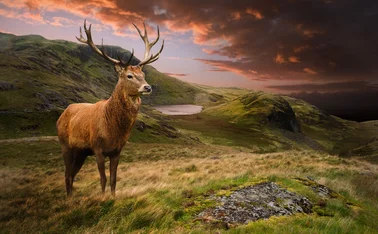
Deer-vehicle collisions reach six-year high
Deer-vehicle collisions have reached their highest level in six years during the autumn rutting season, according to AA Accident Assist.
Tara Foley to step down as Axa UK and Ireland CEO
Tara Foley has revealed she is stepping down as CEO of Axa UK and Ireland after six years.
Credit hire costs to peak amid inflation forecast
Credit hire costs are set to rise significantly over the next three years, putting further pressure on motor insurers, according to QG Law.
Why electronics retailers are turning to embedded insurance
How embedded protection can give electronics retailers a new revenue stream while helping them stay connected to customers beyond the initial sale is explored by Ross Sinclair, founder and CEO at EIP.
Aviva enters pet insurance space with lifetime product launch
Aviva has entered the UK pet insurance market with a new lifetime product, Insurance Post can reveal.
60 Seconds With... EY’s Kevin Gill
Kevin Gill, strategic transactions and restructuring partner at EY-Parthenon and chairman of the Insurance/Reinsurance Legacy Association, reveals how a broken leg led to a secondment into a team running off insolvent insurance companies.
Big Interview: Jason Storah, Aviva
Following a number of launches, as well as the rebranding and hiring of a new CEO for Aviva Syndicates, Aviva’s UK and Ireland General Insurance CEO, Jason Storah, sits down with Scott McGee to discuss the insurer’s areas for growth moving forward.

Britain stress-tested insurers – it should have confidence in them
After the regulator put insurers through a demanding test, Susan Dreksler, partner and head of the general insurance actuarial team at KPMG, argues its success should give them the confidence to be more targeted next time.