Flood: A Dutch Obligation
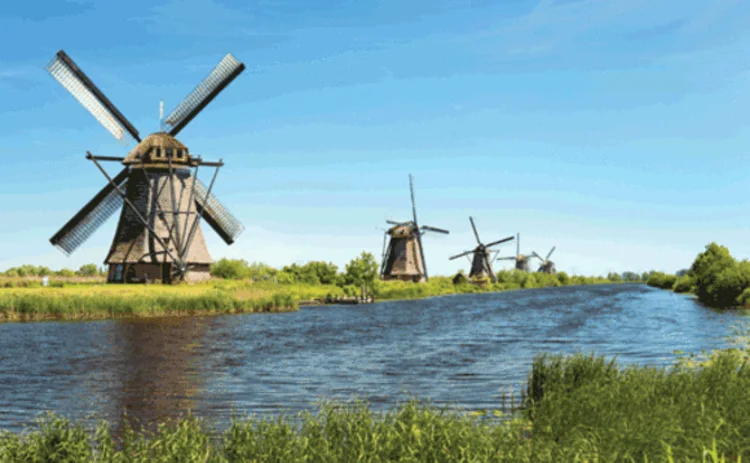
netherlands-windmills

For the first time in decades Dutch citizens can purchase flood insurance but should the product be compulsory?

On 1 February 1953, the Great North Sea flood struck the Netherlands, killing 1835 people, and causing 1bn Dutch guilders (€450m) in damage. The recovery and reconstruction took years but the legacy for homeowners was that flood risk was deemed uninsurable by the private sector.

The intervening years saw the Dutch government invest in the construction of dykes and flood defence systems that are acknowledged as among the most advanced in the world, and in 1988 the decision was made to rescind the exclusion on flood cover. Many, the Dutch government included, hoped this would spark a resurgence of the commercial flood market, but, despite the move, the insurers still did not enter the market.

Protecting the people
Since 1998 flood victims have been able to appeal to the government's Calamities Compensation Scheme, which responds to natural disasters on an ad hoc basis, and will pay out a maximum of €450m annually. Emphasis has also been placed on risk mitigation by individual home owners.

The inability to obtain flood cover remained a reality for Dutch homeowners until September last year, when Lloyd's coverholder Neerlandse, with backing from Kiln, entered the market with a stand-alone flood solution.

"The Dutch are world leaders in building and monitoring their flood defences." Shaw

The product, devised in partnership with Dutch engineering company HKV, provides protection for flood damage up to €75 000. It also covers water damage resulting from a failure of flood defences caused by earthquake, an unexploded wartime bomb or an act of terrorism.

Explaining the firm's decision to step into the breach, Charlotte Shaw, an underwriter in Kiln's property & special lines team, says: "The Dutch are world leaders in building and monitoring their flood defences. This, together with relatively low loss limits per policy, very conservative worst case disaster scenarios and tightly controlled underwriting down to policy level, has given us the confidence to back it."

Early stages
The product is still in its infancy, but the early signs have been good. According to Ralph Van Helden, regional manager for the Benelux region at Lloyd's, "interest in flood cover has been significant, with around 60 000 people viewing the Neerlandse website to load individual risk profiles, with a significant proportion of those asking for quotes for the cover".

While Neerlandse's participation in the market is welcome, market commentators suggest that the solution is very specialised and from a financial perspective out of reach of many Dutch homeowners. While a positive step, it is not a general solution, they say.

"We want to find out what the relationship is between this product and the obligations that the government has on creating safety for flooding." Authority for Consumers and Markets

The Dutch Association of Insurers, which represents 95% of the domestic market, has been working behind the scenes for almost a decade, in a bid to make flood risk insurable, but concerns about the burden on individual insurers have always been seen as barrier to a viable solution.

Compulsory scheme
In December 2012 at the association's general assembly a majority of members voted to try and establish a compulsory insurance scheme. The organisation favours a system that would make it obligatory for insurers to offer flood cover within all home insurance policies. It is thought that they would seek state help to provide reinsurance for the scheme.

One European country, which takes a similar approach, is France, where the law imposes mandatory catastrophe insurance on all owners of property, fixes the premiums and arranges re-insurance via state insurer CCR.

However, the form of the Authority for Consumers and Markets has thrown up a hurdle, by claiming the planned scheme falls foul of competition law. The body is in consultation with the ACM in a bid to find a way round the impasse, which will also allow safety and security for the majority of Dutch citizens.

"If the scheme is to become viable it will have to have some sound modelling behind it." Simic

According to Van Helden, the government prefers "a market solution that is transparent and affordable" rather than a compulsory scheme. But like many governments in the current economic climate, it is are looking to reduce its overall liabilities.

A spokesperson for the Authority for Consumers and Markets told Insurance Insight: "What we want to look at is if insurance companies have the freedom to come up with other products that differ from this advised product. We want to see if there are companies interested in promoting such as product and to investigate if there is already a market for it.

"We want to find out what the relationship is between this product and the obligations that the government has on creating safety for flooding and other disasters that could occur. We also want to know what the costs are."

Drawing conclusions
The consultation period will end in two months' time, and the organisation hopes to report on its findings later in the summer.

Much hangs on the study's conclusion. "There are signs that various parties have plans to enter the market. It will, however, depend on the outcome of the competition authorities that have been asked to approve a compulsory scheme," says Van Helden.

That is not to say that insurers are not making preparations. Milan Simic, managing director of catastrophe modelling firm AIR Worldwide says the firm has noted a significant increase in enquires in recent months. Although it does not currently have a standalone flood model, it is watching developments closely.

"The reason that we haven't created a [Netherlands flood] model so far is because there has been no demand because flood hasn't been offered as a commercial cover. But there has been a lot of interest shown [recently] because if the scheme is to become viable it will have to have some sound modelling behind it."

Calculating costs
One area, which has not often been mentioned in public discourse, is the estimated cost of such a scheme. For a country exposed to both inland, river flooding, and coastal flooding, like the 1953 storm surge, it will not be a small figure.

"There are signs that various parties have plans to enter the market. It will, however, depend on the outcome of the competition authorities who have been asked to approve a compulsory scheme." Van Helden.

"If the UK and Germany are anything to go by we are looking at hundreds of millions of Euros of average annual loss for the whole country," says Simic. "In some years there will be nothing but some years there could be billions of euros of loss."

But while the figure is daunting, improvements in flood defences and advances in risk mapping, mean that insurers in 2013 are better equipped to understand individual risks than they were 60 years ago, and, therefore, to price them accurately. The time seems right for the private sector to shoulder some of the country's flood risk; the question is whether it should be compelled to do so.

Only users who have a paid subscription or are part of a corporate subscription are able to print or copy content.

To access these options, along with all other subscription benefits, please contact info@postonline.co.uk or view our subscription options here: https://subscriptions.postonline.co.uk/subscribe

You are currently unable to copy this content. Please contact info@postonline.co.uk to find out more.

Storm brewing in legal PI market over genAI

As generative AI becomes embedded in professional workflows, Marcel Le Gouais explores how insurers are grappling with a rising wave of silent PI exposure driven by lawyers and other advisers mishandling AI-generated outputs.

Why MGAs need to hold the line in 2026

Trade Voice: Mike Keating, CEO of the Managing General Agents’ Association, says the softening market gives MGAs the opportunity to prove their mettle – but they must show underwriting discipline.

Diary of an Insurer: Markel’s Dan Martin

Dan Martin, managing director of distribution strategy and business development at Markel, kicks off the week with a brisk walk with his dog, connects with colleagues from across the globe and meets with an MGA to explore potential partnerships plus distribution opportunities.

Four biggest challenges facing insurers in 2026 revealed

Insurance Post reveals the four main challenges general insurers face in 2026 and the solutions experts from EY, the International Underwriting Association, AM Best, Moody’s, S&P, KPMG, Pathlight Associates and Sicsic Advisory say will matter most in the year ahead.

Most read articles loading...

You need to sign in to use this feature. If you don’t have an Insurance Post account, please register for a trial.

Sign in
You are currently on corporate access.

To use this feature you will need an individual account. If you have one already please sign in.

Sign in.

Alternatively you can request an individual account here