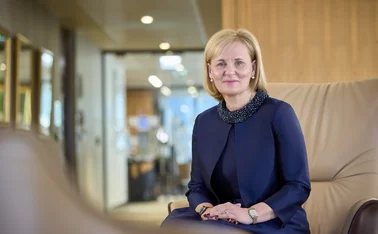
Big Interview: David Ross, Cila

David Ross

Only six months after taking the role of executive director of the Chartered Institute of Loss Adjusters, David Ross sat down with Pamela Kokoszka to discuss Cila’s vision, taking the institute forward, and giving the profession a voice.

Ross began his insurance career in 1987 as a personal underwriter for the Guardian Royal Exchange, which was  acquired by Axa in 1999 and incorporated into its Sun Life & Provincial Holdings division. This proved to be his first exposure to loss adjusters.

Ross then went on to work claims as a negotiator before switching to public relations, where he spent most of his career working for Axa, Norwich Union (now Aviva), and Chartered Insurance Institute.

In 2017, Ross briefly left the UK for Dubai, returning in June 2022 to lead Cila’s strategic, organisational and commercial endeavours.

Ross said he was approached for the role, which became available following Malcolm Hyde’s retirement, and felt he had what it takes to showcase the positive aspects of loss adjusting.

“The opportunity to work for a professional body was quite appealing,” he says.

“My time at the CII gave me a sense that most people want to come to work every day wanting to do a good job but there are factors that stopped them doing that. That might be poor management, budget resources, lack of training – all sort of things. But most people – whatever they do – want to do a good job.

“Coming to work for the CII and for Cila gives you an opportunity to be able to showcase the positive aspects of insurance, and the positive aspects of loss adjusting.”

Objectives

One of Ross’ objectives is to “take the enthusiasm and passion that Cila’s membership and council” have and use it to shape the institute and take it forward.

He says: “The vision that we have is articulated through three Rs: respect, relevance and representation.

“First is respect. The goal we have is for loss adjusting and for the claims profession to be respected, and for the institute to enjoy increased respect.

“Similarly, it’s important that we show the relevance of both the institute and the profession.

“Thirdly, we need to be more representative. The role of loss adjusters is meeting people in the real world. We need to recognise that the people we meet come from all walks of life, whether that be demographically, their age or their gender, or whatever it might be. Being able to attract a more diverse individual into loss adjusting is something that we’re very keen to do.”

Predecessor

Ross acknowledges how his predecessor, Malcolm Hyde, who was at the helm for 13 years before retiring last year, left institute in “good shape”.

He says: “He did lots of valuable things and took the institute to new levels while he was in charge. I hope he enjoys his retirement. It’s well deserved.”

Ross adds that he is keen on building on the work done by Hyde.

Most people want to come to work every day wanting to do a good job
David Ross

He says: “There are incremental changes that we can make in certain areas. I come from a slightly different skills set. I’m not a loss adjuster; you will never see me in a room standing up telling loss adjusters what to do.

“But what I can do is help address some of the challenges that we have in terms of establishing the profession and giving the profession a voice.”

He points out that while insurance has the Association of British Insurers, and brokers have the British Insurance Brokers’ Association, “nobody really speaks” for loss adjusters.

He explained how loss adjusters can add value not just when a claim has been made, but throughout the entire insurance process.

“There are some challenges around getting our voice heard. We have a lot to contribute and a lot of it is valuable. Take policy wording, for example. Insurers and underwriters will work on policy wordings and then put them into the outside worlds. Sometimes, what underwriters meant, and how its perceived in the real world, might differ.

“For adjusters who are used to dealing with a variety of policy wordings, BI is probably a pertinent one given events in recent years, there’s opportunity for us to be able to say ‘well actually before you release your wording into the wild, we’re happy to sit down and review it and maybe tell you what some of those consequences might be’.”

Even when a claim has occurred, Ross believes loss adjusters can harvest the data they receive and feed that back to the underwriters.

“There’s some value in terms of sharing our insight around the technical aspects of losses because we’re there when fires are still smouldering,” he says. “Similarly in terms of the insight that we can give our own valuable customers, which is increasingly a challenge.

“Those are some of the things we have to contribute. In the past maybe Cila has been focused more on qualification and the competency of individuals, and we will continue to do that, but we have opportunity to stretch ourselves a little bit and give a voice to the profession.”

Voice

Ross says there is “merit” in Cila’s voice being public, and it also “makes sense” to be involved in conversations that are being heard in private.

Ross says the advantage of Cila is that while it is still “quite diverse”, the number of firms operating in loss-adjusting and loss-assessing “is obviously smaller than it might be in some other disciplines within the insurance industry”, but that allows Cila to find “consensus, talk to CEOs and reach out to stakeholders” to try and identify the issues they are facing, and identify what the “collective voice at Cila” would be if there was one.

He continues: “This is the first time I sense that this has been done, so actually when you pose some of those questions there’s a kind of scratching of the chin. But we will be certainly beginning those conversations to be able to understand some of the issues.”

Ross adds that as a chartered institute, it is important to remember “we were created to support the public interest”.

He says “We need to be mindful of the fact that our public interest agenda puts claimants, policyholders and customers at the fore. We need to be cognisant of that in our discussions.”

He stresses that Cila is not a trade association – “we don’t want to be a trade association” – but where the agenda and purpose of Cila “align with the purpose of the wider adjusting and assessing market”, then there “may well be opportunities” for the institute to speak for the industry or facilitate conversations, debates or discussions.

He adds: “I see us moving forward having the kind of more visible role if we can get consensus and curate the views and thoughts of albeit a smaller but still diverse range of stakeholders then we can take pragmatic approach to bring the voice of the profession.”

Perception

Ross also believes he has what it takes to address the perception gap when it comes to loss adjusting profession, pointing out that it is not always perceived “in the most way”.

And while the insurance industry has a mountain to climb to gain customers’ trust, claims presents a simple and effective starting point.

He says: “The promise that policyholders are buying is that if they make a claim, [insurers] will pay in a fair and reasonable way.

“If we lose a sight of that, we lose sight of the purpose of insurance. Loss adjusting has an integral role to play in making sure those claims are settled fairly and reasonably.”

Ross adds that there is a perception that “insurers don’t pay claims”, but the “majority of claims are paid and are paid fairly”.

He explains: “A lot of people’s experience is word of mouth. They say ‘well I never had a claim turned down but I know everybody else has’ – but the reality is that’s not necessarily the case.

“The fact that nobody likes us is a challenge, but at the core of overcoming that challenge is that we just need to pay claims. The reality is, if we pay 75% of claims, that means we don’t pay 25%.”

But Ross believes that financial services is “unique” in that respect and a “significant” part of the reporting focuses on highlighting the “inadequacies on the part of those firms that operate in that sector.”

He says: “The motoring sector doesn’t do that, travel sector doesn’t do that, and the food sector doesn’t talk about restaurants that you shouldn’t go to. The financial sector enjoys unique critical space, which I genuinely understand people would see as unfair. That’s one of the reasons why people don’t like us as an insurance industry.

“But the way to overcome that is to just focus on settling the claims.”

Talent

But that perception gap is not limited to insurance customers. Ross points out that there is also a perception gap in what the profession aspires to be and the reality of it.

He explains: “From the experience I had, particularly when I was at the CII in terms of working there, the chartered body has very specific purpose, which is defined in the Royal Charter that both the Cila and the CII has that sets out your purpose and your objectives, and that is, in essence, very much about creating professionals.

“If you were to look at medicine for example, you have a very high level of competency required to take by going through qualification. Then you have a hippocratic oath, which is its code of ethics where you commit to always put the patient’s needs first, then the third aspect is ongoing learning. You are constantly required to keep up to date with the latest medical practices or procedures or drugs, whatever it might be. If you don’t have those three things, it would enable somebody to say ‘we’re going to strike you off because you didn’t fulfil those obligations’. That’s what defines a profession.

“Loss adjusting hasn't historically been that [a profession], but the role of Cila is to provide those three things.”

Ross believes that if Cila continues to provide qualification, a code of ethics and ongoing learning, then it will create enough professionals and eventually reach a “tipping point” where it becomes a profession.

He continues: “That’s what happened with all the other industries, it happened with accountancy, and with medicine – they created enough professionals that they eventually became a profession.

“The goal really is to look at loss adjusters and say ‘okay, our role at Cila is to provide you with those skills to make those professionals’.

"There’s a challenge around making sure that we create the right people with the right skills for our ever changing market. There’s a challenge for us to make sure that we deliver on the needs of all the stakeholders withing the value chain – everyone from the policyholder, insurers, brokers, loss adjusting firms and the individuals who are wanting to make careers, all of them.

“There has to be a ‘what’s in it for me’ and that’s something that Cila has a role to play in being able to articulate what that is”.

Future

Looking ahead into the future, Ross says that an opportunity lays in “growing the membership, improving the reputation, achieving those three R’s – more respect, more relevance and more representation”.

He continues: “The opportunities are in all three of those spaces and the strategies and challenges that we need to overcome to achieve that.”

Ross says that Cila is mapping these opportunities out and “will start to do things over the course of this year and beyond that to move us closer towards achieving those particular goals and that particular vision”.

He acknowledges it will “take time” but one things he likes about this job is that “every day you feel as if you’re taking a step forward.

“It might not necessarily be as quick as you might want it but rarely do you go backwards.”

From personal perspective, he wants to feel as if “I’m making a difference”.

He concludes: “I want to feel as if I’m taking the institute and the profession forward. I’ve been given the opportunity by the people that brought me in to do it and it’s exciting, I’m excited by the prospect.”

Only users who have a paid subscription or are part of a corporate subscription are able to print or copy content.

To access these options, along with all other subscription benefits, please contact info@postonline.co.uk or view our subscription options here: https://subscriptions.postonline.co.uk/subscribe

You are currently unable to copy this content. Please contact info@postonline.co.uk to find out more.

Most read articles loading...

You need to sign in to use this feature. If you don’t have an Insurance Post account, please register for a trial.

Sign in
You are currently on corporate access.

To use this feature you will need an individual account. If you have one already please sign in.

Sign in.

Alternatively you can request an individual account here