
Climate change - flood defences: Manning the defences
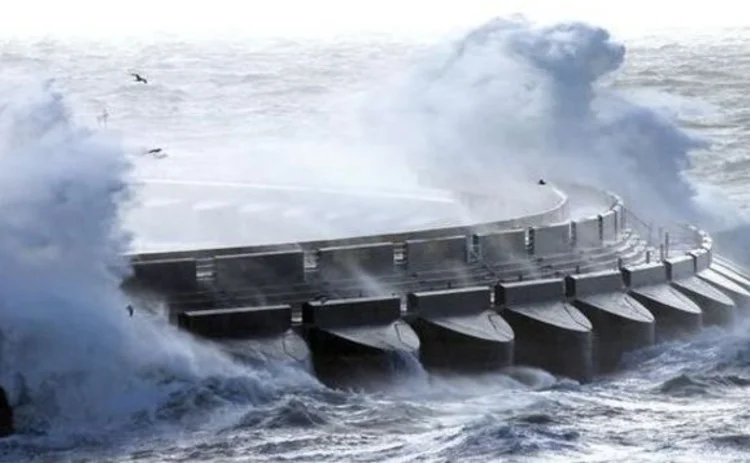
With the government cutting the budget for flood and coastal risk management and the coming expiry of the Statement of Principles, Amy Ellis looks at the future of flood defence.
With the comprehensive spending review due out in the autumn, rumours have been flying around of significant cuts to come on flood management. Post reported only this month that the Environment Agency's budget for flood and coastal risk management has already been slashed by £30m, following the government's plans to cut public spending by £6bn.
But a recent report from the Environment Agency for England has highlighted that the amount of money spent on flood defences needs to double over the next 25 years, just to stand still in terms of the number of at-risk properties that can be protected from flooding from rivers and the sea.
The costs when they come are sizeable: the 2007 floods cost the insurance industry more than £3bn, with the Cumbrian floods of last year adding an extra £200m to that total. But the cost-effectiveness calculations for preventative action are equally impressive — the Association of British Insurers has delivered evidence that shows for every £1 spent on flood defences, £8 in benefits is reaped.
Arthur Philp, underwriting and strategy manager at Aviva, stresses, however, that it is not about what is spent this year or the next that is critical. "It is about what is achieved in terms of the reduction in risk over the longer term that really matters. Can the government put in place a long-term strategy to reduce flood risk over the next 25 years and more?" he asks.
The industry's current commitment to continuing to insure properties against flood risk as standard — known as the Statement of Principles — is set to expire in 2013 and is only upheld provided the government continues to effectively manage the risk of flooding through funding commitments.
James Dalton, assistant director of property, motor and liability at the ABI, says that he believes the Statement of Principles will not be renewed in 2013: "There are some very good reasons for that. It is abundantly clear that the principles distort competition in the market and that, under its provision, insurers continue to cover customers in high-risk areas because they don't charge the full price that an insurance policy would attract if it was appropriately risk-based. The Statement of Principles doesn't apply to new entrants, so there is the potential for new market players to come in and use more sophisticated flood risk modelling and mapping and undercut those insurers that are bound by the deal."
Neil Carrington, household portfolio underwriting manager at Ecclesiastical, suggests that the 2013 end date for the deal was set in the context of an invigorated economy, while the new economic landscape has changed the game for what can be done in terms of spending and development plans.
Meanwhile, David Williams, managing director of claims at Axa Insurance, highlights that it is important to remember that when the Statement of Principles was last renewed, not everyone was completely happy with the level of spending the government committed to in any event.
Unlikely extension
What happens post-2013 will be the subject of discussion at a high-level flood insurance summit, taking place on 16 September. Environment minister Richard Benyon will be chairing the meeting, with representatives from the National Flood Forum, the Department for Environment, Food and Rural Affairs, the Environment Agency and the ABI among others in attendance.
Mary Dhonau, chief executive of the NFF, agrees with Mr Dalton that an extension of the existing agreement is unlikely. "At the summit we will be discussing the future insurance availability of those at risk from flooding. We need to make sure that there is education about resilient repairs; if people put their homes back in a resilient way after they are flooded, come the next flood they possibly wouldn't have to make an insurance claim and they certainly wouldn't have to move out for months or years on end. With the increased threat of flooding that we face, that kind of adaptation has got to become normal."
Mr Dalton agrees that resilient repair is a very important part of the conversation. "Property owners have got to think about how they manage the risk to their own property. If the property gets flooded one of the questions will be, how are we going to make sure it doesn't happen again and, if it does, how are we going to minimise the cost? Property owners do have some responsibility here; it is not just about relying on insurance."
Ms Dhonau suggests that a change to the building regulations is perhaps the only solution. Andrew Torrance, CEO of Allianz Insurance, supports this view, suggesting that when properties have been flooded and are repaired, a requirement is introduced to repair them to flood resilient standards. "While that is obviously a long-term process, buildings are around for an awfully long time. So, it would be sensible for government to say that it is looking at this in the context of the years to come and how, in that timeframe, building infrastructure in the UK is going to become more resilient to flood. Doing this would move us in the right direction."
Ms Dhonau adds: "At the summit we will also be discussing alternative ways of insuring people — for example, perhaps pooling insurance as has been done with terrorism under the Pool Re model."
Another option could be to look to our French neighbours and its natural catastrophe risk pool, suggests Mr Williams. "Big flood losses are covered under a government pool, whereby if it declares that something has been a natural disaster, then government pays out. We could either go for something that mirrors that, or mimic what was done with terrorism and the Pool Re model. I think that would be fairer, as currently insurers have to subsidise people that are living in high flood risk areas. And the only way they can do that, to be frank, is by penalising people who are not living in those areas."
Different cover options
As Mr Torrance is keen to remind people, the UK remains one of the few markets in Europe in which flood insurance is widely available as part of standard cover. "Post-2013 I believe we are going to be moving to a situation where flood-prone risks are going to be assessed on a much more realistic basis of what the exposure is. In other parts of Europe, the government steps in by some means to provide cover as a line of last resort. That is very much the area on which the industry is working right now, looking at different options that will continue to supply customers with cover. But, equally, it needs to be a solution that doesn't leave the industry with basically untenable exposures."
Mr Torrance is also quick to highlight that it has to remain clear that even under the existing Statement of Principles, there is no requirement to provide insurance for new builds. This is a fact that concerns Mr Dalton. "If there is no obligation, under the agreement, for insurers to insure new properties built, how do people sell these properties? If you have got a mortgage on a property then the bank requires you to have insurance. What we haven't quite come to terms with or understood, is that if you have properties that are built on flood-risk areas, how these property owners are complying with their mortgage covenants?"
Mr Carrington agrees: "The threat of large areas of the UK unable to secure flood insurance would inevitably cause problems with mortgages and, ultimately, restrict the buying and selling of properties. If this was the case it is very probable that some form of new agreement would have to take its place to avoid this major market failure."
Regeneration is essential and there are towns, such as Hull, that are built on floodplains. As such, a blanket ban on building on floodplains is not plausible, says Ms Dhonau. "However, inappropriate and unnecessary development should be stopped with immediate effect. But we have also got to remember that a lot of people flooded in 2007 didn't live on official floodplains.
"Surface water flooding is the poor relation of flood risk management; it's not an exact science where water is going to fall out of the sky and decide to dump itself at any given time. So, everyone has to rise to the bar to deal with the unpredictability when it comes to surface water flooding."
At least 2.5 million properties in England and Wales are at risk of flooding from rivers or the sea — 1.1 million of which are also at risk of surface water flooding. A further 2.9 million properties are susceptible to surface water flooding alone and climate change is increasing the flood risk further.
The Flood and Water Management Act, which received Royal Assent just before parliament dissolved in April, is designed to give more comprehensive management of flood risk for people, homes and businesses.
Colin Bradbury, commercial underwriting director at RSA, highlights that environment minister Richard Benyon has expressed support for the Act and recently announced a £2m injection in funding to help local authorities manage the flood risk in their own areas. "This local funding is welcomed, but how far that will stretch and how much more might be needed in future is not yet clear," he adds.
Ms Dhonau argues: "When you stop and think about how many local authorities there are, £2m is a woefully insignificant amount really. It is more like a sweetener, as some local authorities are saying they are not going to be able to step up to the bar and deliver the goods expected from them in terms of managing local flood risk, purely because they haven't got a ring-fenced budget or the expertise."
Mr Philp welcomes the Flood and Water Management Act, but believes much more needs to be done. "We welcome the support announced for local authorities to allow them to produce the preliminary flood risk assessments and also to help them develop their skills and expertise in flood risk management. However, we understand that there were some parts of the bill that didn't get resolved in the time available, within the last parliament. These were left for further consideration — particularly relating to sewer systems and sustainable urban drainage systems. These still need to be tackled."
Sustainable drainage challenge
He continues: "Looking back to the parts of the proposed Flood and Water Management Act that have yet to be addressed, we feel that the automatic right to connect to drainage systems should be removed; that the relevant water authority should be consulted automatically as part of the planning process; and that [property] developments should not be allowed to proceed until the water authority is able to confirm that it will be adequately drained and not reduce the service level they are able to provide to those further down the system. Responsibilities for future maintenance of all sustainable urban drainage systems also need to be clearly established."
And, as Mr Torrance points out, one of the lessons learnt from the 2007 flood event was that the whole impact of surface water flooding was not well understood. The surface water flooding was, in part, due to poor maintenance of drainage systems. In fact, it is estimated that 70% of the 2007 claims came from non-traditional floodplains, according to Mr Carrington. "This proves that, as an industry, we have a worrying 'blind spot' with regards to data on other aspects of flooding, such as run-off, sewer, ground water and infrastructure failure," he says.
In conclusion, Mr Williams says: "Sometimes, as an industry, we take our foot off the pedal inbetween key dates. We get all excited when there has been a big flooding event and we get all excited when the Statement of Principles is up for renewal, but I really do think we need to be maintaining the pressure now."
Is the Statement of Principals running out of time?
Only users who have a paid subscription or are part of a corporate subscription are able to print or copy content.
To access these options, along with all other subscription benefits, please contact info@postonline.co.uk or view our subscription options here: https://subscriptions.postonline.co.uk/subscribe
You are currently unable to print this content. Please contact info@postonline.co.uk to find out more.
You are currently unable to copy this content. Please contact info@postonline.co.uk to find out more.
Copyright Infopro Digital Limited. All rights reserved.
As outlined in our terms and conditions, https://www.infopro-digital.com/terms-and-conditions/subscriptions/ (point 2.4), printing is limited to a single copy.
If you would like to purchase additional rights please email info@postonline.co.uk
Copyright Infopro Digital Limited. All rights reserved.
You may share this content using our article tools. As outlined in our terms and conditions, https://www.infopro-digital.com/terms-and-conditions/subscriptions/ (clause 2.4), an Authorised User may only make one copy of the materials for their own personal use. You must also comply with the restrictions in clause 2.5.
If you would like to purchase additional rights please email info@postonline.co.uk