Top 100 UK Insurers: Interview: Jacqueline McNamee: A people person
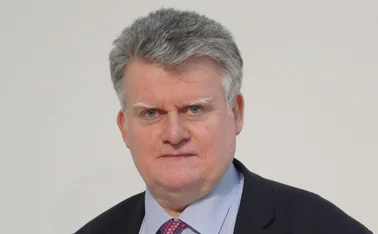
AIG’s UK managing director Jacqueline McNamee is focusing on staff engagement to deliver the big ideas that will ensure the company’s continued success
Staff engagement is a priority for Jacqueline McNamee, who believes AIG must keep its people on side if it is to successfully implement organisational reform.
As the UK’s fifth MD in seven years, McNamee’s focus is to drive forward the strategy that has been developing over the last three years for the UK business – and by extension, the Europe, Middle East and Asia region, in which the UK plays a leading role.
It is a focus that largely picks up where she left off in her previous role as UK commercial director, albeit with a broader remit encompassing the smaller consumer operation and the wider functions for which McNamee is now responsible. Like her recent predecessors, McNamee had an accomplished career at AIG before becoming UK MD, in which she quickly progressed into positions of authority across a range of locations – in her case, through the financial lines and broader commercial businesses in Dublin, New York and London.
Following Dan Glaser’s return to Marsh in 2007 following a five-year tenure at AIG in the UK, Lex Baugh held the UK MD post for two years and four months, James Shea for 15 months and Nicolas Aubert for two years and 10 months – all relatively short stints, from which they moved into wider global roles within AIG.
With a market capitalisation of close to $80bn (£48.8bn), McNamee’s firm remains a global giant – even if it lost its longstanding title of the world’s largest insurance company when, six years ago to the week, it was deemed ‘too big to fail’ and received an initial $85bn (£52bn) bailout from the US federal reserve bank.
Five group chief executives later and its subsequent journey has been a remarkable one. It has been through nationalisation, a huge asset sale and downsizing, repaid its total loan of $182.3bn to the US government – plus $22.7bn profit prior to its deadline – returned from government ownership and had a three-year spell as Chartis following a rebranding.
As for its European entity, it now ranks top for 2013 in AM Best’s top 100 UK insurance companies, beating Aviva, RSA, Axa and Direct Line into second to fifth place respectively. Not in small part aided by accounting changes following the restructure of its European operation, as McNamee explains, it is also the result of a carefully executed growth strategy that is now bearing fruit.
This strategy began in 2010 with remedial action on its underwriting portfolio, including exiting unprofitable lines of business such as solicitors’ professional indemnity and strengthening its overall portfolio in property and casualty and financial lines. In the last two years, AIG UK has turned its attention to three areas; expansion in the London market; its retail business, including a push in the UK middle market space; and new approaches to portfolio underwriting.
(Click here for McNamee's full CV)
McNamee passed her first 100 days in the role last week, and has set out her priorities – which are focusing on staff engagement, the priorities and the structure of her leadership team and her “blueprint for the future”.
“Given the amount of evolution we have been going through, it has been critical to make sure staff are aligned with us,” she says. “Our whole success is premised on it. When I came into this role, people asked why we were continuing to change when business momentum was strong.
“So it has been important to communicate that the world placement strategies are changing, client needs are changing, technology is advancing at a critical pace and it is important we evolve to meet those needs.”
She adds: “A lot of the big ideas within our commercial operation have come from our staff. We talk about being stronger together [the company’s current motto] but we need to hear what is on their minds – if we’re not aware, we can’t help. It’s hugely important that it is a top priority.”
For McNamee it is vital AIG avoids the temptation to become too inward-focused and “caught up with a lot of the internal dynamics”. She says: “From a leadership standpoint, we need to make sure we have a strong external business focus and that our priorities are our customers, while also striving for accelerated profitable growth over next few years.”
Strategic blueprint
Designing the strategic blueprint for the business for the next six years “is all premised on driving profitable growth and adapting to a changing world”, explains McNamee. “It’s about taking a fresh look at the markets in which we operate and making sure we align our structures and strategies around client and market needs.”
The firm remains focused on its “ongoing expansion into the London market” where her predecessor Aubert declared in May 2013 that AIG would “bounce back hard”, and where it is strong in pockets such as aviation and energy and through its underwriting operation Lexington.
She adds: “But to make sure we are bringing the breadth of services and capabilities as an organisation to the London market, we have to be seen not as an alternative but as part of that market. [We have to] make sure London remains a compelling attraction to bring international business.”
The need to adapt to changing market conditions could not have been starker than in the last six months, in which emerging risks and instability have grown at pace, says McNamee. “We have seen the Russian Ukrainian crisis, the Malaysia Airlines tragedies, the emergence of the Islamic State, the fighting in Iraq and Syria, the increased UK terrorist threat and ebola. If ebola was more transmittable there would be a very different dialogue today.”
Being responsive takes McNamee back to the issue of staff engagement. The firm has been piloting new types of technology to make sure it is engaging better with “people on the ground in the UK and beyond”, as well as introducing more flexible ways of working “from a child management standpoint”, through to attracting new generations of employees.
This goes to the core of the reorganisation of its EMEA region in June, when AIG moved from 47 countries to eight “zones”, which McNamee says has “facilitated better networking”.
“Our business here is an import and export market. Business comes in and repatriates and it is important that we support that for lots of reasons. The idea of networking in those eight EMEA zones involves sharing ideas and looking at the dynamics driving other markets.”
The UK is unique in the EMEA set-up as the only country to be in a zone on its own, as well as because of the mix of markets it incorporates. McNamee adds: “Because of our breadth of experience and proposition we feel we have a leadership role across EMEA, which creates great opportunities to send our people elsewhere and also to bring people here.
“We have 30 to 40 nationalities working in the UK and if you are servicing clients’ needs, the blend of cultural experiences of a diverse workforce is very important.”
Returning to her strategic blueprint, McNamee wishes to stress that as well as the London market, AIG’s commitment to serving the UK retail sector is unwavering – but she would like to see it strengthen its middle market proposition as well as its footprint in niche SME areas, such as cyber.
And the third area of the blueprint, around strategic platforms, involves expanding product reach in the areas of portfolio underwriting and facilities. This has included providing capacity to managing general agents with two deals that came into force on 1 January: one with Tamesis Dual specialty excess loss reinsurance entity, and a second with Gallagher’s OIM Underwriting in the retail space, in which RSA is the lead insurer.
MGA benefits
The Dual deal ticked a number of boxes for McNamee. It meant AIG became more committed to the London market and delivered more international business “so that shows we are integrating our strategies as well”.
She describes the model as a “highly efficient distribution platform that adds to the diversification benefits we already have with this operation of writing retail, wholesale, specialty, SME, mid-market and multinational.”
The firm has also recently changed its distribution structure, so it now has both a sales and a client element. “The client side is not about cutting out the broker, but working with the broker,” says McNamee. “We have a lot of large customers, so a three-way dynamic is a more collaborative way of working.”
Returning to AIG UK’s vastly improved results in 2013, including a 19-point improvement which took its combined operating ratio to 84%, McNamee describes it as a reflection of the “underlying scheme correction and underwriting discipline executed in aspects of our portfolio over the previous few years”, as well as a relatively benign catastrophe experience and focus on expense management.
She adds: “So far, 2014 has been another strong year for us from a business momentum aspect. Although it is a tough market from a rate and capacity standpoint, we have a strong, profitable book because of the remediation action and our book is very well diversified.
“We can offset challenging conditions in the aviation market with some of the profitable growth in the commercial property sector around our high-limit strategy, for example. Obviously there will be losses, and if we do see aspects of market softening, we’re making sure we are factoring that into our strategic underwriting discipline.”
She continues: “We are also doing business we didn’t have before, like the managing general agent business. As an example, we have written as much business in the London market space this year as we did in all of 2013, so the strategies are working.”
McNamee’s loyalty to AIG has rewarded her with a rich and varied career across two continents, but how long the UK will hold on to her to deliver her three-pronged plan is anyone’s guess. “I am currently very focused on the job in hand and I’m looking forward to a long period leading the UK business to continued success,” she says.
As demanding as her roles have been – particularly during the 2008 crisis when, as head of its financial institutions portfolio, she was working on the frontline – McNamee sees AIG’s journey over the last six years as taking the company “back to that pre-2008 position of strength” and delivering “a lot of encouragement, confidence and pride going forward”.
Asked if she ever considered leaving for another company and perhaps, an easier life, for McNamee it all comes back to her favourite subject: “The attraction here is the people we work with. Having those relationships around the world would have been a very hard piece to separate from.”
Jacqueline McNamee on...
New group CEO Peter Hancock...
What he will carry forward into to the CEO role is the focus on data and analytics. He has created a science team and is investing in the power of data and unleashing a lot of innovation on how we do business. He is very forward-thinking in terms of anticipating customer needs and looking for new ways to respond to those needs.
International sanctions....
As we look at the expansion of Russian sanctions at the moment it’s very important we stay on top of the opportunities from a regulatory and legislative standpoint. Insurance is the lifeblood of trade and sanctions impact trade. So this is an important agenda discussion item, both as a US governed company and as a UK regulatory operation.
The regulator…
The Financial Conduct Authority is determined firms have customers at the heart of the way they operate, and proceeding with a thematic review into the wholesale insurance market, particularly broker conflicts, will be interesting. As it looks into coverholders and complex supply chains, it is important our relationship shifts with them.
AIG crisis of 2008...
I was running the financial institutions portfolio, which was heavily impacted by the global financial crisis. So I was working around a heavily impacted portfolio from a claims standpoint – with litigation in 55 countries and also dealing with the challenge of the AIG crisis. What I learnt in the space of that couple of years would take many years in a normalised environment.
Only users who have a paid subscription or are part of a corporate subscription are able to print or copy content.
To access these options, along with all other subscription benefits, please contact info@postonline.co.uk or view our subscription options here: https://subscriptions.postonline.co.uk/subscribe
You are currently unable to print this content. Please contact info@postonline.co.uk to find out more.
You are currently unable to copy this content. Please contact info@postonline.co.uk to find out more.
Copyright Infopro Digital Limited. All rights reserved.
As outlined in our terms and conditions, https://www.infopro-digital.com/terms-and-conditions/subscriptions/ (point 2.4), printing is limited to a single copy.
If you would like to purchase additional rights please email info@postonline.co.uk
Copyright Infopro Digital Limited. All rights reserved.
You may share this content using our article tools. As outlined in our terms and conditions, https://www.infopro-digital.com/terms-and-conditions/subscriptions/ (clause 2.4), an Authorised User may only make one copy of the materials for their own personal use. You must also comply with the restrictions in clause 2.5.
If you would like to purchase additional rights please email info@postonline.co.uk