

C-Suite Europe: Technology opening up new avenues for insurer partnerships


New technology is changing the nature of the partnerships insurers are getting into, says Ageas CEO Bart De Smet.
The concept of partnership has been synonymous with the world of insurance for decades. This ranges from traditional distribution agreements at one end of the spectrum to public-private infrastructure investments at the other.
It's nothing new. Insurance companies are experts in partnering and they would rank pretty highly on any corporate dating website as a 'desirable long-term partner'. It's what we do. For many of us, Ageas included, it has become central to our business model. But success isn't a given.
Making the relationship work
To be successful requires a clear alignment of vision, purpose, culture and strategy, and complementary skills built upon a strong foundation of trust. People at every level of the organisation must have a strong resolve to make it work consistently over time. And when it does work, it is a beautiful thing.
But it comes with a price: be prepared to give up part of your control and to share in the rewards. In return, expect superior local market knowledge, excellent distribution capabilities and a ready-made customer base. And as a consequence, you will experience significantly lower risk than going it alone.
It's not an easy thing to do. Closing a long-term partnership deal can take anything up to two years from the initial contact, even longer in some cases. Just like a marriage, there is a period of courtship where both parties need to get to know each other before committing.
Each partnership is distinct, reflecting the unique nature of the market and the partners themselves. It is important to respect cultural differences and to create a win-win for both parties. Impose a standard global framework and, more often than not, trouble will be lurking round the corner.
Flexibility and adaptability are key characteristics. Successful partnerships require an important investment, not just of capital, but of people and time. If you believe you can successfully manage a joint venture remotely, think again. Be on the ground as frequently as possible, be engaged, and sit across the table from your partner if you want to build real trust. It's the only way.
From distribution to knowledge partnerships
 So partnering in the insurance world is bread and butter. There's nothing new going on, right? Wrong. The type of partnerships insurers are now engaging in is evolving beyond distribution. New elements are coming into play that will disrupt the world as we know it such as data analytics, connected homes, autonomous cars, sensors - some of them wearable - and more informed, assertive customers. As a consequence, we need to have a better understanding of the impact of these developments and the role we can play as insurers. The important role of technology is leading insurers in the direction of new non-traditional partnerships based more often than not around knowledge.
Developments such as connected homes and driverless cars represent a revolution. Be part of it by engaging with those who are driving change or be left on the sidelines. Healthcare technology for instance will drive new types of partnerships between insurers and hospitals, pharmacies, elderly care homes etc. Car manufacturers and energy companies will become important allies and information providers to insurers.
Interestingly, in many cases insurers are being viewed themselves as highly attractive distributors: suddenly the distribution shoe is on the other foot. Insurers are among the biggest collectors of data in the world, but we haven't always used that data as well as we might. Partnering with those who know how to leverage data becomes obvious.
It takes two to tango - and insurers know the moves
Don't think that because these are less conventional relationships, there is a home advantage for the partner. Insurers have a lifetime of success in partnering. But always field your best and most knowledgeable people around the table. People who understand and can speak the language of the partner.
These partnerships are unlikely to be exclusive and they may be shorter term in nature. Regardless, the decades of experience gained in partnerships will help equip those insurers who choose to explore the wider market for the sake of their customers. Ultimately they are the reason we do this. It's a marriage of convenience in which all parties have a lot to gain.
By Bart De Smet, CEO, Ageas
Only users who have a paid subscription or are part of a corporate subscription are able to print or copy content.
To access these options, along with all other subscription benefits, please contact info@postonline.co.uk or view our subscription options here: https://subscriptions.postonline.co.uk/subscribe
You are currently unable to print this content. Please contact info@postonline.co.uk to find out more.
You are currently unable to copy this content. Please contact info@postonline.co.uk to find out more.
Copyright Infopro Digital Limited. All rights reserved.
As outlined in our terms and conditions, https://www.infopro-digital.com/terms-and-conditions/subscriptions/ (point 2.4), printing is limited to a single copy.
If you would like to purchase additional rights please email info@postonline.co.uk
Copyright Infopro Digital Limited. All rights reserved.
You may share this content using our article tools. As outlined in our terms and conditions, https://www.infopro-digital.com/terms-and-conditions/subscriptions/ (clause 2.4), an Authorised User may only make one copy of the materials for their own personal use. You must also comply with the restrictions in clause 2.5.
If you would like to purchase additional rights please email info@postonline.co.uk
More on Technology
Penny Black’s Social Diary: Hiscox and Howden's hole in one
Penny Black has been out and about again, notebook in one hand and canapé in the other, keeping a keen eye on the insurance industry’s more whimsical moments.

Sapiens CTO warns insurers against costly AI ‘sledgehammers’
The insurance industry must learn from powerful yet costly “sledgehammer” frontier artificial intelligence models amid tokenisation concerns, according to Sapiens’ chief technology officer Glen Ceniza.

Sapiens’ Hannay says AI progress requires firms to hire ‘disrupters’
The industry must find disrupters with divergent thinking to work alongside people with years of experience as AI continues to develop, believes Sapiens’ chief revenue officer James Hannay.

Big Interview: Hardeep Gulati, Duck Creek
Following Duck Creek’s acquisition of AI-native underwriting platform Send, CEO Hardeep Gulati outlines the efficiency gains he expects from bringing the businesses together and his ambitions to double revenue in the next four to five years.
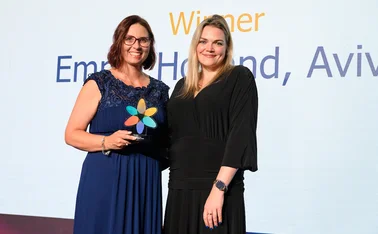
Winners of the Insurance Post Claims and Fraud Awards 2026 revealed
Aviva, Bamboo Connect, DWF Law and DAC Beachcroft were all multiple winners at the Insurance Post Claims and Fraud Awards held last night (1 October) at The Brewery in London.
WTW’s Anderson says agentic mentoring will be vital for industry
Agentic AI mentoring will help any future knowledge gap among insurance workers and encourage critical thinking said WTW’s global technology leader for insurance technology Duncan Anderson.

How ChatGPT far from killing PCWs may help them grow
After the launch of insurance apps on ChatGPT, Scott McGee analyses where it has the upper hand on price comparison sites, where it needs to catch up, and how the future of distribution will settle.

Synthetic ID fraud on the rise in AI era
AI is helping fraudsters generate synthetic IDs on an industrial scale, posing a growing threat to insurer onboarding and risk models.