

How insurers should navigate political risks and policy signals


View from the Top: Jason Harris, CEO of QBE International, breaks down key risks and priorities for insurers ahead of a busy year of elections.
2026 may have started out electorally quieter than recent years, but the underlying forces reshaping the global risk landscape are accelerating.
While a lighter election calendar and the continued
Only users who have a paid subscription or are part of a corporate subscription are able to print or copy content.
To access these options, along with all other subscription benefits, please contact info@postonline.co.uk or view our subscription options here: https://subscriptions.postonline.co.uk/subscribe
You are currently unable to print this content. Please contact info@postonline.co.uk to find out more.
You are currently unable to copy this content. Please contact info@postonline.co.uk to find out more.
Copyright Infopro Digital Limited. All rights reserved.
As outlined in our terms and conditions, https://www.infopro-digital.com/terms-and-conditions/subscriptions/ (point 2.4), printing is limited to a single copy.
If you would like to purchase additional rights please email info@postonline.co.uk
Copyright Infopro Digital Limited. All rights reserved.
You may share this content using our article tools. As outlined in our terms and conditions, https://www.infopro-digital.com/terms-and-conditions/subscriptions/ (clause 2.4), an Authorised User may only make one copy of the materials for their own personal use. You must also comply with the restrictions in clause 2.5.
If you would like to purchase additional rights please email info@postonline.co.uk
More on Commercial

Ardonagh merges global MGA businesses to create $3bn platform Orvia
Ardonagh Group is to merge all of its international managing general agent businesses under the Orvia Underwriting brand creating a platform that controls $3bn (£2.25bn) of gross written premium.

Beazley warns AI sends vulnerability disclosures soaring
Artificial intelligence is dramatically increasing the volume of newly disclosed cyber vulnerabilities, but the technology has yet to fundamentally change how ransomware attacks begin, according to Beazley threat data.

Fraudster fails to pull wool over Ifed’s eyes
City of London Police’s Insurance Fraud Enforcement Department is investigating suspected fraudulent insurance claims over the alleged theft of more than 650 sheep.
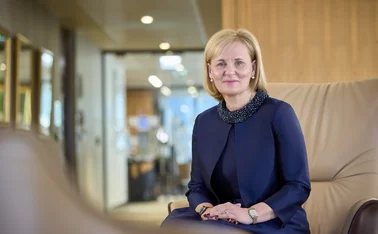
What next for Aviva and insurance’s greatest Dame?
Editor’s View: Emma Ann Hughes considers the remarkable turnaround of Aviva under Dame Amanda Blanc and asks what comes next for the insurer and its formidable group CEO.

Q&A: Nick Dinsdale, Peach
Nick Dinsdale, underwriting director at Peach, speaks to Insurance Post about the firm’s new hire, AI in underwriting and Peach’s growth plans.

Throwback Thursday: Royal retreats from Moscow
Insurance Post’s Throwback Thursday steps back in time to October 1991 to remind you what was going on this week in insurance history when Royal International was reconsidering its plans for a Moscow-based insurance company.

CFC report highlights gap in cyber awareness and understanding
Research from CFC has found that while SMEs are aware of the threat of cyber-attacks, most misunderstand the threats they face and the protection cyber insurance provides.

How AI is redefining the art and science of underwriting
As artificial intelligence adoption expands across underwriting, Marcel Le Gouais examines how a more complete picture is emerging of where automation ends and human judgement remains.