Interview: Jon Dye - Making it work
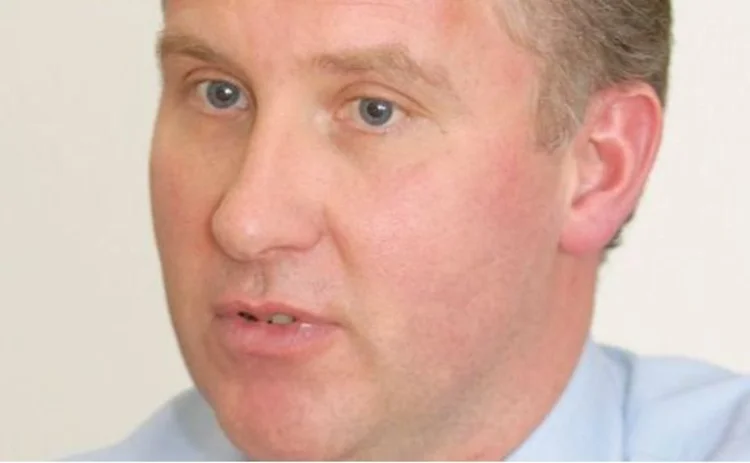
With a stated aim of reaching £1bn by 2013, Jon Dye talks to Jonathan Swift about why a recent downturn in Allianz Retail's GWP masks a lot of progress towards that goal.
When Jon Dye took over Allianz Insurance's newly formed retail division he set a target of reaching £1bn by 2013. Given that earlier this month the insurer reported the arm — formed in November 2007 — had actually gone backwards by 5.4% to £579.9m in 2009, this may now seem slightly foolhardy. But the ever-confident Mr Dye remains certain he will hit his target, not least because the figures mask a lot of work that is being done in the background to get the division fit for purpose.
Reflecting on his move from director of claims to become Allianz Retail's first general manager, he comments: "It was a fantastic opportunity for me. I had been running claims for just over four years when we started having conversations. And, for me, I was either going to be a claims 'lifer' or take a step to move across and run one of the trading businesses.
"With retail, the idea was to bring together the disparate Allianz businesses that ultimately reach out to the end consumer, of which we had several. Some of them were extremely successful, such as Pet Plan, which is the biggest pet insurer in the world, and the legal protection business. In others, we may have viewed ourselves as being a little underweight."
Turning corners
When he took over, Mr Dye noted that the broker division in particular faced challenges, as did every major insurer with an intermediated personal lines book. "That has been a story of a few parts. In household, we introduced the 'clear' product range, which was based on feedback from brokers. That has gone extremely well and is now increasing in terms of unit count for the first time in years. So, we have turned a corner there.
"And we have also formed some new strategic relationships with intermediaries that we already had good ties with on the commercial side to help take us in the right direction — Towergate, for example."
Having made headway in household, Mr Dye is now looking at what he can do in the motor space — an area that has come under significant pressure because of the growth in price comparison sites. "On motor, we have the same challenges as everyone else and have deliberately gone backwards in terms of our revenue, withdrawing a lot of legacy products that were no longer fit for purpose in a market so heavily affected by aggregator distribution."
To this end, he concedes that Allianz is currently rebuilding its motor product and that it should be available "in the back half of this year". In the meantime though, the insurer has taken its core product — horizon — and enhanced its pricing structure as a stop-gap measure.
"If you look at how that account performed from 2000 until 2006 it delivered a good return, and was better than most of the market by a decent margin," claims Mr Dye. "And then aggregator distribution came along. That is where all the volume brokers are getting their business these days and if your product doesn't have very sophisticated pricing — and you're not clear where you want to write business — the aggregators will find you out. That is not just an Allianz experience; it's the experience of the private car market.
"We are still trading with the all the volume players. But we are doing it differently. These guys are trading in a new way and it is up to the insurers to adapt accordingly to fit that paradigm. The notion that these brokers are to blame [for the lack of insurer profitability] I don't buy at all. They are just doing business and doing business with them is voluntary."
Mr Dye adds: "We have made a large investment in our pricing capability, which we had to do. We have hired quite a lot of new people into our technical area and several actuaries as well, so our pricing capability has effectively doubled since I took over."
Asked what the main differences are with the soon to be launched motor product that Allianz brokers will notice, Mr Dye reflects: "It will be more competitive in the areas where we want to be competitive. Otherwise the features are what you would expect from a motor product. It is a fairly homogenous space, isn't it? The pricing is what really makes the difference and, if that is not of the highest order, you are not going to succeed."
As to price comparison sites, could Mr Dye's confidence in them be misplaced? Does he genuinely think they are set to become a permanent feature of the personal lines landscape or could they yet prove to be a flash-in-the-pan? "From a consumer point of view, the argument for their existence is so compelling. That you can go onto one system, put your details in and be offered prices from the whole market. It's difficult to imagine a world now where the aggregator model doesn't exist.
"Their margins are being squeezed because they are putting more money into advertising, and they are getting less profit from larger revenues. And that may mean they have to change the dynamic of their model. But I can't believe there won't be some way for those websites to survive. And that must be true because four or five years ago they didn't exist and now they command 50% to 60% of the direct market."
Rate increases
One area where Allianz has not been shy in coming forward is in the area of rate increases for private motor. Last year, the insurer introduced 24% hikes and Mr Dye believes that, by enforcing these in 2009, it has a head start on some rivals. "By the middle of 2008 we had worked out our issues that needed addressing. So, through the next 18 months, we took some pretty substantial action. In brokered motor that has taken our revenue backwards, but it had to be done and I believe it gives us a bit of a head start over those who are starting to push changes through now," he adds.
Last week, Mr Dye spoke about Allianz's aspiration for the affinity space following its deal with Volkswagen (www.postonline.co.uk/1595816). "Pre-Retail, the individual businesses that make up the division were really organised around particular products and we did not make it as easy as we should have done for corporate partners to join up the different parts of our proposition," he told Post.
He takes this issue up again, by saying: "But we actually have a very broad product set with motor, pet, home, legal and extended warranty. If you stick in [Allianz sister company] Mondial, we also do travel and breakdown. So we have a very broad portfolio; what we have not been very good at in the past is taking that portfolio to our existing customers and potentially lot of new ones."
For the VW deal, Mr Dye noted that the insurer had used a number of his division's skills including seven-day cover notes — as used by Pet Plan — for the customer's 'drive-away' insurance product and the growing aggregator expertise of Cornhill Direct.
As well as these turnaround and fledgling businesses, he is also energised by the opportunities in the retail division that have traditionally performed well, including the aforementioned pet insurance specialist. "Pet Plan is a great business and the way we distribute through vets, charities and breeders is well-established, effective and difficult to copy," he remarks. "But there are things we can do to improve our customer service and operational ability — some of which we have already done.
"Take our contact centre conversion — this has improved but there is more we can do to enhance the sophistication of our marketing, and we have some substantial work going on there. So although Pet Plan went through the £200m mark last year, which is a colossal milestone, we can make it much bigger and better."
Elsewhere, the area of legal expenses is currently clouded with uncertainty — not least because of the recent Jackson Review and its recommendations. "The big question is which parts of these proposals will actually be executed and that is the big unknown," says Mr Dye. "There are some parts of Sir Rupert's proposals that would have a very large impact on the after-the-event legal expenses market. And some of what he suggests about referral fees would have a profound effect on the before-the-event market as well. But how much of that will become reality?
"We have been preparing for this for some time, however, because this type of reform — and the notion that the model will have to change — has been mooted for the last decade in one form or another."
Another opportunity that the changing legal and regulatory landscape could afford Allianz is so-called 'Tesco Law', relating to the alternative business structures that should come to fruition as part of the Legal Services Act. These would change the rules about law firm ownership, enabling any type of business from a supermarket chain — hence the tag — to insurers to own one.
"This is not something we are actively pursuing right now," Mr Dye admits. "If I return to analogies from my claims days, it is a bit like running your own motor repair shop. Do you really know how to run a business like that? Can you really understand the dynamics and make it work when, at heart, you are an insurer? If you can answer 'yes' to any of those questions, then there is no harm in looking at it.
"But, in the end, asking an insurer to go and play at being a law firm is taking it away from its core know-how and skills. I am not saying you can't do it and, who knows, as the market evolves it may be something we look at. But we would think long and hard about it because this represents a pretty fundamental shift in our business model."
Buying dynamics
One of the final foundations on which the retail business is built is Cornhill Direct, which has already undergone significant change under the watchful eye of Mr Dye — not least the move away from outbound calls in November 2008, with a headcount reduction of 90 staff (www.postonline.co.uk/1266901).
"When I took over, Cornhill Direct was running outbound and, whatever way you look at it, the dynamics of that market were not working. People simply do not buy motor or home insurance if someone phones them up with a warm lead. That doesn't happen in the aggregator world.
"The way to go is the internet and as a niche proposition, rather than mass market play. We have some ideas about that which we have been working on over the past 18 months. And I anticipate these will find their way onto the market around the back-end of this year."
When asked if this could mean the Cornhill name — which Allianz as a group in the UK shed in 2007 — could finally be consigned to the history books, Mr Dye answers: "We need to think about that carefully. It still amazes me how much resonance the Cornhill brand has. You only have to mention it and people still think of cricket. And bearing in mind the last Cornhill test was in 2000 that is pretty extraordinary. But we obviously have options in terms of what we do and branding is part of our consideration. We are not spending a cent advertising Cornhill Direct right now."
Troubleshooting reputation
So, finally, having also overseen the closure of Allianz Retail's Tunbridge Wells site and its personal lines office at Horsforth (Leeds); the reorganisation of its schemes business with the loss of 170 positions (www.postonline.co.uk/1266011); and the changes he took charge of while in claims — not least consolidating commercial property claims handling centres in property, motor personal injury and casualty — could Mr Dye get himself a reputation as a 'troubleshooter'?
"Claims was not broken and, in 2003, that was relatively unusual because many companies had broken their claims departments during the early part of the noughties," he retorts. "It has improved and Graham Gibson is doing a good job in advancing this further. We are in a great place.
"The two roles I have held at Allianz have involved a degree of change. That is true. But that is also common in the market right now; there are not many firms standing still. So handling change is fairly important."
As such, he laughs at speculation that his job at Allianz Retail is now done and insists he would "absolutely" love to be running the business in 2013, which brings us back to that £1bn target.
"What we said is that we would grow profitably — and that is very important — to £1bn by 2013 and I still think we will do that," Mr Dye concludes. "Yes, motor has gone back a long way, indeed it has gone back a lot further than the drop in revenue overall. On the other hand, if you look at pet, legal and household they are growing and other things we have in the pipeline give me confidence we will see some growth this year."
Only users who have a paid subscription or are part of a corporate subscription are able to print or copy content.
To access these options, along with all other subscription benefits, please contact info@postonline.co.uk or view our subscription options here: https://subscriptions.postonline.co.uk/subscribe
You are currently unable to print this content. Please contact info@postonline.co.uk to find out more.
You are currently unable to copy this content. Please contact info@postonline.co.uk to find out more.
Copyright Infopro Digital Limited. All rights reserved.
As outlined in our terms and conditions, https://www.infopro-digital.com/terms-and-conditions/subscriptions/ (point 2.4), printing is limited to a single copy.
If you would like to purchase additional rights please email info@postonline.co.uk
Copyright Infopro Digital Limited. All rights reserved.
You may share this content using our article tools. As outlined in our terms and conditions, https://www.infopro-digital.com/terms-and-conditions/subscriptions/ (clause 2.4), an Authorised User may only make one copy of the materials for their own personal use. You must also comply with the restrictions in clause 2.5.
If you would like to purchase additional rights please email info@postonline.co.uk