Q&A: Samantha Owen, Zurich Community Trust
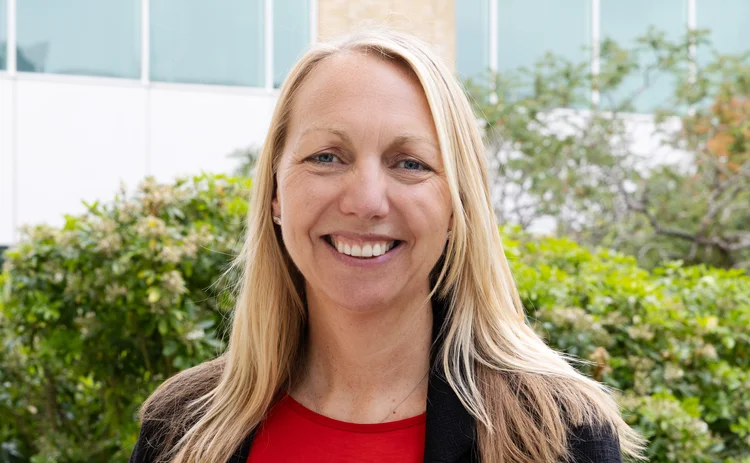
Samantha Owen, interim head of Zurich’s independent charitable arm in the UK Zurich Community Trust, discusses the various elements of the trust’s work and how it is likely to evolve over the coming years.
What has your career journey been so far?
I started as interim head of the trust in February until the head Laurie Deans returns from maternity leave early in the new year.
My background is in the corporate responsibility space. I started with HSBC in 2004 when corporate responsibility was just emerging, so I have watched its evolution over the last 20 years.
We’re a little bit different to other funders because we’re happy to cover core costs, while many simply make restricted grants. It’s very important, especially for the smaller charities, that we enable them to continue to do the work they’re doing.
I also had an incredible opportunity to work in the corporate responsibility team at Silicon Valley Community Foundation, based in California.
It gave me a new perspective on philanthropy and giving because we worked with just over 100 companies, from your EBays and Microsofts down to the small startups, helping them create their grant making and employee engagement programmes.
My career goal has always been to run a corporate responsibility team within an organisation or a corporate foundation, so 21 years later, I’ve achieved my career goal through the opportunity to run the team at Zurich.
I had only been with Zurich for a year before stepping up to this role, but I worked with Zurich during my time working in Nationwide Building Society’s social investment team. We worked together to see how we could support and improve the lives of people in Swindon.
What does Zurich Community Trust do?
We’ve been in action since 1973, when we began as Hambro Life Charitable Trust, which came from a desire from the founding members to give back to their local communities and help those in need.
Since our inception, we’ve contributed more than £100m to worthy causes, logged over 600,000 volunteering hours and positively impacted the lives of more than five million individuals.
2024 was a really positive year for the trust. There were nearly 300,000 people that whom we were able to provide some benefit.
We have 56 charity partners local to the Zurich offices across the UK, and over the last three to four years, they have received about £2m in grant funding.
We’re a little bit different to other funders because we’re happy to cover core costs, while many simply make restricted grants. It’s very important, especially for the smaller charities, that we enable them to continue to do the work they’re doing.
There are also national partners like Barnardo’s, Dementia UK and The Magic Breakfast. We’re now in the process of finding our new partners for 2026 and beyond.
It’s a long history and legacy, so I feel a lot of responsibility coming in and taking on this role.
What are some of the aspects of the trust’s impact that stand out to you personally?
The More Than Money programme gives smaller charities access to valuable resources and knowledge to help support them further. It was designed to see where we could help them from a capacity-building perspective.
While the grant funding is clearly very important, when we get feedback from our charity partners, it is often on the benefits of the More Than Money programme.
We have given our local charity partners free membership to the NCVO – a membership community for charities, voluntary organisations and community groups in England.
They get access to Directory of Social Change courses and conferences as we’ve funded an online membership.
We also ensure we can get them volunteers through our challenge programme in the summer, which brings together employee teams from Zurich offices across the country to complete a one-off project which benefits a local voluntary organisation or school.
Additionally, they’re provided access to our apprenticeship levy, and we’ve heard great stories from partners who have been able to put their employees through apprenticeships.
We have deep relationships with the local charity partners, and being able to offer them these additional benefits has been transformative.
We’re going to be making some enhancements to it going forward, and that will be aided by the fact that we’re looking to move from 56 local partners down to 31. Having key partners will allow us to deepen the relationships.
They will then be able to own and shape what the support they get from the programme looks like. We’re looking at doing some organisational work with them to understand what their needs are.
The legacy we want to leave them is that they’re in the best possible shape to continue once our funding has ended.
How does the trust’s work further Zurich’s sustainability goals?
Our sustainability fund looks at what our local partners need and how they can benefit from a sustainability perspective. It came from a desire to make sure we align with the United Nations Sustainability Development Goals and enhance the ability of small charities to do so as well.
We have had £100,000 available each year, with grants of up to £10,000 available on an application basis. We have just £30,000 left this year, and the previous two years we exhausted that.
The feedback we’ve had from the partners is that the extra money to support sustainability projects has been fantastic. Really simple projects like introducing solar panels have been the difference between a small organisation being able to keep its doors open or not.
Additionally, we offer a sustainability and diversity, equity, inclusion and belonging network, where we have quarterly meetings with our sustainability partners focusing on a sustainability or DEIB topic.
If requested, we also carry out reviews, where we ask for their policies and procedures around sustainability and DEIB. Within that, we’re considering formally offering the opportunity for one of our sustainability managers to go in and review what the charities are doing, then make recommendations.
We’ve also joined the Funder Commitment on Climate Change, which is a framework supporting funders to play their part in tackling the causes and impacts of climate change.
Now that we’ve seen the work from other members, we’re considering what else we could be doing to see what other best practices are out there, because we are quite early in that journey, but we have a real desire to do more.
How do you drive employee engagement for volunteering, considering volunteering hours in the UK are generally down?
At the start of the year, we had an employee survey where we allowed all of our employees to vote for the causes they care about the most – health and mental health were the two that came out on top across every location, that’s going to be our focus for the next three or four years, and we’re going to consider it from a local and national perspective.
We see lots of our employees who do regular volunteering become trustees. One of our employees in Swindon volunteers regularly for the charity he did a challenge with and became a trustee last year. The charity went through some really tough times, and he helped them secure extra funding.
That’s why allowing employees to vote for who we ultimately support is so important, because it drives that buy-in from them. Last year, we raised £190,000 from our employees.
One of the things we’re exploring for 2026 and beyond is how we get better at skill share volunteering with knowledge and expertise across the business, because the value of that type of support to charities is far greater than us going in and painting buildings.
Only users who have a paid subscription or are part of a corporate subscription are able to print or copy content.
To access these options, along with all other subscription benefits, please contact info@postonline.co.uk or view our subscription options here: https://subscriptions.postonline.co.uk/subscribe
You are currently unable to print this content. Please contact info@postonline.co.uk to find out more.
You are currently unable to copy this content. Please contact info@postonline.co.uk to find out more.
Copyright Infopro Digital Limited. All rights reserved.
As outlined in our terms and conditions, https://www.infopro-digital.com/terms-and-conditions/subscriptions/ (point 2.4), printing is limited to a single copy.
If you would like to purchase additional rights please email info@postonline.co.uk
Copyright Infopro Digital Limited. All rights reserved.
You may share this content using our article tools. As outlined in our terms and conditions, https://www.infopro-digital.com/terms-and-conditions/subscriptions/ (clause 2.4), an Authorised User may only make one copy of the materials for their own personal use. You must also comply with the restrictions in clause 2.5.
If you would like to purchase additional rights please email info@postonline.co.uk