From Bolton to Palace; Gretna to Argyle - when insurance personalities invest time and money in football
As former Sabre CEO Keith Morris backs the Bolton Wanderers FC buyout, Post content director Jonathan Swift looks at other insurance individuals who have been closely involved in football over the last two decades.
Football and insurance; the two might not be as closely associated and aligned as rugby and insurance, but there continues to be a bond between the two.
From the glitz of the Premiership to the more hearty fare in the lower reaches of the Football League, the new season has seen some new relationships struck up.
At the top end Axa has become a principal partner of Champion’s League winner Liverpool FC and the club’s new official training kit partner; meanwhile in division two Autonet has agreed to sponsor the Hamil Road stand at struggling Port Vale.
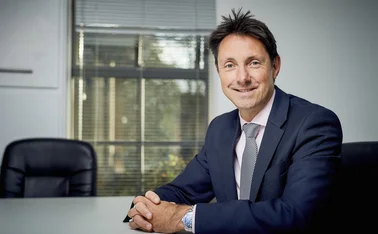
However, it was a move by another insurance figure – former Sabre CEO Keith Morris, that got me thinking about the roles industry individuals have played in supporting the ‘beautiful game’ over the last two decades.
Given that with little fanfare and almost by stealth he was named amongst those involved in the Football Ventures bid to save Bolton Wanderers from going the same way of fellow North West club Bury FC.
Of course there are some corporate owners involved in football that have insurance links, none more high profile that Fosun International and Wolverhampton Wanderers.
But there are also individual insurance professionals who have invested time and/or money in British football clubs, by doing more than sticking their firm’s logo on a shirt. Here is a flavour of some of the more notable examples.
Brooks Mileson, Gretna FC
Brooks Mileson amassed his wealth through a number of insurance ventures, including North East based broker Arnott, which merged with Century and was subsequently sold to BGL and then Swinton; and non-fault accident management company Albany, which was bought by Helphire in 2004 for more than £45m.
A well-known football philanthropist, the Carlisle supporter might have failed in a reported attempt to buy his favourite football club, but he did make his mark with Gretna FC.
Backed by Mileson’s fortune Gretna FC were promoted from the Scottish Third Division to the Scottish Premier League in three consecutive seasons and reached the 2006 Scottish Cup Final.
However, the footballing fairy tale did not end well for both sides as the club was liquidated in 2008 after Mileson reportedly withdrew his support suffering from ill health. He passed away on 3 November 2008.
John Radford, Mansfield Town
In 2010, telebroker One Call CEO John Radford took over the majority ownership in Mansfield Town from Steve Hymas, Steve Middleton and chairman Andy Saunders.
Two years later Radford purchased the ground from another former owner Keith Haslam and changed the stadium’s name from Field Mill to the One Call Stadium.
Since taking over Mansfield Town, Radford has helped ‘The Stags’ re-establish itself as a Football League club having been promoted from the Conference in 2013.
The closest it has come to going up the football pyramid again was last year when the club came fourth in Division Two and then missed out on a trip to Wembley when it was beaten on penalties by Newport County in the play-off semi final.
For the 2016-17 season the once One Call sponsored Doncaster Rovers [2010 – 2017] spent a year in the same division as Mansfield Town leading to what no one is likely to have called the “Boom Boom, Boom … let me hear you say One Call” derby being played twice. The games finishing 1-1 and a 1-0 victory for Rovers.
Joe Plumeri, Plymouth Argyle
Former Willis Group CEO Joe Plumeri is another famed sports philanthropist; although before getting involved with Plymouth Argyle he was more famed for his ties with baseball.
He owned two baseball teams in Trenton Thunder and Lakewood Blueclaws and helped fund the building of Plumeri Park in Williamsburg, Virginia in 1996, home to the College of William & Mary Tribe.
However, having been introduced to the team by its then chairman Sir Roy Gardner - who was also on the Willis board and previously a non-executive director and non-executive chairman of Manchester United, Plumeri invested £100 000 in Argyle in 2009.
As to what Plumeri now thinks of his investment, I can find no record. But under Sir Gardner Argyle ran into financial difficulties and faced winding up orders over unpaid taxes and debts before going into administration in 2011.
At that point Mastpoint Limited, the former investment company for Plymouth Argyle in which Plumeri was involved, announced “with no prospect of repayment the company decided to write off the loans made to that company”.
Incidentally, former Direct Line CEO and chairman Peter Wood also invested in Mastpoint at the same time as Plumeri which brings me nicely to…
Martin Long, Crystal Palace
Legend has it that Martin Long – who was there with Wood at the start of the Direct Line journey - is such a big Palace fan that he named a daughter Crystal P. Alice.
Before the opportunity arose to own a share in the club, Long’s former business Churchill splashed its brand on the shirt of the South London football club. A move that proved fortunate as the club was subsequently promoted to the Premier League with all the added exposure that brought.
After Churchill was sold to Direct Line, Long had a few spare bob lying about so it was no surprise that when the chance arose in 2010 he joined up with a trio of wealthy fans to form CPFC 2010 - alongside Steve Parish, Stephen Browett and Jeremy Hosking – to take over the club after it had fallen into administration.
To begin the four owners then had an equal 25% stake, although Long has since diluted his holding to 2.5% following the sale of a majority of the overall shares to American investors Josh Harris and David Blitzer.
Paul Barker, Cheltenham FC
Paul Baker joined motorhome insurance specialist Bakers of Cheltenham in 1986, a company started by his father John, and remained with the business when it was acquired by Towergate in 1999 and renamed Towergate Bakers.
However, he is on this list for the time and effort he put into the local club Cheltenham FC, serving as chairman for 21 years before stepping down at the end of the 2018 season.
During that time the club has transitioned from part-time to professional, won the FA Trophy and celebrated four promotions.
After Towergate acquired Bakers in 1999 the club featured the consolidator’s logo on its shirts for a few seasons prompting [unsubstantiated] speculation that the thing that got the deal over the line was for the broking giant to invest in Paul’s beloved club by way of a sponsorship deal.
Having left Towergate Bakers in 2015, he has now set up Paul Baker Insurance Services.
Stewart Donald, Eastleigh FC and AFC Sunderland
Stewart Donald has invested in not one, but two football clubs beginning in 2011 when his firm Bridle Insurance took a majority shareholding in non-league Eastleigh FC.
At the time the club’s managing director David Malone said the investor had a “five-year plan to get the ground up to League standard and us into the Football League”.
The club did manage to get promoted from the Conference South to Conference Premier with Donaldson on board, but has yet to make the leap to Division Two with its much improved Silverlake Stadium.
Donaldson himself has made the transition into league football though in 2018 when he sold his shareholding in Eastleigh to buy Sunderland AFC. It will be interesting to see how often he features if Netflix do ever broadcast a second season of reality TV show “Sunderland til I Die”.
Steve McPherson, Hampton and Richmond FC
Someone else who has been involved in non-league football is former Complete Cover director Steve McPherson who both played and then was chairman at Hampton and Richmond FC before stepping down in May 2017.
Writing in Post in 2016 about the life of a chairman in the lower leagues he said: “The life of a non-league chairman never really stops. They say it’s a labour of love, and it truly is. A typical Saturday match day at home starts for me at 9am. I’ll have meetings with the groundsman and health and safety officer, head steward, hospitality manager, kit man and spend half an hour with the manager. I tend to walk around during the game, mixing with the sponsors and the supporters.”
Interestingly the management team he had at Hampton and Richmond when he left - manager Alan Dowson and coach [and football commentator Martin Tyler] - are now having great success at Woking FC at the top of the Conference Premiership. Meanwhile, Hampton and Richmond FC are struggling near the foot of the Conference South.
Only users who have a paid subscription or are part of a corporate subscription are able to print or copy content.
To access these options, along with all other subscription benefits, please contact info@postonline.co.uk or view our subscription options here: https://subscriptions.postonline.co.uk/subscribe
You are currently unable to print this content. Please contact info@postonline.co.uk to find out more.
You are currently unable to copy this content. Please contact info@postonline.co.uk to find out more.
Copyright Infopro Digital Limited. All rights reserved.
As outlined in our terms and conditions, https://www.infopro-digital.com/terms-and-conditions/subscriptions/ (point 2.4), printing is limited to a single copy.
If you would like to purchase additional rights please email info@postonline.co.uk
Copyright Infopro Digital Limited. All rights reserved.
You may share this content using our article tools. As outlined in our terms and conditions, https://www.infopro-digital.com/terms-and-conditions/subscriptions/ (clause 2.4), an Authorised User may only make one copy of the materials for their own personal use. You must also comply with the restrictions in clause 2.5.
If you would like to purchase additional rights please email info@postonline.co.uk