Best Insurance Employer 2021: Arag (3* employer, SME)

BIE - Arag

Post surveyed thousands of employees across the insurance sector and Arag was voted a 3* employer in the small and medium-sized employer category.


Company info

Total number of staff: 131

Number/percentage of full-time employees: 93.9%

Number/percentage of part-time employees: 8%

Percentage female/male: 43.5% female/56.5% male

Percentage of board female/male: 100% Male

Median gender pay gap: N/D

Average tenure of employees: 4.7 years

Company values: Discipline, Drive, Foresight, Fairness, Openness, Pioneering Spirit


View from HR

Ian Screen, people services manager,  Arag UK

Why do you think your employees have nominated you in this survey?

Everyone will have their different reasons, but there are some common reoccurring themes that emerge from our various surveys. Our colleagues consistently cite “the people” as a significant reason that makes Arag a great place to work; the sense of team, togetherness and belonging to a family. Our colleagues also cite leadership and the “great culture” they foster which includes “a real focus on wellbeing.” In more recent times, our colleagues have also noted the importance of the flexibility the company offers them, not least in the ability to work from home. You can trace all the reasons for being nominated back to our core values, the Arag Essentials; we truly live them, as a family, as we look to our inspirational founding principle of providing access to justice for all.      

What do you believe employees value the most?

First, it’s important to accept that one size does not fit all; colleagues have varying life experiences, challenges and needs.  In addition to treating everyone with fairness and respect, it’s, therefore, vitally important to provide a work experience and benefits package that can meet those varying needs. That’s not to say we’ve cracked it, far from it, but we always keep that important truth in mind. Importantly, we also recognise that we’re all part of something special, a common purpose; Access to Justice, not just for those who can afford it. We work hard to centre our decisions around this historic founding principle and we think our colleagues are, therefore, able to feel part of a noble purpose rather than just a business.

Where does your HR strategy come from?

Our people strategy is a culmination of the overarching business goals, group-wide ambitions, and the valuable feedback we receive from our colleagues via our annual Best Companies experience (survey and workshops). The latter has very much directed our focus in some areas.  For example, it was clear that our performance management (appraisal) process left a lot to be desired, and many wanted even clearer direction on their career paths. From this, in 2018 we committed to evolving performance management into a digitised and real-time solution that would prove more engaging; this led to the introduction of Appraisd. The feedback also gave birth to the Arag Pathways project; the personal growth expectations of each role documented in a clear and visual way so colleagues can more easily map out their career ambitions against where they now are. The feedback and input of our colleagues is a vital part of our People Strategy jigsaw – it’s our people that will shape the future of our business, far more than the cold reality of financial numbers.

How does this tie into your company values?

Our Arag Essentials are explicitly referenced in everything we do. For example, the evolution of our appraisal process included integrating the Arag Essentials into the review – it’s not just your performance that matters, but also how you went about achieving it. The Essentials, therefore, aren’t just an indication of what is expected, but also a yard stick of what’s actually delivered.  anagers and colleagues alike are routinely compared to these ideals.  The Essentials also permeate through recruitment and selection, training and personal growth, and even office design.

How does staff feedback affect HR decisions?

It’s impossible to imagine how it wouldn’t. The engagement of our colleagues is key to not only our corporate performance and ability to attract new talent, but also to our own enjoyment of working at Arag and our continued motivation to make those next steps. Our adoption of the Microsoft O365 platform has made it easier than ever before to reach out to our colleagues. This year alone we’ve consulted on our response to new lockdown measures, how we communicate across the business, office design and what the future of hybrid working looks like. Colleague feedback is discussed at detail at the highest levels in the business and shapes our future.

How do you retain staff?

How to retain staff is rarely the focus. Instead, we use an appreciative lens and look to the future; how can we make Arag an even better place to work and build upon our founding principle of Access to Justice? Identifying key improvements and working with colleagues to make them happen will naturally generate desirable outcomes such as staff retention.  However, we also embrace the fact that colleagues will move elsewhere; because if a colleague has had a productive, enjoyable and enriching work experience with Arag, they go on to become an ambassador for the business (and who knows, they might just come back one day).

Do you do anything differently from other insurance firms?

We don’t tend to look to others to know if we’re doing the right thing by our colleagues; our own data and colleague feedback will tell us that.  It’s quite possible that we differ little from other insurers in terms of benefits, pay and office space, but we believe that being part of the family-owned Arag Group is a significant difference, and a huge benefit to our culture; as our employees are a part of the family. We focus on our founding principle of providing access to justice for all and this in evident throughout our company values. We have bi-weekly MD updates to all staff and quarterly staff events to bring the whole company together to embed our family culture.

Where do you think HR is going in the future?

There’s no doubt that technology will play a significant role in the future of HR and people management.  The capability to record and analyse data has never been greater, and overlapping performance metrics with selection methodologies can surely lead to more accurate recruitment and reduced costs. The same data when overlaid against engagement will undoubtedly highlight area of focus and future improvement. At Arag we’re also close to deploying our own inhouse Chat Bot to help with colleagues’ day-to-day HR queries, giving our HR team more time to work with people on other projects.  We’re also weeks away from automating large portions of our recruitment processes; automation potentially leading to HR efficiencies, but also an improved colleague/applicant experience.

In light of the Black Lives Matter movement and other social justice efforts in areas such as LGBTQ+ rights, many HR teams will also be prioritising Diversity and Inclusion; Arag is no exception.  We’re looking at pronoun choices on our HR systems, diversity and inclusion data during recruitment and we’ve undertaken Gender Pay Gap Reports despite being too small to be required by law.  Our Wellbeing Champions will come together in the near future to get a sense of what more we should be doing.

But of course a significant challenge facing HR teams right now is the move to greater home working; how to maintain corporate identity, culture, wellbeing, engagement and productivity in an ever-expanding world.  The move from the old normal to lockdown was relatively easy; it was a necessity and forced upon us by something larger than us.  The future however is in our hands to shape, and we need to ensure it’s sustainable and achieves what everyone wants.

What new benefits are on the horizon? Will you be introducing these?

The ‘benefits horizon’ should be different for all business; one size will not fit all.  However, there are some common truths that all reward strategies will need to address. Our appreciation for services like Netflix and Amazon Prime means we need to provide choice, variety and ease of access to benefits. This is particularly true with a greater number of generations working at the same time; some will be interested in discounts, some in pension savings. 

Healthcare will also likely to be of greater importance in the future. Staff will likely place a higher value on it because of the pandemic and scarcity of service within the NHS, but also with an ageing workforce comes more chronic disease management requirements. Higher levels of awareness about mental health will also place a spot light on what companies offer to support their staff.

The benefits supply chain will come under greater scrutiny. Staff will likely demand greener and more eco-sustainable offerings and pension investments. This won’t necessarily change the benefits on offer, but it will certainly impact on how companies assess them and their providers.

We will be open-minded and always try to make the most beneficial and sustainable of choices.

In your experience is recruiting and retaining in insurance different from other sectors? If so, how?  

Insurance is different. Extremely rewarding and evolving all the time. But it’s not something any five year old dreams about or aspires to.  The Chartered Insurance Institute is addressing this, and it’s exciting to see the developments with the vocational qualifications and the links with MSc courses such as those as UWE Bristol. So the challenge for Arag largely centres around attracting those who aren’t familiar with the insurance industry, those who haven’t discovered its richness. If we can do that, we then need to work on our own valuing of transferable skills from other industries at the point of selection; something we’re more capable of today, now that we’re a more mature business in the UK.

What advice would you give to other firms to replicate your success?

Take the time to truly listen to your people and take care to understand not just to the words, but the hidden truths lurking between them. Data is only part of the picture and can lead you towards conversations, not replace them. 

What will the ‘new normal’ look like for your employees in terms of office/home working after Covid?

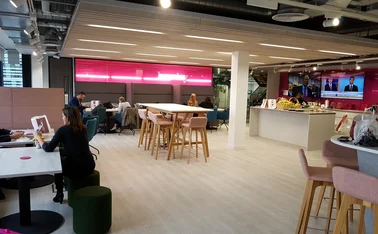
Not very different from our ‘old normal’ – we will extend home working to 60% of working days, and expand the eligibility to all staff except facilities whose roles require them to be on site.  We’re reconfiguring the office space to create more collaboration areas, and ensuring outside spaces provide a welcome working environment also. 


More information

To find out what makes the best insurance employer and the methodology behind the research click here.

To view the top companies ranked click here.

Only users who have a paid subscription or are part of a corporate subscription are able to print or copy content.

To access these options, along with all other subscription benefits, please contact info@postonline.co.uk or view our subscription options here: https://subscriptions.postonline.co.uk/subscribe

You are currently unable to copy this content. Please contact info@postonline.co.uk to find out more.

Lloyd’s pulls plug on Dive In

Lloyd’s will bring its flagship diversity and inclusion Dive In festival to an end after 2026, as it launches a market-wide consultation to develop a broader approach to talent, skills and culture.

Is it third time lucky for Axa as it merges divisions again?

Content Director’s View: With Axa UK and Ireland combining its personal and commercial businesses into one, Jonathan Swift reflects on why insurers often oscillate between splitting and merging these divisions, and what led the insurer to believe this latest move will pay off now despite similar attempts in 2005 and 2016.

Q&A: Chris Methven, CyberCube

Chris Methven, the new CEO of CyberCube, reveals how fresh financial backing will allow his business to place bigger, longer-term bets on global expansion, deeper analytics and new capabilities.

Most read articles loading...

You need to sign in to use this feature. If you don’t have an Insurance Post account, please register for a trial.

Sign in
You are currently on corporate access.

To use this feature you will need an individual account. If you have one already please sign in.

Sign in.

Alternatively you can request an individual account here