

Blog: Covid-19 and its impact on Italy's insurance industry


The impact of Covid-19 has been felt across the global insurance industry and, for Italy's insurance industry more specifically, the largest and most direct impact will be from the high rates of hospitalisation in the country during the pandemic and the increase in the cost of services, equipment and drugs writes Alberto Batini partner at Batini, Traverso, Grasso and Associati of Italy.
The impact of the virus will depend on each country’s healthcare system and the relative proportions of government and private insurers. Some insurance policies may exclude claims arising from epidemics or pandemics, or even certain named diseases. So how has the pandemic affected Italy’s insurance industry?
Travel Insurance
The travel industry has been one of the most immediately affected sectors, and so, at least in the short-term, travel insurance is likely to be very significantly impacted.
A standard travel insurance policy covers trip cancellation, travel and more major medical claims, emergency medical evacuation and accidental death. However, many such policies contain an “epidemic or pandemic” exclusion. Some policies may also exclude cover not only in areas subject to official travel bans but also where warnings against non-essential travel apply to certain areas.
Business interruption
Another major issue is the cover provided by business interruption policies, as the lockdown measures have forced many (indeed, in Italy, almost all) businesses to suspend their activities, or at least to operate in a very different way.
Conventional BI cover is subject to a “material damage proviso”. Infection with Covid-19 will not, of itself, constitute physical damage, which is the trigger requirement for coverage.
Provided that the policy does not exclude it, “loss of use” of the insured premises due to virus contamination may constitute “physical damage” or “physical loss or damage”, thus triggering cover.
Liability
Insurers providing general liability for sectors with a large workforce in (in these circumstances) high risk operations – such as entertainment, manufacturing, transportation and retail – are likely to experience increases in claims. The extent of this will to some extent depend on how far a country’s legal system inclines towards litigation and (especially) collective actions.
Also, claims based on allegations that the insured caused a guest, customer or third-party harm by failing to exercise reasonable care (in warning of the risk of potential exposure to Covid-19, or in implementing or enforcing protective measures) could be covered.
Directors’ & officers’
Senior management teams in all industries must focus on ensuring constant regulatory compliance, employee protection and continuation of the business services, all in the face of reduced staff numbers, supply chain difficulties and market volatility.
Lawsuits relating to Covid-19 might allege that the company did not take adequate steps to prevent its spread, or did not have contingency plans, or did not activate or execute those plans appropriately.
Public entities
Public entities’ liability insurance might also be affected by a rise in claims alleging inadequate response to the emergency. The government has adopted a variety of measures that authorise requisition of medical goods, such as masks, and of medical-surgical facilities, as well as hotels, which could be used to house those who have been quarantined. Italian case law based on previous emergencies shows that municipalities and other local authorities might face claims for alleged unlawful requisitions or tendering procedures.
Employer’s liability
As for EL insurance, it is generally thought that Covid-19 infection is unlikely to have been caused by business activity outside the high-risk sectors. However, subject to any specific exclusion as regards communicable diseases, epidemic or pandemic, cover could respond if the insured business had failed to take reasonable measures to adequately protect, respectively, members of the public, customers or employees, against exposure to coronavirus.
Cyber insurance
With the adoption of restrictive measures, such as social distancing and stay-at-home orders, people are required to work remotely and maybe under stressful circumstances and with perhaps makeshift arrangements – hence increased cyber risk. Increased remote working offers more opportunities for cyber-attackers, and any organisation that is just starting out with using remote desktop protocols may be more susceptible to a cyber-attack.
Trade credit and surety
Trade credit insurance will cover losses in case of customers’ failure to pay for purchased goods but insurers are likely to adapt coverage for countries/regions that are experiencing the most severe impact of the virus for new policies or renewals. Claims from global insolvencies are anticipated to reach 2008 proportions.
Only users who have a paid subscription or are part of a corporate subscription are able to print or copy content.
To access these options, along with all other subscription benefits, please contact info@postonline.co.uk or view our subscription options here: https://subscriptions.postonline.co.uk/subscribe
You are currently unable to print this content. Please contact info@postonline.co.uk to find out more.
You are currently unable to copy this content. Please contact info@postonline.co.uk to find out more.
Copyright Infopro Digital Limited. All rights reserved.
As outlined in our terms and conditions, https://www.infopro-digital.com/terms-and-conditions/subscriptions/ (point 2.4), printing is limited to a single copy.
If you would like to purchase additional rights please email info@postonline.co.uk
Copyright Infopro Digital Limited. All rights reserved.
You may share this content using our article tools. As outlined in our terms and conditions, https://www.infopro-digital.com/terms-and-conditions/subscriptions/ (clause 2.4), an Authorised User may only make one copy of the materials for their own personal use. You must also comply with the restrictions in clause 2.5.
If you would like to purchase additional rights please email info@postonline.co.uk
More on Claims
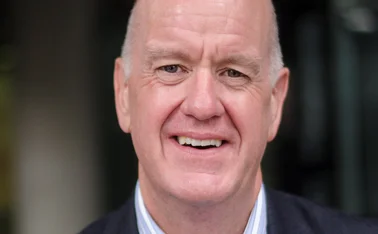
Big Interview: Mark Huxley, Foil
As he prepares to succeed Laurence Besemer at Foil, Mark Huxley sets out his plans to raise the organisation’s profile and influence across the insurance market.

AI claims handling: Are insurers listening to customers?
As artificial intelligence accelerates claims processing and improves fraud detection, Neil Heasman, operations director at Charles Taylor Assistance, argues human expertise remains essential to building trust and supporting customers through complex claims.
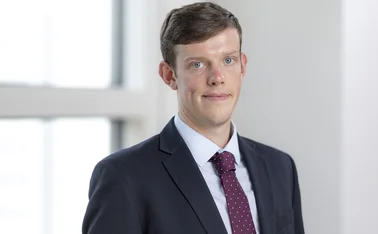
Are insurers doing enough to share intelligence to combat fraud?
The insurance industry has invested heavily in tackling fraud, but with criminals increasingly operating across sectors and borders, Association of British Insurers senior policy adviser for general insurance, Jonathan Purvis, says a more connected approach to sharing intelligence is needed.

Q&A: Nutan Rajguru, Verisk
Nutan Rajguru, head of analytics at Verisk, explains how data, analytics and artificial intelligence can help insurers identify risk earlier, generate stronger insights and make more informed decisions.
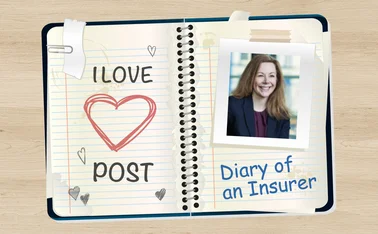
Diary of an Insurer: Intact’s Carolyn Mackenzie
A week of international travel, complex claims, broker meetings and talent development – with family life, a fractured sacrum and a hoverboard mishap – keeps Carolyn Mackenzie, vice president of complex claims and specialty at Intact Insurance, on her toes.
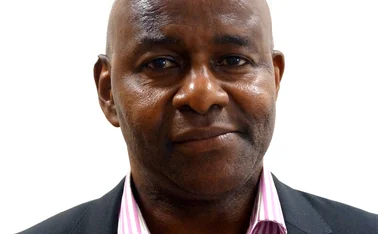
Ifed on why fight against fraud must focus on the fraudster
Colin Jemide, protect officer at the Insurance Fraud Enforcement Department of City of London Police, explains why intelligence sharing, prevention and collaboration are key to disrupting organised insurance fraud without creating unnecessary barriers for genuine policyholders.

Ageas steps up fraud education as ID theft fears grow
Ageas is stepping up efforts to educate brokers and policyholders about fraud, after research found nearly three quarters of home and motor policyholders are concerned about becoming victims of identity theft.
Sumner says ‘significant rewrite required’ on how the UK fights fraud
Adele Sumner, former director of counter fraud and financial crime at Intact, has said the way the UK fights fraud has to change, as the nature of fraud has changed.