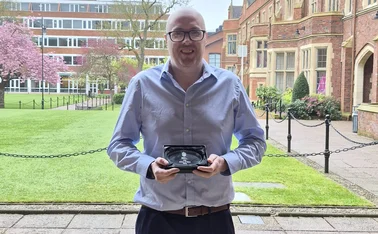
Interview: Martin Oliver: Grafting the Gallagher way

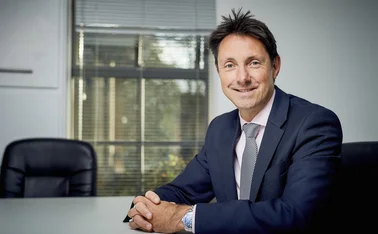
Martin Oliver

Having joined Gallagher last year as MD of personal lines, Martin Oliver explains why he’s there to stay, his relationship with Grahame Chilton and how the role plays to his experience and strengths.

Almost seven years after leaving Kwik Fit Financial Services, two other jobs and a couple of Post profiles later, Martin Oliver finds himself in the spacious boardroom of a shiny new City of London headquarters and the not-unusual position in the current climate of being an Arthur J Gallagher employee.

After leaving his CEO role at Allen & Allen and a pleasingly timed spell in the garden last summer, Oliver’s arrival at the family-owned Illinois-based firm as managing director of personal lines marked just one of a raft of personnel changes within the top tier of its UK operation at the time. These changes continue –
most recently with the appointment last week of ex-Bluefin executive chairman Stuart Reid as retail CEO – with more posts needing to be filled, not least that of Oliver’s immediate boss – vacated by Adrian Brown in February – who will sit between him and newly appointed international CEO Grahame Chilton.

Gallagher has suffered some rapid departures in recent years. Its previous retail bosses, Adrian Colosso, Brendan McManus and Peter Blanc, all left within six months of taking on the role, after the firms they previously headed up were bought by Gallagher. Meanwhile, former insurer bosses Brown and Janice Deakin spent a total of 24 months at Gallagher before following at least three other executives, including Chilton’s predecessor David Ross, out of the door in February, bound for Towergate in a split involving ongoing legal proceedings.

Oliver himself fills the shoes of Des O’Connor, who left to join Brightside last July, along with former managing director of direct, Andrew Wallin.

However, Oliver says he is “going nowhere” – which is reassuring for Post. Last time the publication interviewed Oliver as CEO of A&A, he resigned from the position before the article was due to be published, leading to some fast action at Post Towers. “I can confirm that my future is Gallagher,” he replies when asked if he might follow others to rival firms. “I have no plans [to leave]. I am enjoying the job. It plays to my experience and strengths. What more can you want?”


CV: Martin Oliver

2014 - present:
Managing director – personal lines, Arthur J Gallagher

2012 -2014:

Chief executive, Allen & Allen

2008 - 2012:
Chief executive, Barbon Insurance Group

1995 - 2008:
Managing director, Kwik Fit Financial Services


Federation of businesses
Oliver was brought in by Brown to head up Gallagher Insurance Solutions in October 2014. With its 650 staff across 22 branches it is what he describes as a ‘loosely aligned federation of businesses’ consisting of a mishmash of largely PL, as well as some small commercial and affinity business. He is charged with growing the book from its current £200m gross written premium  – a drop in the ocean compared to the $2.91bn (£1.95bn) brokerage the US giant’s broking operation chalked up in 2014 – and to refocus its appetite according to the Gallagher ‘specialist not standard’ mantra.

Having appeased Post’s concerns about its publishing schedule, Oliver says the departure of Brown and Ross caused no disruption to his role at GIS: “The good thing was that Adrian and I were on same page for at least 90% of issues, so not one thing has changed [around strategy]. What we were doing three months ago remains the same. [Adrian’s departure] hasn’t affected things.”

He adds: “We now have a new boss in Grahame Chilton. I have already met him four or five times and the way I look at it is I have a job to do, which is to improve the businesses Gallagher has acquired and that’s what I like doing. So, as long as my boss agrees with that, I am happy – and so far so good. They are recruiting for [parts of the] executive management team, so I will have to trust they will get that right.”

Oliver’s appointment at Gallagher was perhaps less predictable than some others, given his greater experience in personal rather than commercial lines, notwithstanding his three-and-a-half-year stint as CEO of Barbon Insurance Group, the umbrella for various specialist property intermediaries, whose commercial and property insurance interests were bought by Gallagher a year after he left it for A&A in May 2012.

He has said before it was the return to the “cut and thrust” of PL trading that attracted him to A&A after Barbon, and he feels more at home in PL territory, where to survive the impact of price comparison sites and other market disrupters is to prove your worth as a broker. It’s a line Oliver pursues today, undeterred by being seated in the Foster-designed Walbrook Building, Gallagher’s UK headquarters since 2013 and a bastion for commercial lines from a sole trader to the most complex energy risk.

“For me, and I’m being snobby about it, PL has been through – and continues to go through – massive amounts of change and innovation, and only certain people can keep up with that,” says Oliver. “I don’t think the commercial world has been through anything near the same revolution. That is what I meant when I said I was glad to be back.

“There are very strong retention rates in commercial lines, so it can be quite difficult to create churn. The whole disruptive thing in PL – and now at the smaller end of commercial  – is what gets my competitive juices flowing. If you can compete in that space and win, you are by definition, very good.”

He adds: “The ‘Gallagher way’ is about growing your margins and business. I’ve done PL most of my life and the onset of the internet and aggregator trading makes it really tough, unless you are very good at everything and have an amazing brand or IT. It’s difficult to survive and prosper on such thin margins, so you have to do an awful lot of business very well.”

Oliver runs through many of his 22 “estates” within GIS, starting in Bournemouth, home to its largest PL operation, via Horsham, Tunbridge Wells, Croydon, London and Wakefield, and ending on the west coast of Scotland in Irvine, where GIS’s private client operation is based.

He admits the spread of offices is a “a challenge and a stretch” in geographic terms, not that he complains too much having grown accustomed to a long commute from his Glasgow home since leaving Uddingston-based Kwik Fit in 2008.

Noting there are “not a lot of similarities” between the GIS businesses and “bags of opportunities”, he diplomatically describes what they do and where he wants improvements: “They were mostly acquired over the past three-and-a-half years and were all good businesses and that is why we bought them. But some – not all – of the execution skills have left a bit to be desired. Some have performed well and some not.”

Insure 4 Retirement, its Bournemouth-based over-50s property specialist, he notes, “was a very entrepreneur-led business” that has “lost its way a bit and has been struggling” since its acquisition in May 2012 – implying not enough attention has been paid to it since joining the Gallagher family. Having recently boosted its ranks with the appointment of Andy Leggett, formerly of Castle Cover, Rias and Which?, as marketing manager, and James Collins, also formerly of Rias, as its head of business, Oliver says it is now “rebuilding the management team down there and making sure we are fit for purpose”.

Deacon, previously part of the Barbon stable, is “in rude health” says Oliver, who credits its MD Nigel Feast with growing its bottom line first by becoming more efficient and then its top line by bringing in more clients, adding: “I am not going to take any of the credit for that”.

He is also proud of the Horsham-based business George Burrows – offering cover such as personal accident and travel tailored to police and fire personnel through arrangements with bodies like the Metropolitan Police – which is soon due to expand into the home insurance market.

Signposting initiative
Asked whether motor is also on the cards, Oliver say it is another area of growth that he hopes will benefit from a new ‘signposting’ initiative introduced to educate staff across the 22 businesses about the other products available across the wider GIS division.

“So if a customer at Insure 4 Retirement asks for car insurance, we can now say we do it through our private client unit in Irvine. Two or three months ago if you had asked for car insurance we would have said no. We are joining the dots to provide the complete gamut  of PL products. About the only one we can’t do is pet insurance so, in true Gallagher style, we will look to fill that at some point.”

Since his Kwik Fit days, Oliver has espoused the importance of looking after and investing in employees in order to build a healthy and successful company. This sentiment has provided common ground with Chilton, harking back to the days when his boss headed up reinsurance broker Benfield, which he sold to Aon in 2008.

“I met [Chilton] 15 years ago when he was running Benfield and, not surprisingly, I remembered him but he didn’t remember me,” Oliver recalls with a chuckle. “His was one of first insurance brokers to be listed in the Sunday Times’ 100 Best Companies To Work For and Kwik Fit was on that journey when I was running it. We were in that list for seven years in a row and I learned a lot from that. He was doing similar things years ago to what I want to do with my businesses.”

GIS’ US-based parent was listed as among America’s Best Employers in 2015 by Forbes magazine last month but Oliver suspects only about half the broking industry thinks along the same lines as him when it comes to investment in people.
He adds: “You either get it or you don’t. Usually 50% or 60% of cost is staff. You can view it as a cost and look at how you can minimise that cost. But my view is to look at how to maximise that investment that you put into people.

“We want to recruit the best, keep the best, train and educate them so customers have great conversations with our people – and a lot of our sector doesn’t get that. [Chilton] obviously does and on that particular issue, which is quite a big one, we are definitely on the same page.”

Oliver is unlikely to be fazed by the corporate culture of his newest employer, whose single-page document, the ‘Gallagher way’ lists its shared values – and a copy of the document is never far from hand in a Gallagher office.

Asked to describe his approach to improving his group of businesses, Oliver admits his own team is likely to be fed up with his own mantra, which eschews pretentious talk of ‘visionary transformation’ in favour of calls for “baby steps” towards long-term growth. He responds: “I look at the businesses and ask ‘how can next month be better than this one’ and then ‘how can the one after that be better still’. My team is sick of the expression but it is about taking baby steps. When I arrived here there was too much talk about transformation, visionary products and visionary solutions.

“In fact, the way to run a business is to make every day just a little bit better than one before. Good businesses do that in their sleep. They don’t have massive change agendas – they just get better every day and you end the month with a slightly higher conversion or retention rate and a slightly lower cancellation rate. That is the charge I set for all of those businesses: keep making those small, iterative changes and then in a year you’ll find you have woken up to a better, more profitable business.”

Listening to staff
Part of the process is listening to staff, says Oliver, who says that particularly matters in a contact centre environment, where work can become repetitive, and in which the majority of his staff work. “I’ve surveyed our 650 staff about what it is like to work for Gallagher, so we are churning through the results of that now. We got an 85% participation rate and I am doing a series of roadshows over the next two months to get feedback and tell people what changes we can implement to make life better for them.”

A tendency to trust immediate reports with more decision-making authority is another familiar hallmark of Oliver’s management style and with good reason, he says. “Each business we bought had a strong leadership team and a strong direction of travel. They knew what they were doing and had a deep knowledge of their sector and we must not lose that. That’s why we bought each business – they have a unique DNA and you cannot lose that. So, we need strong and empowered local leaders who can keep competing and winning business from the opposition.”

No doubt he is banking on his next immediate boss taking the same approach when it comes to letting Oliver get on with what he enjoys doing best.

Oliver on...

Non-standard: We are unlikely to target ‘vanilla’ motor but, as I have found in other jobs, the specialist stuff often  becomes standard. Someone who has  a couple of claims or convictions on their  motor licence will see them drop off in a couple of years’ time and they become a standard risk. As a good non-standard broker it’s important we keep a home for those customers. Their risk profile has changed but the customer hasn’t changed and I don’t want to leave him high and dry.

Signposting:
This mostly involves education rather than training. It has taken me six months to realise we do taxis out an office in Sevenoaks, so we are starting to communicate [our range of products]. I’m a not betting that I have something in pet insurance [within GIS]; I just haven’t found it yet.

Global aspirations: I was lucky enough to go to a worldwide sales conference in Las Vegas in March, which made a change, was great fun and a chance to see what Gallagher does around the world. It was amazing to see what a huge organisation it is. It has a global ambition and a phenomenal desire to be better than an Aon, Marsh or Willis and I wouldn’t bet against that.

Labels: GIS does a mixture of wholesale, affinity and direct so it’s [hard to] categorise and I don’t use the distinction of affinity or direct. We are just individual businesses trying to make a fist of it in a competitive world.

Deacon: I think we were the first broker to launch online blocks of flats using a price quote engine that provides three quotes from around the market. We’re looking to push into landlords using the same technology. Although that’s a more competitive market, we will try to identify areas where the margins are better.

Cross-selling: We have more than 250,000 commercial customers and we have a huge reach but not enough conversations had been going on with them to say that we would also like to do their personal lines, although some branches have been better than others.


Only users who have a paid subscription or are part of a corporate subscription are able to print or copy content.

To access these options, along with all other subscription benefits, please contact info@postonline.co.uk or view our subscription options here: https://subscriptions.postonline.co.uk/subscribe

You are currently unable to copy this content. Please contact info@postonline.co.uk to find out more.

Throwback Thursday: Biba’s talent help

Insurance Post’s Throwback Thursday steps back in time to September 1981 to remind you what was going on this week in insurance history when the British Insurance Brokers’ Association responded to demand from members for help with “personnel matters.”

McGill sold to EQT for $2bn

McGill and Partners and private equity firm EQT have entered into a definitive agreement in which the latter will acquire a majority stake in the former for $2bn (£1.5m).

AI in broking: why the debate must move on

For insurance brokers, Andy Lewis, head of people proposition at Hedron Network, says the artificial intelligence debate has shifted from whether to adopt the technology to how to embed it safely, practically and strategically so it delivers lasting value.

Most read articles loading...

You need to sign in to use this feature. If you don’t have an Insurance Post account, please register for a trial.

Sign in
You are currently on corporate access.

To use this feature you will need an individual account. If you have one already please sign in.

Sign in.

Alternatively you can request an individual account here