Scottish Independence: Decision time
As the referendum on Scottish independence edges closer, what would a ‘yes’ vote mean for the insurance industry?
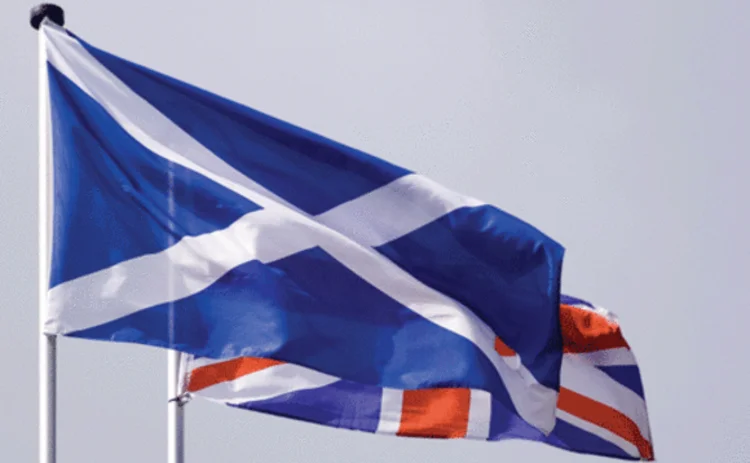
In five months’ time the Scottish population will be preparing to vote on whether it wants to be independent from the UK. Voters will be tasked with answering ‘yes’ or ‘no’ to a seemingly simple six-word question: ‘Should Scotland be an independent country?’
Scheduled for 18 September, the timing of the vote has been criticised by some for being scheduled at a time when Scottish nationalism will be at a high. The country will have just finished cheering on Team Scotland at the Commonwealth Games hosted in Glasgow in July and August, and events commemorating the 700th anniversary of the Battle of the Bannockburn are taking place at the end of June.
In fact, Scottish nationalism seems to be on the up already. An opinion poll released by Dundee University in March showed support for Scottish independence had reached its highest level in more than six months, with 39.3% of respondents saying they would vote for independence.
If the 13.1% of undecided participants were excluded from the poll, the outcome of the referendum would be 45% voting for independence and 55% against, based on
this study.
But for Forum of Insurance Lawyers Scotland chair Rory Jackson, the poll’s results are not indicative of what might unfold in September. “There is not a huge swing required to take [the Scottish National Party] over 50%,” he says.
This uncertainty is presenting a big challenge for insurers. As Scottish Financial Enterprise chief executive Owen Kelly says: “Only after there has been a ‘yes’ vote can negotiations begin between Scotland and the rest of the UK on matters as important as currency, and negotiations with the European Union on membership.”
However, he adds there are a number of inevitabilities to which the insurance sector already knows it would need to adapt. For example, assuming Scotland remains within the EU, it would be required to establish its own financial regulator.
An EY survey of 29 financial services leaders, including representatives from the general insurance sector, found 86% of respondents assessed the impact of Scotland having its own regulator or having to work with regulators in both the UK and Scotland as being “adverse”. Just over half of the companies said it would be “very adverse”.
However, according to last October’s white paper Scotland’s Future: Your guide to an independent Scotland, a Scottish conduct regulator would work closely with the UK regulators to keep an integrated market across the sterling area – a move that could mitigate the negative impact of an independent Scottish regulator.
But Barnett Waddingham partner Cherry Chan predicts that, over time, a Scottish regulator would diverge from its UK counterparts. “[The regulator] would start out in the same position because initially nobody would know what it would want to change. [But] it might take some time if it wanted to review all of the regulation and see if there were some areas it wanted to make more tailored [to the Scottish market],” Chan says.
Whatever the situation with the regulator, Jackson hopes an independent Scotland’s government would examine mistakes made by others and set up a system that is “better than before”. But he is not convinced this would be the case: “The unfortunate fact is that I’m not sure it would have the funds to devote to that sort of exercise. From day one it would be as what has gone before, because the market cannot completely turn overnight.”
How important is the insurance industry to the Scottish economy?
The Scottish insurance industry plays a key role in the health of the Scottish economy. According to a UK government research paper, financial and insurance activities contributed £8.8bn to Scotland’s economy in 2010 – accounting for more than 8% of the country’s onshore activity.
Figures from The City UK show the insurance industry makes up 30.3% of Scottish financial services sector employment. That research found the financial and insurance sectors employed 84 800 people directly and a further 100 000 indirectly.
In terms of the impact a new regulator would have on the insurance industry, the likelihood of an insurer or broker being affected would depend on the location of its customer base, according to Kelly. “If a firm has a customer base throughout [England, Wales, Northern Ireland and Scotland], it would have to deal with two different markets for financial services products. This is because if you have different regulators and a different tax system then, depending on the product, you would have to have different products for different markets,” he says.
Kelly adds a separate financial service compensation system would also need to be established – something Chan believes could put insurers and brokers in an uncompetitive position. She gives the hypothetical example of a compensation system in the UK requiring the industry to pay 90% of claims while a Scottish system requires 75% to be paid. In that situation, consumers could opt to buy an insurance contract in the UK rather than Scotland.
But, she adds: “On the other side [the Scottish government] might want to make it more attractive to do business in Scotland, for example, by paying more compensation.”
Tales from the archive: 2012
In 2012, insurers and brokers with a Scottish presence offered Post their thoughts on independence.
An Aviva spokesperson said: “Aviva has a long and proud association with Scotland, and will continue to work with all parties to ensure an environment favourable to Aviva’s continuing support for our customers, jobs and communities.”
An Esure spokesman added: “We are committed to Scotland – both staff and business.”
But Stuart McGregor, director of broker Calcluth & Sangster, was less positive: “A lot of businesses would reconsider basing their companies in Scotland if it was independent. It would be a disaster to our business as an SME operating in Scotland if we were to separate from the UK.”
Shona Robertson, partner at broker H&R Insurance, echoed McGregor’s view: “Our fellow brokers in England, with which we compete in the same market, will not have the same costs. Insurers [might] feel nervous about dealing in Scotland. We would be cast adrift. Separation fills me with dread.”
Money, Money, Money
Gilbert Anderson, DAC Beachcroft Scotland senior regional partner, highlights another major issue – uncertainty surrounding currency.
In February this year, UK Chancellor George Osborne ruled out Scotland being able to use the pound as a currency union, insisting: “If Scotland walks away from the UK, it walks away from the UK pound.”
Kelly identifies three further options for currency in an independent Scotland: adopting the euro – which he says is not an option in the short term; using sterling outside of a currency union, such as Montenegro using the euro or Panama using the US dollar; or introducing a new currency.
“If there is a new currency there would obviously be the transitional costs of setting that up but, for companies with clients on both sides of the border, there would need to be transaction costs for exchange purposes, and companies would need to make a decision about the price of their products in different currencies,” he warns.
Indeed, British Insurance Brokers’ Association CEO Steve White says: “If you are a broker in Scotland dealing with a customer elsewhere in the UK, what would the currency be? There is no evidence UK insurance buyers want to be purchasing policies in different currencies. The currency issue will be part of the pricing process, whether it is the broker costing its services or the insurer pricing the insurance premiums.”
More than half (55%) of the respondents to the EY survey said a new Scottish currency would have a substantially negative impact on their business. According to one respondent: “All our overseas revenues would be impacted, as well as our UK client base who would not want to have exposure to a Scottish currency.”
But not everyone feels this way – Allianz Insurance CEO John Dye is confident his company would operate successfully with a different currency, given Allianz’s past experience. “The fact is we will adapt if Scotland votes for independence. We are fortunate in having experience of this type of scenario, as our office in Dublin serves both Northern Ireland and the Republic of Ireland,” Dye says.
“Ultimately, I am confident we will continue to trade successfully in the region, regardless of the outcome of the referendum.”
Chan believes acceptance into the eurozone would be more straightforward than setting up a new currency, which would bring issues such as exchange rates and debate over what currency should be introduced. She explains: “If firms collect premiums in a different currency from what they are reporting to, that would have currency loss or gain. [Insurers and brokers] might need to do some hedging or investing in other currencies, although this is probably not something the industry is unfamiliar with.”
While it is easy to focus on the challenges of devolution, commentators are also quick to highlight the opportunities for insurance firms that would continue to operate in the Scottish market.
“One of the things the Scottish government has said is that it would reduce corporation tax with a view to attracting more business, so that could be a positive thing for insurers,” says Anderson. “Insurers will remain in Scotland as they would any country with economic growth.”
Kelly also sees benefits for the broking sector: “All companies would have to look at the new market created in Scotland and judge how they wanted to participate in it. For brokers, there may be opportunities to focus on particular products that meet the particular needs of the market.”
‘No’ vote
On the other side of the coin, what would happen in the event of a ‘no’ vote? Anderson is certain the Scottish parliament at Holyrood will receive more legislative powers if independence is voted against. “From an insurance context, while Scotland has got its own independent legal system, we could see more power going to the Scottish parliament in areas such as tax-raising and health and safety,” he explains.
Jackson, though, hopes there won’t be huge changes from the status quo if the population votes ‘no’: “To say: ‘Now we will give you more powers in areas that thus far have been retained’ – for example, having jurisdiction over health and safety, which has previously not been within the Scottish parliament
remit – might depend on how close the vote is and whether there is pressure to do that.”
Whatever the outcome, it is clear the insurance sector needs to be prepared for change north of the border. As industry bodies such as Foil and Biba are maintaining an apolitical stance, individual firms will need to decide what is best for them.
The Association of British Insurers tells Post: “It is for ABI members to look after the interests of their customers and shareholders with whatever arrangements they see as most appropriate both prior to, and following, the referendum.”
For Jackson, the motivation for voters is clear. “My concern is that we need to look at what is best for the UK and, from my own perspective, I would like to think we were a strong UK and a strong Europe as well.”
Timeline:Key dates on the road to the referendum
February 2010
Scottish National Party government publishes draft referendum bill
October 2011
SNP launches drive for independence at its annual conference
10 January 2012
Scotland First Minister Alex Salmond announces a referendum for autumn 2014
25 January 2012
SNP sets out its question in a white paper, asking ‘Do you agree that Scotland should be an independent country?
25 May 2012
Yes Scotland campaign launches, with the aim of encouraging one million Scots to sign a declaration of support by the 2014 referendum
15 October 2012
Edinburgh Agreement is signed by UK Prime Minister David Cameron and Salmond, paving the way for a vote in autumn 2014
22 October 2012
Scottish government consultation published with 26 000 responses. 64% broadly agreed with the wording, 28% did not
30 January 2013
Scottish government agrees to change question wording to: ‘Should Scotland be an independent country?’
26 August 2013
Scottish MPs endorse referendum plan
14 November 2013
Scottish MPs pass referendum bill
26 November 2013
Salmond launches 667-page white paper – Scotland’s Future: Your guide to an independent Scotland
Only users who have a paid subscription or are part of a corporate subscription are able to print or copy content.
To access these options, along with all other subscription benefits, please contact info@postonline.co.uk or view our subscription options here: https://subscriptions.postonline.co.uk/subscribe
You are currently unable to print this content. Please contact info@postonline.co.uk to find out more.
You are currently unable to copy this content. Please contact info@postonline.co.uk to find out more.
Copyright Infopro Digital Limited. All rights reserved.
As outlined in our terms and conditions, https://www.infopro-digital.com/terms-and-conditions/subscriptions/ (point 2.4), printing is limited to a single copy.
If you would like to purchase additional rights please email info@postonline.co.uk
Copyright Infopro Digital Limited. All rights reserved.
You may share this content using our article tools. As outlined in our terms and conditions, https://www.infopro-digital.com/terms-and-conditions/subscriptions/ (clause 2.4), an Authorised User may only make one copy of the materials for their own personal use. You must also comply with the restrictions in clause 2.5.
If you would like to purchase additional rights please email info@postonline.co.uk