Regional Report - Dublin: Dublin up
Ireland has been bailed out by the International Monetary Fund, insolvencies and unemployment are up, insurers premium incomes down and rates show no sign of real hardening. But, when Stephanie Denton visited Dublin she found the market surprisingly upbeat.
There could be no bigger understatement than to say 2010 was a bad year for the Irish economy. The property industry came to a virtual standstill, the bad lending of the banks was revealed and the budget deficit — which three years ago was in surplus — reached 32% of gross domestic product, the highest by far in the history of the Eurozone.
On 16 December 2010, the International Monetary Fund approved a three-year lending arrangement for Ireland totalling ‚Ǩ22.5bn (£19.8bn). The loan was part of an international rescue package worth ‚Ǩ85bn, which also involved the European Union, European bilateral lenders, and financing from Ireland's own cash reserves.
The main goal was to restore confidence and financial stability and the plans behind the package include a fundamental restructure of Ireland's banking system and reforms to restore the long-term growth potential of Ireland's economy. "The Irish authorities have designed an ambitious package to address the economic crisis facing the nation," IMF managing director Dominique Strauss-Kahn said.
In summary of the situation, Brendan Murphy, group chief executive officer for Allianz Ireland, says: "We went from boom to bust. Starting with GDP we've gone from plus 6% to maybe minus 9%. That represents a 15% turnaround, which is a bit like going off a cliff. Unemployment has gone from about 4% to 13.2%, which is actually 'good' news as it was expected to go higher but hasn't. There is also the budget deficit, which has to be addressed, and taxation is being seen as never before."
"House completions were 90 000 in 2008; this dropped to 27 000 in 2009 and about 12 000 in 2010, which gives you an idea of scale. It was a bubble," he adds.
John Bissett, director at broker Glennon, continues the story of woe."If you consider construction was 25% of the Irish economy in the boom years, it doesn't take a genius to work out the effect this has had. And that is just construction. The knock-on effects in other areas mean we are seeing clients with turnover down 50% throughout the economy. Clients are cutting costs and reducing headcounts."
Three one-in-100 year events
At the same time the country faced unprecedented weather-related incidents, with three one-in-100 year events occurring in the space of 18 months. Mike Kemp, chief executive at the Irish Insurance Federation, explains: "The flood and freeze in 2009 cost €541m and there is an indication that although the second freeze we saw this Christmas won't be quite as serious it will still come in at about €290m. When the entire property market is worth €900m, that is a significant figure."
As a historically strong part of the Irish economy (see box, page 27), the insurance market has naturally been negatively affected by these issues. In terms of premium income, Allianz's Mr Murphy explains: "Four or five years ago the Irish non-life sector was worth about €4bn gross premium income and, with 6% growth, you would expect it to go much higher. But for 2009 it was about €3.2bn and for 2010 is expected to be somewhere in the region of €3bn, which is a significant reduction."
Official figures from the IIF show combined operating profits, after investment income was taken into account, from 22 non-life insurers (its membership) of €135m in 2009: a decrease of 38% from 2008.
In the early 2000s, the market was in a soft cycle and many felt it was due to turn as pricing and rates had been unrealistic for some time, but no one anticipated what was to happen next.
Tony Gill, deputy managing director at First Ireland, explains: "After 11 September 2001 rates here went through the roof — 200% or 300% in some cases. Builders' rates after the US terrorist attacks went up to 12% of payroll. That rate at its lowest has now come down to below 1%."
Eamonn Egan, Lloyd's country manager for Ireland, agrees: "Post-11 September rates were excessive and everyone predicted there would be a downfall but rates have dropped to unbelievable levels."
Although closely linked to its UK cousin, many feel the Dublin market, which is reflected in Cork and other major insurance centres, has its own characteristics and, therefore, has reacted in its own way to the challenges faced. For example, Des Hennelly, strategy specialist at RSA Ireland, says: "For the €3.123bn market, 50% of business is in personal lines and 50% in corporate."
While Richard Endersen, managing director at Aon, adds: "The Irish insurance market has a cycle that is more volatile than the rest of the world. It is a good market, with good players, but much of the capital is from UK companies. It has always been good but in the past few years we have been challenged."
Ronan Foley, managing director of Ecclesiastical Ireland, agrees: "The market is a lot smaller and unbelievably competitive, and everyone has known each other for years. Ireland is hugely based on relationships; brokers know their customers and can identify areas where they can benefit.
"This market is still very driven by brokers and, if you want to play as a direct commercial player, brokers control the market and the customers are theirs. The beauty of the brokers is they give independent advice and can choose from the insurers."
So, how have Dublin's brokers fared in this tough market? Jim Duncan, Ireland country manager for Ace Europe, explains: "It has been very challenging for them. All have been affected and had to work on managing expenses and their cost base, but a lot of this depends on where the revenue came from. Any brokers involved in financial advice and pensions have seen that revenue source dry up. Value of assets is down and costs are up, and they need to deliver even more competitive products to highly stressed businesses."
Mr Gill, representing mid-market brokers, agrees: "Clients are facing a tough time as they won't account for rate increases and they will fight to the death even if it means going to five brokers. In construction, when the times were good, a broker could save a customer €20 000 and they were so busy they wouldn't switch. Now saving €500 means something to people."
Graham Weir, managing director of Pembroke Insurance and Quote Devil, a small broker that employs 15 people, echoes this: "Today every good business is shopping around for its insurance. Service is more important than ever."
With brokers fighting so hard for business, Mr Endersen believes consolidation is inevitable: "There are too many brokers in a market this size, the market is really the size of Manchester and you wouldn't see that many brokers there. Business will contract again and people here have to be realistic about what they take out of it."
Mr Bissett agrees but wonders how far up the market consolidation will filter: "There is a lot of M&A activity with small brokers and there is going to be consolidation at the bottom end. The real question is whether we will see those with 30 to 50 employees selling up. And I think some of them will have to."
Some commented that having held on this long waiting for prices to rise again some small brokers may now face having a fire sale.
However, outside of Dublin much of the Irish market is made up of community brokers and, as Allianz's Mr Murphy says: "Traditionally people would say they wouldn't last but they have been much more resilient than people gave them credit for."
While Brian McNelis, director of general insurance services at the Irish Brokers Association, adds: "It is a challenge to survive in the environment of high costs, management pressures and profitability, but brokers will find markets no matter the challenge. There are new measures in credit control and a number of brokers have gone but not to the level one would expect. Others have upped their game." Mr Weir even adds his firm has ambitious plans: "We hope to double in size in the next 12 months."
Broker resilience
In Ireland, brokers still have a very strong hold on personal lines and, despite some players selling off their books of business in recent years, 2010 saw this begin to change. Ciaran Phelan, CEO of general insurance services at the IBA, explains: "A number of years ago, big brokers stayed in commercial but recently Aon bought a personal lines player and this gives an indication that it is looking for other sources of revenue."
According to Aon's own Mr Endersen, the opportunity came up to buy Insure.ie and it was too good to miss: "When you have no share in one half of the market and the other half is down 40% it makes sense to enter the other — although there needs to be the right scale and prices, proper partnerships, efficiencies and, of course, acceptable margins."
Mr McNelis adds: "Aggregators have raised their heads but they need the co-operation of insurance companies and they have refused so far."
There are, therefore, opportunities for brokers to get further involved in PL and one such broker has already spotted the gap in the market. Paul Murphy, director at Pembroke, explains: "Historically, firms would have done commercial and personal lines but in the boom times the commercial shored up personal. When the corporate levels reduced then PL became very labour-intensive. High-volume internet basis is the only way forward and this is a self-fulfilling prophecy." Consequently, Mr Weir and Mr Murphy set up Quote Devil a year and a half ago to fill this perceived gap in the market.
Speaking of personal lines, Mr Gill sums up the general market feeling when he says: "The margins are thin and commissions aren't extravagant, so you have to be ruthless in handling. There are personal lines specialists but if you are in it you need to be in it in a big way."
However, rate increases are being seen in this area following the adverse weather, Mr Bissett says: "Home insurance has been hit hard with the flooding and 20% to 30% rate increases have been the result."
While Mr Hennelly says government schemes have had an impact on motor: "Penalty points were introduced in 2002 and this has made a difference. The Personal Injuries Assessment Board has also brought down legal fees and been a success." Allianz's Mr Murphy agrees: "In the Irish context we are reasonability litigious and there are higher awards generally speaking. To some extent Piab means more certainty but the book of quantum has helped too."
No perfect system
However, Richard Finan, director at Arc Legal Assistance, highlights that no system is perfect: "We have identified a large number of cases that are not being settled by Piab. What is happening is that the figures put forward by Piab are being beaten in court and people can also claim costs. This is dangerous and detrimental for both the assessment board and the legal expenses insurers. There is definitely a difference between what Piab would award compared to the judiciary, and the judiciary obviously has concerns."
Compared to the UK, however, Mr Finan says there are some positive aspects too: "Claims frequency in Ireland is much lower than the UK; the problem is the level of damages rather than the claims frequency. Claims farming doesn't exist in Ireland and referral fees continue to be banned. There are also very strict rules on what solicitors can do in terms of marketing and there are areas where the first resort is mediation rather than courts."
Dublin insurers, just like their peers in the UK, are keeping a close watch on the legal system, however, as there are changes being proposed that may affect the market. Mr Kemp says: "The High Court has recommended introducing periodic payments on catastrophic injury cases. This is still under review but the recommendation has been passed down. It might be seen in state cases first."
Commercial lines, however, is another story altogether and signs of positivity are hard to find. Mr Bissett explains: "One of the big things is that there has been a tumbling in premium income, down maybe 40%. There is buckets of capacity out there and the market is over capitalised. But, despite everything, most insurers are still making some money. If I was running a business and it was losing money then I'd be putting the price up — and they are not doing that. So there is no discernible change or upward movement in rates. We are not getting insurers looking at commission rates."
Mr Egan agrees: "There are signs of the market hitting the bottom and everyone is talking about getting back to underwriting. The days of not populating the system are gone." Most major insurers claim they are slowly pushing through rate increases, however, Mr Bissett says: "Until capacity is taken out of the market, either in terms of a major catastrophe, firms pulling out of the market, or a major insolvency, this will not change."
However, the market has already seen a major insolvency in the form of Quinn — and this does not appear to have had a marked effect on the market. Most commentators choose not to comment on the record regarding the Quinn situation, preferring instead to await the upcoming outcome of the sale of the business. However, Mr Egan does say: "Quinn's case is still in the balance and what will happen in the market depends on whether the buyer buys what is in the tail as well."
Quinn itself was also unavailable for comment stating only that it would be premature to talk to the media before the outcome of the general election, which was taking place during Post's visit. Since then it has been declared that Fine Gael will form a coalition with Labour. This change of government was largely predicted by commentators and the general sentiment is that a new government will help take away some of the unpredictability and reassure the market.
The feeling is that any investment will help create jobs and build confidence in the economy and Mr Kemp says lines of communication will be kept open with the new government "so it knows the views of our members". He adds: "Their processes will be slightly different and we want to make sure we educate them and talk with them before they develop policy." Dublin, and the rest of Ireland is, therefore, watching with interest to see which policies the new government implements and how it influences the sale of Quinn.
Regulation, however, appears less of a concern, which perhaps reflects the fact that significant change has already been seen in this area. In October 2009, Matthew Elderfield was appointed head of financial regulation at the Central Bank of Ireland, a position better known as the Financial Regulator. He is the former chief executive of the Bermuda Monetary Authority and his appointment has been well received.
Regulator praise
Mr Egan comments: "The regulator is doing a great job and everyone is getting their house in order. Matthew Elderfield has run a coach and four horses through it and he made a brave decision on Quinn — some have likened him to Wyatt Earp coming in."
While Mr Gill adds: "The regulator has upped its game and is far more involved in the industry than it was. It missed out on the banks and the way they had over-lent on property. The regulator in future is going to be hands-on and won't be taking any prisoners."
"We don't do anything contra to what the regulator wants us to do and, as long as there is a level playing field and regulation is there to serve the customer rather than bureaucracy, then that's OK," Mr Endersen adds. "People now have a greater understanding of the need for regulation. Gone are the days where it was something we had to do and now it is something we need to do. It is best to embrace it instead of discuss it."
However, there are concerns it could be heavy-handed in some areas: Mr Kemp explains: "Some of it [the regulation] is quite intrusive and micromanaged. For example, the larger insurers — and we had to fight for it not to be all — have to have 11 board meetings a year. There are also rules about how many authorised firms a person can be a CEO or non-exec of. This could be necessary for banks, but not for insurers where it could have a negative effect. We want regulation but not over-regulation and we have to make sure the pendulum doesn't swing too far."
Patrick Nally, marketing director at RSA, agrees: "Prudent regulation is sensible but over regulation can stop the entrepreneurial spirit needed in the market."
"The market is doing well in terms of Solvency II, although it started with the belief that this was just for actuaries and accountants," adds Mr Kemp. "The realisation has now dawned that this is about assessing and documenting risk management. There is more emphasis on it now than there was before. The European Insurance and Occupational Pensions Authority and Solvency II are there to iron out the kinks in the system."
Two things that might aid the speed of Ireland's recovery are its strong export business and its attractiveness to international business. Allianz's Mr Murphy explains: "Exports are growing at quite a significant level, second only to Germany in terms of exports in Europe, which is very strong."
However, part of that growth is foreign investment companies coming to Ireland — and one of the main reasons for this is its low corporate tax of 12.5%, which could be under review when the IMF next assesses its terms. Mr Kemp acknowledges this is a worry: "If the terms of the bailout are up for renewal then it is not sacrosanct and there is scope to do a little bit. There is a reluctance for it to go too far but [the rate] could go into the teens and there might be some compromise to help get a good deal."
But Mark Hewlett, general manager at Beazley Re, believes any rate change won't be excessive: "I think the government will be strong enough to hold to this and also it is one of the pillars necessary for recovery. I don't believe anyone would want to see that upset."
However, Allianz's Mr Murphy believes Dublin has a lot more to offer than a competitive corporate tax rate. "The tax rate is what brings firms in but after that they tend to stay because of the flexibility of the workforce. Our people here are a huge asset," he explains.
This view is echoed elsewhere in the market. "All of us suffered from a few years of not investing in talent," says Mr Endersen. "Talent was let go and it is time to go back to basics on that front."
Dan Mckeown, regional manager for Ireland at recruitment agency Marks Sattin, is positive about recruitment on the whole in the Dublin insurance market: "Insurance is one sector that is more robust than most during a downturn. The problem is that businesses are focused on getting people with experience. Most individuals in the Irish insurance market see a job in the insurance industry as a safe and lucrative bet." And he illustrates the attractiveness of a long-term career in insurance by adding that, even with the recession, "we are seeing 90% or 100% bonuses regularly at senior levels".
There are a few insurance-related degrees available in Ireland and most commentators mention The University of Limerick's degree in International Insurance and European Studies, which includes a six-month business placement. Dublin City University also has a Quantitative Finances degree which encourages actuarial employment. Qualifications are much more important than they used to be in Dublin but Mr Mckeown adds that is true across Europe: "People leaving the market to go to the UK, for example, has slowed in the past 15 to 18 months."
Organic growth challenges
Ireland's economy is on its knees, there is no disputing that, and its insurance market faces some challenging times ahead. Allianz's Mr Murphy says: "Dealing with the impact of the economic situation and going forward is important — it needs to bottom out and then grow. That is going to be difficult because fiscally they are taking money out of the economy. Maintaining any growth is going to be a challenge."
"Growing organically is difficult in a climate where your clients' turnovers are tumbling," adds Mr Bissett. "It is a very competitive market, which is driving premium down and, therefore, driving broker income down."
Yet it is not just the economy that is bringing challenges according to Mr Hennelly: "The weather is a key challenge as we are having freeze events that haven't been seen before. We have to ask ourselves if these are emerging risks and we have to be responsible about underwriting and claims. We can't keep forcing prices up as the consumer will be forced out of the market so we have to be responsible."
But the outlook for the future is surprisingly optimistic. Mr Weir has plans to expand his personal lines internet business: "We set up six months before the world ended. When we advertised there were 50 good people for every job so we have the best people. We have a young dynamic team and, because of how our cost base is set up, we will be in a very good position when we come out of recession."
Meanwhile, Mr Foley has convinced his firm to invest €2.4m into expanding its presence in Ireland: "We did some external research and estimated the market north and south is worth €263m [in its five key areas]. So we felt we could get the business to an 18% market share by 2015, and to do that I went back to the board, presented the case and asked for the investment in the business. This is a testament to the team and also to the economic situation."
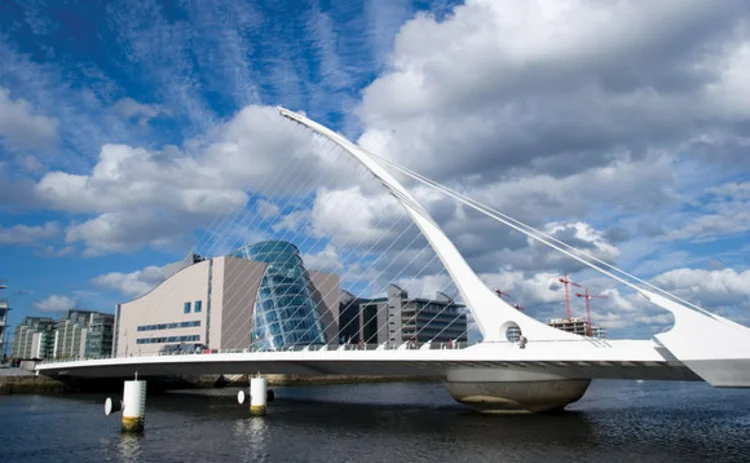
Ireland also did well out of its boom time in terms of infrastructure and now has a fantastic motorway network, alongside Dublin's two reliable LUAS tram systems and grand plans for a metro being proposed. Mr Duncan adds: "This isn't the first difficult cycle we have faced. It has a different profile but over the next 12 months we'll have a better idea of how Ireland will pull itself through this crisis and will start to see more positive signs. We will begin to see a road map that we can believe will give us an idea of what the economy will look like in the future."
"It is not optimism," adds Mr Endersen, "but realism that the market is displaying, as we have had to adjust our views. Ireland has gone through the likes of little or nothing before and that's fine but the debt is a big problem and will be for a long time to come. We have got to be realistic and private debt is yet to be resolved — this may take 10 years but we will get through it. It is the same as the Lloyd's Names in the past; it will sort itself out."
Mr Kemp agrees: "I don't believe what we have experienced here is as bad as the international media would lead the world to believe. There was a big fall in the economic turnover and wage levels but it wasn't devastating — although we are not out of the woods yet. We hope, and expect, this year to be better than the last but we have a long way to go to get back to the overall size of the market we had before."
While Mr Nally says: "We would like to think we can face any change and be flexible enough to adapt. We are very positive against a difficult background." And Allianz's Mr Murphy concludes: "The next 12 months will be challenging but our attitude here is to look forward and deal with what we see and the consequences. We haven't developed the ostrich approach so far."
At the time of writing, the Irish debt was ‚Ǩ97 115 680 567 and the outcome of Quinn was still be to confirmed. Uncertainty holds the country and the insurance market in its grip but one thing is certain — Ireland might be down but it certainly isn't out.
A presence in dublin?
Dublin used to have an insurance district much like London but, as property prices have increased, insurers have moved out of the main city and some even have smaller offices. So, will there be a time when no presence is needed in Ireland at all for the big insurance brands?
Richard Endersen, chief executive officer at Aon, says: "In time you may not need to have the same presence in Dublin as companies all become global players; it will be a question of what is required. However, decision-making will always be needed."
John Bissett, director at Glennon, says: "Look at Cork 20 years ago — there were full branches and now they just have sales people. It is entirely possible Dublin could end up like this in 10 or 20 years. As the European Union expands and the euro is used, the need for a certain number of people will be less. If firms can service from Mumbai, then they can do it from anywhere. As communication gets better it is not necessary."
However, Tony Gill, deputy managing director at First Ireland, believes such change is a long way off: "I think they [insurers] will always have some form of office in Dublin. Front-line executives will stay in Dublin, as a lot of business is done through meeting people. You could transfer back-office functions, although still in Ireland, but access to decision makers is important and, even in Cork, a lot of companies have beefed-up branches there so they can make decisions. Dublin is where it is at."
The irish market on fraud
For some years advertising campaigns have been running across Ireland to highlight the impact of fraud to the consumer and, according to the market, it has had a positive effect, even in the economic downturn. However, some fraud still exists.
Brendan Murphy, group chief executive officer of Allianz Ireland, explains: "One fraud campaign showed fraudsters' hands in the customers' pocket and was effective. The message was clear: the cost of fraud is higher premiums. Opportunistic fraud has increased to some extent but is more easily dealt with in some ways. It is also easier to stop things like crash-for-cash in Ireland, as it is a small population."
Tony Gill, deputy managing director at First Ireland, supports this adding: "The insurers have run big anti-fraud initiatives and there is a claims fraud hotline. Businesses are sickened by this — a fight in the pub sees a landlord paying for it. The general public has less sympathy than before, so the campaigns have been a success."
And Eamonn Egan, Lloyd's country manager for Ireland, adds: "We haven't seen the onslaught of fraudulent claims you would expect in these economic times as the culture has changed. It is too easy to get found out."
Irish insurance in figures
The Irish Insurance Federations's 22 domestic general insurance members write in excess of 95% of Irish non-life insurance business in the established market.
IIF member insurance companies domestic premium income in 2007 was 7.4% of Ireland's gross domestic product.
Combined, IIF members wrote gross premiums of €3.12bn in 2009 (€3.33bn, 2008).
From 2008 to 2009 premium income decreased across almost all classes of business: employer's liability -18.3%; commercial motor -12.7%; and commercial property insurance —11.6%
Motor insurance remains the largest class of GI insurance at almost €1.33bn (43% of all non-life business). Property is the second largest class of non-life business (30%).
Net written premiums were €2.73bn, a decrease of 6% on 2008. Net earned premiums were €2.8bn in 2009 (down 7.2% on 2008).
The number of new claims notified to IIF members rose by 3.1% in 2009 to 624 967. More than 50% of new claims were motor claims while 33% were made on property insurance policies (household and commercial property).
Only users who have a paid subscription or are part of a corporate subscription are able to print or copy content.
To access these options, along with all other subscription benefits, please contact info@postonline.co.uk or view our subscription options here: https://subscriptions.postonline.co.uk/subscribe
You are currently unable to print this content. Please contact info@postonline.co.uk to find out more.
You are currently unable to copy this content. Please contact info@postonline.co.uk to find out more.
Copyright Infopro Digital Limited. All rights reserved.
As outlined in our terms and conditions, https://www.infopro-digital.com/terms-and-conditions/subscriptions/ (point 2.4), printing is limited to a single copy.
If you would like to purchase additional rights please email info@postonline.co.uk
Copyright Infopro Digital Limited. All rights reserved.
You may share this content using our article tools. As outlined in our terms and conditions, https://www.infopro-digital.com/terms-and-conditions/subscriptions/ (clause 2.4), an Authorised User may only make one copy of the materials for their own personal use. You must also comply with the restrictions in clause 2.5.
If you would like to purchase additional rights please email info@postonline.co.uk