Big Interview: Andrew McMellin, Markel

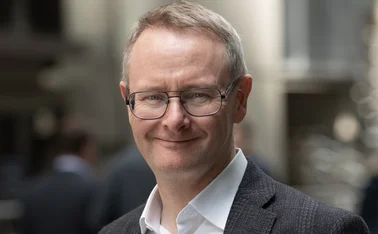
Andrew McMellin, president of Markel International

Andrew McMellin, president of Markel International, sits down with Harry Curtis to talk about the insurer’s plans to hit $5bn premium by 2030, rebalance its portfolio, and how it’s using AI to turn the distribution chain on its head.

Markel International, which encompasses the group’s wholesale insurance operations in the London market and Asia as well as local businesses in a host of countries including the UK, has grown impressively in recent years.

In 2019, the business wrote around $1bn in gross written premiums. Over the next five years, led first by William Stovin and then Simon Wilson, it grew its topline to around $2.5bn by the end of 2024.

In March this year, Wilson stepped up to become CEO of the Markel Group’s three underwriting businesses, collectively known as Markel Insurance.

His successor as president of the international business is Andrew McMellin, a London market veteran who has been Markel’s wholesale managing director, responsible for both its London market and Asia Pacific operations, since January 2022.

McMellin is now tasked with delivering the second half of what Markel hopes will be a decade of strong international growth, with a $5bn GWP target set for 2030.

We were one of the first markets back in 2016 to launch a product to serve the FinTech market and we’ve been enhancing that and improving that year on year, so it’s still market leading.

As he sets about the job, however, he will be retaining the wholesale MD position, albeit with other leaders within that business shouldering more responsibility.

“We’ve got a lot of changes from Market Insurance standpoint, and we’re making some structural changes in terms of how we set the business up,” he explains, sat in Markel’s offices on the 27th floor of London’s Walkie Talkie building.

“Our US business has had a period of results which haven’t been as good as they would like, so there’s a lot of reorganisation going on there.

“When I think about International, we’ve been producing some really good results. Everything is working well, and so we’re just trying to keep some consistency and make sure people are still focused on the opportunity we have rather than structural changes.”

Career background

McMellin found his way into the London insurance market via a graduate programme at Willis, having graduated with a geology degree in 1987 with oil prices low and opportunities in his expected field light on the ground.

One of the features that attracted McMellin to the market was face-to-face trading, and after an initial seven-year stint on the broker’s stool, he swapped it for a seat at a box at Lloyd’s, joining Drysdales – a forerunner of Amlin – in 1994 as class underwriter for general liability business.

In 1999, he joined Catlin, where he would spend more than half of his career to date.

Having distinguished himself a series of senior underwriting positions over the ensuing decade or so, he was made CEO of Catlin US in 2012, where he was charged with running a 500-person-strong business writing in excess of $1bn of premium.

In the summer of 2014, it was announced McMellin would return to London in the first half of 2015 to take the reins of Catlin’s UK-based $2.75bn GWP operation.

By the time he arrived back in the UK, Catlin’s acquisition by XL had been announced and he went on to lead the combined business’s UK and Ireland operations before departing for pastures new in 2017.

After a stint repositioning Pioneer Underwriters as group CEO between 2018 and 2021, McMellin joined Markel in January 2022.

“I’ve had quite a varied career,” he reflects.

“There’s been bit of broking, a bit of MGA, a bit of carrier. I’ve seen all elements of the market really, which gives you a good understanding of the strategies and the pressure points people have.

“One of the things about London in particular, because of the closeness of the ecosystem here, is you do get a lot of people who do move across from broking into carriers, into MGAs, much more so than perhaps in other markets around the world.”

Ambitions

One of the first things on the agenda as McMellin stepped into his new role was deepening the familiarity he had with Markel’s national markets businesses from sitting on the executive committee.

These span Markel’s non-London market business in the UK, Canada and Europe, where the insurer has operations in Germany, Spain, France, the Netherlands and Switzerland.

“Three days after my appointment, I was out in Europe talking to Frederik Wulff, who runs our European business. The following week, I was in Canada,” he recounts.

“In the UK, I was up at our Leeds operation earlier in the year and I’ll be back up there in September.”

If Markel International is to achieve all it wants to over the coming years, these national markets businesses will need to further accelerate their growth.

Laying out a vision to “put Markel on the map” over the next five years, McMellin first reflects on the strong foundations the business has built.

“We’ve done tremendously well over the last five or six years,” he says.

“We’ve taken a business that in 2019 was about a $1bn, and we’ve grown at around a 15% CAGR, and we did about $2.5bn last year.

“More importantly, we’ve taken the combined ratio from about 99% in 2019, to a sub-80% combined last year.

“So, we’ve grown the business very profitably, and both our top line CAGR and, more importantly, our combined ratio outperforms the high-performing peers we look at and compare ourselves against.”

However, despite the strides that have been made, Markel’s market shares remain, in McMellin’s words, “relatively small”.

“We have a 2% market share in London, which is good, and we’ve really been creating a market-leading proposition here,” he says.

“We’d like to get from 2% to 4%. If we can do that profitably, that’d be great.

“But when I look across the rest of our regional business, including Asia Pacific, so Canada, Europe, the UK and Asia, we’re at less than 1% market share.”

Those positions, he explains, mean Markel has plenty of headroom to grow into a $5bn GWP business by 2030, as it aims to bring more products to market and become a go-to specialty insurer for brokers and clients.

However, McMellin caveats he will prioritise the combined ratio over the top line.

“While we have ambitions to be that $5bn player, the key is profitability and if we don’t hit the $5bn because we’re managing the profits, that’s fine,” he says.

The reason why Markel’s national markets businesses will need to accelerate their growth is, in tandem with doubling the top line, McMellin wants to rebalance the international division’s portfolio.

“At the moment, we’re at roughly about 60% London, 40% non-London. Ideally, we’d like to get it to 50/50,” he says.

“London business tends to be more complex and comes with a bit more volatility. The wholesale market’s also a little bit more volatile.

“When we look at the non-London, more domestic business, it tends to be more straightforward, less complex and less volatile by its nature.

“Because you’re getting closer to the client and the broker – the retail broker that deals with the client – it’s stickier business as well.

“So, if we get a better balance across the portfolio, that means we’ll have more consistent profitability and performance.”

While he’s keen to offset some of the volatility inherent in London market business, he sees no shortage of opportunities for this business to keep growing.

For instance, Markel has recruited two underwriters that will join later this year to start a London market construction book.

“London’s not going to slow down and stop and wait for everyone to catch up,” he says.

“That means the non-London teams are thinking about how they accelerate their growth profitably to be able to hit that.”

Growing national markets

The plans that are being put together to deliver on these ambitions vary across the various territories where Markel has national markets business, as you would expect.

However, McMellin says they have broad themes in common, one of which is increasing the range of products Markel offers.

“Our non-London businesses have generally been quite narrow in their product shelf, and we’re expanding that,” he says.

One way it will do that is by having London market underwriters share expertise to win business that wouldn’t otherwise wend its way to the Square Mile.

An example of this already being put into action is the insurer’s plans to address the renewables market in Europe.

“We have a strong renewables team in London, but we recognise there’s a renewables market in Europe that stays in Europe,” McMellin says.

“We’ve hired some really good technical underwriters in Europe, and they’re working with our London colleagues to bring that product out into the European marketplace.”

The business will also look to harness expertise it has in the US, with McMellin picking out its life sciences and environmental practices as parts of the group it can draw on to seed international launches.

Another strategy for delivering growth is currently being piloted in Germany, where the Markel Prime was launched in Q2, with a view to being rolled out elsewhere including the UK down the line.

The initiative sees Markel use artificial intelligence to scrape publicly available data for the type of businesses it wants to be underwriting, in order to proactively approach prospective clients and brokers.

The offering is focused on the professional indemnity market, in particular businesses that have a large online presence.

“It enables us to create a quote and then go to the client and the broker and say, ‘you haven’t traded us in the past, but we can offer you this product, we like your business, and this is how much it will cost you for this sort of limit,’” McMellin explains.

“We’re starting to see some really early, very good results coming out of that,” he adds.

“It’s introduced us to new brokers, and it’s introducing us to new clients.”

UK regional business

In the UK, Markel’s regional business is headed by Lee Mooney, who succeeded Neil Galjaard – who had been managing director since 2016 – in June.

“Neil had been with us for a number of years, and he’d built a very good business, increasing the profitability about 200% and bringing through innovation and good solutions,” McMellin says.

“Lee, with his background from over 25 years at RSA, really is the right person to take us to the next stage and think about how we broaden the product relevance we have in the UK regional market and also work closely with our London colleagues to enhance that.”

During the interview with Post, McMellin cites again and again five pillars that underpin Markel’s strategy moving forward.

One that will shape how Mooney goes about delivering growth in the UK business is local empowerment. McMellin is clear he wants to give leaders of different businesses the authority to interpret the broader strategy for the markets they’re in.

“They should be able to bring their own flavour to that, because they understand their markets better than us,” he says. “Local knowledge and local expertise beats centralised genius.”

In common with the broader theme across the national markets business, Markel in the UK is set to deepen product shelf, with McMellin referencing enhancements to its tech PI product and expanding cyber coverage as current initiatives.

As for where the insurer might go next, he says: “Marine cargo could be a good opportunity for us in the UK.

“Professional and financial lines businesses – we do some of that already in the UK, but it’s about broadening out our appetite.

“We’ve also got to think about how we expand our distribution network. We’ve got some strong relationships with our broker network, but we have some gaps in that.”

Expansion and acquisitions

In September 2023, Markel launched an operation in Australia, opening three offices and appointing a country leader. McMellin says expansion into further markets may be on the cards.

“We’ll look at new geographies. We’re well established in a number of territories, but there’ll always be opportunities there we’ll continue to look at, as we’ve done in in Australia.”

On the topic of possible acquisitions, he says it plans to hit $5bn GWP through organic growth but remains open to opportunities to buy.

Earlier this year, Markel acquired Meco, a marine MGA that wrote $63m GWP in 2024 and has offices in London, Dubai and Shanghai.

“It intertwines quite nicely with our own marine book, because we are strong in hull and cargo, and we do war business, but the particular areas they’re focused on, we don’t actually have that much presence,” McMellin says.

“By bringing the two together, they’re very complementary and we see an opportunity for our marine and cargo books to say to clients ‘we could just do your hull business before, but now we can do your trade disruption business to alongside it’.”

As for future acquisitions, he says: “We’re very used to it as a company. You can’t really plan for it though, so our plans should really be organic plans, but we’ll always keep an eye out and we’re very open to those inorganic opportunities.”

He reports seeing opportunities for acquisitions specifically in the UK market “on a constant basis”. However, finding one with the right cultural fit is tricky.

“Probably eight or nine times out of 10, you’ll see these businesses come across and there won’t be a fit,” he says.

“The industry generally has had a poor record of M&A, because it forgets it’s still a people business.

“If you get that wrong, and there isn’t a cultural fit, then you could end up paying a lot of money for something and not actually getting anything out of it at the end of the day.”

McMellin highlighted MGAs as possible targets, and – commenting on the UK market in general – predicted insurers struggling for organic growth in the next few years might give rise to further transactions.

“For us, it’s probably more a case of finding transactions that bolt onto what we have, as opposed to a big transformational transaction,” he adds.

Productivity

Another pillar of Markel’s strategy is to cultivate a people-led business.

“We want to attract and retain the top talent in the industry, and have people come to Markel who want to create their career and create their business here and stay with us,” McMellin says.

He envisions the number of employees in Markel International’s business rising from around 1500 today to around 2000 by 2030.

“We don’t think we need to double the workforce to double the amount of profit that we bring into the business, and that’s because of the sort of investments we’ve made on the operational side, which will improve productivity,” he says.

“We believe that we can grow the top line and not have to grow the expense line in the same fashion.”

When it comes to improving productivity, that’s where another of the five pillars, ‘driving operational excellence’, comes into play.

But shortly, this means investing in the technology supporting Markel’s underwriting, data and claims management functions.

“That’s really about unlocking the time that we have within the workforce,” McMellin says.

One example of an investment is this is Markel’s international portfolio analytics team, which has brought together capabilities that previously sat apart in the wholesale and national markets sides of the business.

“The wholesale side have spent quite a lot of time and effort creating their portfolio management team, whereas the national markets side has spent quite a lot of time looking at AI.

“We saw that actually bringing them together means the wholesale business can leverage off the AI capabilities and the national markets business can leverage off the portfolio management capabilities.

“That helps drive the whole business forward, and it’s a more efficient way of doing it.”

Alongside this, McMellin says the business has built dashboards for underwriters and claims staff so they can see how their portfolios are performing in real time.

Standing out from the crowd

Asked what the softening rates that much of the market are reporting mean for Markel’s ambitious growth plans, McMellin says that Markel too has seen rates in some lines come under pressure in recent years but adds that he sees no reason for growth opportunities to abate.

“What insurance brings to clients is certainty,” he says.

“There’s still a huge amount of uncertainty geopolitically and certainly economically around the world, whether it be what the impact of various tariff structures are, or the impact of the conflicts going on around the world.

“As we think about where the market is, we need to make sure that we recognise there’s still a huge amount of uncertainty in there, and so we don’t want to be underselling our products, which bring certainty to clients.

“Yes, there is some pressure in some lines on rates. We focus on what’s the rate adequacy, and whether we’re still comfortable with the rate adequacy.”

Markel is not the only insurer planning to chart an impressive trajectory out to 2030, however.

Asked how the insurer will stand out from and beat the competition, McMellin emphasises ease of trading with Markel for brokers, saying it needs to be quick and innovate new ways of meeting their needs.

One example of this he gives are the fast follow facilities in the London market which Markel has set up with Marsh for marine and energy business, as well as the nascent Markel Prime initiative.

“What we have to bring out to market are products that are differentiating, innovative, and serve clients well,” he continues.

“We were one of the first markets back in 2016 to launch a product to serve the FinTech market and we’ve been enhancing that and improving that year on year, so it’s still market leading.

“That helps people see that as an innovative product and one that really serves the market.

“I think about our care product for nursing homes, which again is market leading and combines the property, the casualty, but also, importantly, brings in risk management services, so the client really sees how they can improve their own business.

“That reduces the number of losses, which means that their premiums reduce. They get some real value out of that.

“It’s a very innovative way of looking at the business and that’s how you differentiate yourself out in the marketplace.”

Only users who have a paid subscription or are part of a corporate subscription are able to print or copy content.

To access these options, along with all other subscription benefits, please contact info@postonline.co.uk or view our subscription options here: https://subscriptions.postonline.co.uk/subscribe

You are currently unable to copy this content. Please contact info@postonline.co.uk to find out more.

Will young talent vanish from the London market?

The dwindling early career population of the London market has been highlighted as cause for ‘genuine alarm’, so Insurance Post has examined the contributing factors and why it’s important for firms to do something now.

Most read articles loading...

You need to sign in to use this feature. If you don’t have an Insurance Post account, please register for a trial.

Sign in
You are currently on corporate access.

To use this feature you will need an individual account. If you have one already please sign in.

Sign in.

Alternatively you can request an individual account here