

Why shipbuilding insurance is making waves in marine risk


Shipbuilding insurance, once a niche part of marine cover, is now expanding rapidly. Fiona Nicolson unpicks the complex projects, new technologies, and sustainability trends that are reshaping global ship construction and the risks insurers must navigate.
Insurance in the 21st century continues to evolve but as new lines emerge and some are withdrawn, others remain a constant presence.
Marine insurance is one of the oldest forms of insurance, originating many centuries ago, to cover seafaring ships and their cargo.
Given that these are fundamental to the underwriting process, it is essential that they are not seen as an administrative inconvenience, but as a process to be engaged with fully and recognised as being of real importance.
Simon Jackson, partner and head of the marine, energy and shipping teams at DAC Beachcroft
Shipbuilding insurance, covering the construction phase of a vessel’s life, is also well-established, having come to prominence during the Industrial Revolution.
Today, shipbuilding insurance is a burgeoning sector. The Marine Builders Risk Insurance Market research report 2033 reveals that the global marine builders risk-insurance market size reached $1.98bn (£1.5bn) in 2024 and it has further to go.
The study anticipates a compound annual growth rate of 7.1 per cent, to an estimated $3.71bn (£2.82bn) by 2033.
The buoyancy of the market is attributed to expansion of global shipbuilding activity, growing complexity of construction projects, changing regulatory frameworks and the integration of advanced technologies in marine underwriting.
Characteristics and differences
Shipbuilding insurance has distinguishing features that set it apart from standard marine and construction coverages.
Richard Hayman, technical director, marine at Sedgwick, says: “Shipbuilding projects have a unique risk profile and timeline. The insurance must be customised to the specific demands of each project, covering all stages, from the drawing board to delivery.
“These projects often span several years, involve capital in the hundreds of millions and require long-tail policies and flexible coverage structures.”
Commenting on the extended timescales and their impact, Paul M Newton, class underwriter, marine, hull and war at Antares, says: “Standard marine policies typically cover vessels for a fixed term – generally 12 months – while hull builders’ insurance applies throughout the entire construction period.
“This means the duration of underwriters’ exposure to claims is uncertain and may be extended by build delays or delayed sea trials.”
There are other key characteristics of shipbuilding insurance, explains Hayman: “Components may be sourced from multiple countries, and shipyards often rely on a global workforce. This introduces regulatory complexity and logistical uncertainty beyond the scope of standard policies.
“The insurance must address not only the physical risks but also contractual obligations, delay penalties and potential disputes.”
Justus Heinrich, global product leader of marine hull at Allianz Commercial, adds: “Shipbuilding insurance features distinctive warranty structures closely tied to classification society approvals and certifications, reflecting the industry’s rigorous standards and regulatory requirements.”
On board
Underwriters and brokers need extensive, specialist knowledge, to effectively manage the risks, along with input from other professionals.
“They must understand classification requirements, material and propulsion system choices, and assess the yard’s performance on comparable builds, says Francesco Dubbioso, European head of underwriting for marine and branch manager of Italy at Alta Signa.
“Engaging specialist surveyors strengthens the technical analysis, adding depth that even the most experienced marine underwriter cannot achieve alone.”
Heinrich also highlights the breadth of knowledge required: “A fundamental understanding of naval architecture and marine engineering is essential.
“Underwriters and brokers must stay up to date on emerging propulsion technologies and alternative fuels as the industry evolves towards greener solutions. Comprehensive knowledge of the regulatory framework is critical for compliance assessment.
“They also need to be familiar with international maritime law and conventions, to navigate the legal landscape governing shipbuilding contracts. Additionally, they must be able to assess risks associated with new materials and construction techniques as industry innovation continues.”
Dubbioso believes that requirements also extend beyond subject-matter expertise, as he emphasises: “Technical literacy is valuable, but sound judgement is even more critical.”
Sustainability trends
Industry experts believe that sustainability trends are reshaping shipbuilding insurance, as well as the industry itself.
Hayman says: “The maritime industry is undergoing significant transformation, driven by the push for greener ships and cleaner fuels. This shift is reshaping risks and insurance products.
“Regulatory pressure is accelerating change. The International Maritime Organisation’s decarbonisation goals and regional emissions mandates are forcing shipbuilders and owners to innovate rapidly. Insurers need to respond with products that are flexible and capable of evolving with new technologies.”
Chief executive and founder of Paratus, Gus Majed, also observes the shift toward greener shipping is fundamentally reshaping marine insurance.
“Traditional hull and machinery policies are being adapted to reflect the risks associated with prototype technologies, supply-chain uncertainty and testing and certification exposures” says Majed.
“Hybrid propulsion systems and new construction materials create performance and reliability unknowns, prompting underwriters to incorporate research and development coverage extensions and broader warranty provisions into builder’s risk policies.
“Sustainability-linked metrics are also beginning to influence pricing – some insurers are exploring ESG-adjusted premiums or incentive structures to encourage lower-emission projects.
“Liability coverage is expanding too, with protection now often extending beyond physical loss to include environmental impairment and regulatory compliance exposures related to alternative fuel systems.”
However, others are less convinced that the greening of the shipbuilding industry is changing insurance policies.
Alex Kemp, partner at law firm HFW, comments: “I don’t think that sustainability trends are reshaping shipbuilding-insurance products. An insurer is primarily interested in the total value of the vessel being built, as that will set the level of cover.”
Danny Bell, underwriter of marine hull, hull construction and war at MS Amlin, also feels there has been very little change to the offering for shipbuilding risks as a result of alternative fuels or greener ship design.
“The companies that are pioneering the sustainability drive are well established and funded companies, and a great deal of research and investment has been spent mitigating the risks involved in developing new technologies,” says Bell.
Insurers’ risk appetite
Considering interest among insurers, Tom Pocklington, specialty lines underwriting lead for hull at Intact Insurance, observes: “Market appetite for shipbuilding risks is healthy, but there are challenges that require careful management.
“Large yachts remain under scrutiny after a series of high-value fire losses, which has led to more selective underwriting and closer attention to onboard fire-prevention systems.”
Majed also points to challenges and how they are being addressed: “Insurer appetite remains cautious around alternative fuel supply-chain risks, such as bunkering infrastructure, contamination and explosion hazards, due to limited historical data,” he observes.
“A shortage of technical expertise in assessing decarbonised vessel technologies often leads to conservative pricing and narrowly worded policy terms.
“These gaps are being addressed through specialist underwriting facilities and consortia that pool expertise across marine, energy and engineering markets.”
Lessons to be learned
As an industry characterised by complex contracts, high-value assets and long construction timelines, what is clear is shipbuilding has the potential to be fertile ground for insurance claims and disputes.
Reflecting on lessons learned, Pocklington says: “Fire remains the leading cause of major loss, often sparked in unexpected ways.
“Recent incidents have shown the need for tighter control over battery-powered tools, particularly lithium-ion devices, which can ignite even when not in use. Many yards now remove these tools from vessels after each shift and store them safely, rather than leaving them plugged in overnight.
“Risk doesn’t disappear when work stops. Several significant losses have occurred overnight, underlining the importance of 24-hour fire patrols rather than reliance on remote monitoring. Quick detection and response are critical in limiting damage.
“The industry has learned that behaviour matters. For example, earlier blanket smoking bans often pushed the activity into unsafe areas, while designated, well-equipped smoking zones proved far more effective.”
Incidents have underlined the risk and huge cost of shipyard fire.
The major fire at Project Sassi at the Lürssen shipyard in Bremen, in 2018, drew attention to risk-management considerations for insurers, says Newton.
“Although the yacht involved had a value of around $500m (£381m), other vessels in the facility were also potentially at risk and of a similar value, underscoring the importance for underwriters to regularly assess their maximum possible exposures at a single location.”
Deborah Shillabeer, class underwriter for marine hull and war at Brit Insurance, highlights the importance of contract clarity, to avoid disagreements: “Ambiguous shipbuilding contracts often give rise to disputes, especially around lead times and performance guarantees. Underwriting should always ensure clarity on terms and conditions.”
Policyholders also need to keep paperwork shipshape. Pocklington says: “When large fires do occur, extreme heat can make identifying the exact cause difficult, reinforcing the value of meticulous record-keeping and surveillance to support faster claims resolution.”
Simon Jackson, partner and head of the marine, energy and shipping teams at DAC Beachcroft, observes policies often include requirements for satisfactory surveys of shipyards to be carried out, as a condition of binding the risk, with recommendations made at those surveys being complied with within timescales set by the surveyors.
“Given that these are fundamental to the underwriting process, it is essential that they are not seen as an administrative inconvenience, but as a process to be engaged with fully and recognised as being of real importance,” says Jackson. “Failure to do so can lead to avoidable issues in relation to coverage for subsequent incidents.”
Summing up today’s shipbuilding-insurance environment and how to navigate the challenges, Hayman concludes: “Overall, shipbuilding insurance is evolving in response to technological innovation, sustainability pressures and global complexity.
“Success demands not just capacity, but also deep insight and the ability to rethink traditional models.”
Only users who have a paid subscription or are part of a corporate subscription are able to print or copy content.
To access these options, along with all other subscription benefits, please contact info@postonline.co.uk or view our subscription options here: https://subscriptions.postonline.co.uk/subscribe
You are currently unable to print this content. Please contact info@postonline.co.uk to find out more.
You are currently unable to copy this content. Please contact info@postonline.co.uk to find out more.
Copyright Infopro Digital Limited. All rights reserved.
As outlined in our terms and conditions, https://www.infopro-digital.com/terms-and-conditions/subscriptions/ (point 2.4), printing is limited to a single copy.
If you would like to purchase additional rights please email info@postonline.co.uk
Copyright Infopro Digital Limited. All rights reserved.
You may share this content using our article tools. As outlined in our terms and conditions, https://www.infopro-digital.com/terms-and-conditions/subscriptions/ (clause 2.4), an Authorised User may only make one copy of the materials for their own personal use. You must also comply with the restrictions in clause 2.5.
If you would like to purchase additional rights please email info@postonline.co.uk
More on Commercial

Insurance Post Census exposes employment progress and problems
While insurance may have more women reaching CEO and C-suite roles than ever before, Insurance Post’s 2026 Census exposes how progress is not being experienced evenly across the workforce.

Diary of an Insurer: Allianz’s Faith Kitchen
Faith Kitchen, head of client relationship management at Allianz, focuses on growing accounts, mentors an A Level student, and finishes the week watching her son's cricket practice.

Allianz deal to bring Coalition to 15 markets by mid-2027
Coalition CEO Joshua Motta has told Insurance Post the firm’s partnership with Allianz will take it into 15 countries by the end of June 2027.
Allianz’s Lalwani on need for collaboration around AI governance
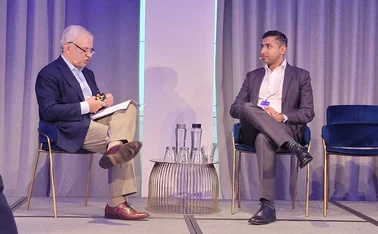
The insurance industry must work together to implement customer-centric artificial intelligence governance, according to Allianz UK’s chief data officer Akhil Lalwani.
Are insurers ready for autonomous vehicle crashes?
William Balfry, member of the motor sector focus team at the Forum of Insurance Lawyers and senior associate at DWF, examines the increasing rollout of automated passenger services and insurers will soon have to handle claims resulting from collisions.

KPMG’s Evans reveals US investors set to snap up UK insurers
US investors are lining up to buy mid and top-tier UK MGAs and brokers in the year ahead, according to Huw Evans, partner and head of insurance at KPMG UK.

Top 30 European insurers of 2026 revealed
Europe’s Top 30 non-life insurers achieved another year of solid top line growth in 2025, although exchange rate changes affected revenue negatively when converted to euros.

Time:To – Axa’s Crane on how to meet regulatory requirements
How artificial intelligence can be used to satisfy the Financial Conduct Authority is outlined by Mike Crane, managing director of Axa Commercial, in the latest Insurance Post Time:To video.