Spotlight on Economy and Society: Insurance to the rescue

From the development of new technology to innovations in micro insurance, the insurance industry can play a major part in stimulating global economic growth.
The world is facing some of its most significant economic challenges since the Great Depression.
Growth rates are flat or negative across developed countries, and what some had predicted to be a two- or three-year aberration as a result of the credit crunch now appears to be a sustained problem, threatening to reduce the long-term capacity of many of the world's wealthiest economies.
To put this into perspective, the International Monetary Fund predicted in 2009 that the growth rate of "advanced economies" would be 2.6% by 2014.
This has been continually revised down, and growth rates are not now expected to return to this level until 2017 at the earliest.
In fact, even this projection may be optimistic; there are a number of dark clouds lurking ominously on the horizon.
The future of the Eurozone, for example, remains far from certain. While recent European Central Bank action and the creation of the European Stability Mechanism have provided more time to find a solution to the crisis, increased lending to debt-ridden countries will not, in itself, resolve what is ultimately a growth problem for these member states.
In the US, if Barack Obama is re-elected president there is likely to be more political paralysis in domestic policymaking, given the Republican-dominated Congress, particularly over any action that might lead to an increase in US debt. Stand by for more sudden crises on both of these fronts.
So, in the medium term, a stagnant economic environment, punctuated by crises and uncertainty, is likely.
Such an environment poses particular problems for insurers, as it is not very conducive to growing premium or investment income and, as seen over the past few years, claims costs are likely to rise when people experience economic hardship.
Recovery through insurance
However, insurers should not be entirely disheartened by this macroeconomic picture, as they have a central role to play in fostering a recovery.
As well as accounting for a significant proportion of economic activity and employment in its own right, the insurance sector stimulates economic growth outside financial services in a variety of ways.
The sector plays a key role in facilitating trade and commerce by mobilising domestic savings, allowing different risks to be managed more efficiently, encouraging the accumulation of new capital and helping to reduce or mitigate losses.
There is empirical evidence to support this claim. A study by the World Bank found that, from 1976 to 2004, life and non-life insurance had a positive and significant effect on economic growth.
Life insurance had a particularly positive effect in high-income countries, while non-life had a similar effect in all countries.
Importantly, current innovations taking place across the sector have the potential to consolidate these already evident benefits in the years ahead.
The future success of the UK arguably hinges on its ability to become a world-leading developer and accomplished user of high-end technology and manufacturing.
The insurance industry can help unlock this door to future prosperity by providing cover for, and advice about, the risks associated with the development of new technologies and manufacturing processes.
However, as universities and science minister David Willetts argued in a recent report published by the Chartered Insurance Institute, insurers must first develop closer ties with universities and research centres to gain a more complete and robust understanding of the complex risks they underwrite.
Insurers have already begun this process, the Willis Research Network being a prime example, but more can be done to ensure that insurers are at the forefront of a UK-based technological revolution.
The importance of innovation Innovations in general insurance can also help unlock the productive capacity of the world's poorest countries.
It has been argued that micro insurance, with its relatively small transaction costs and low premiums, can help alleviate poverty in areas where there is little conventional cover.
Qualitative evidence from New York University implies that, when combined with micro saving - small deposit accounts for those on low incomes - the social value of micro-insurance "could be a major step towards improving the wellbeing of the world's poor".
So far, take-up of micro insurance remains low across much of the developing world. But this should not deter the industry from trying to transform an innovative concept into a financial service that provides tangible benefits to potentially billions of people worldwide.
Social insurance has historically played a key role in providing security and protection to those at the margins of society. This has included the provision of simple welfare benefits such as a basic state pension, or protection in case of disability or unemployment.
While this has often been the role of the state, the private sector can help alleviate some of the burdens that currently fall on the taxpayer.
With the sustainability of public finances under ever closer scrutiny following the global financial crisis, and age-related spending set to continue to rise, governments are trying to encourage a shift of these provisions from the public to the individual's purse.
In the UK, for example, instead of focusing on ways to increase state provision for those in retirement, the government is seeking ways to stimulate demand and appetite for private pension saving.
The government's flagship policy, with automatic enrolment, is aimed at ‘nudging' millions of people into long-term saving for the first time through a default workplace pension scheme known as the National Employment Savings Trust.
Regardless of political allegiance, this seems to be a trend that is set to continue.
Otto Thorensen, director general at the Association of British Insurers, believes the future welfare state must build on the ‘nudge' school of behavioural economics.
"If the state's welfare and tax systems reward and encourage those who protect themselves more, then society benefits and the individual is channelled in the right direction," he wrote in The next ten years, published in March by think-tank Reform.
"This could be via matched benefits, tax reliefs, greater conditionality in benefit payments or any other number of mechanisms."
The result, he argued, could be a simpler and smaller state with a "clear interest in promoting certain outcomes and behaviours".
Crucially, however, shifting the care currently provided by the welfare state to the private sector will not just be down to government incentives. The public must, in turn, be convinced of the need to buy protection and save for the future.
Capturing these consumers will depend, firstly, on increasing the level of trust they have in the industry to fulfil its contractual obligations when claims are made and, secondly, on raising the level of general knowledge about how the industry can mitigate everyday risks.
In response to the first point, competence, transparency and a demonstrable commitment to ethical practice will be critical to success. CII research clearly shows that firms with higher professional standards experience greater levels of trust and confidence.
For example, in a recent survey of 2000 UK adults, 61% of respondents agreed that professional status does make a difference to the extent that they trust a practitioner.
Innovation in communication and distribution will be important in addressing the second point. Research from Deloitte indicates that buyers across all age segments, particularly the young, are very interested in having multiple points of interaction with their insurer.
In this respect, too, the industry is making progress. For example, on the general insurance side, German firm Friendsurance is attracting attention for its use of social networking to encourage people to take up cover and create an insurance network among friends.
Continuing innovations in insurance are critical to unlocking the productive capacity of the global economy.
The road ahead is likely to be difficult but, with real commitment from the insurance industry, working with policymakers and academia in the interests of the public, it will be possible to overturn many of today's economic challenges and build a sustainable path.
Being part of a profession will be important in this regard. In tomorrow's world which, like today's, will be rife with uncertainties and complex risks, a demonstrable commitment to high levels of competence and ethical practice will be vital.
Vital not just for providing appropriate advice and adequately underwriting risks but, and perhaps most importantly, for maintaining the trust and confidence of the consumers and societies it will serve.
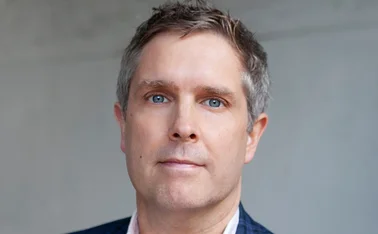
[image2]Ben Franklin
Policy and research manager, Chartered Insurance Institute
Only users who have a paid subscription or are part of a corporate subscription are able to print or copy content.
To access these options, along with all other subscription benefits, please contact info@postonline.co.uk or view our subscription options here: https://subscriptions.postonline.co.uk/subscribe
You are currently unable to print this content. Please contact info@postonline.co.uk to find out more.
You are currently unable to copy this content. Please contact info@postonline.co.uk to find out more.
Copyright Infopro Digital Limited. All rights reserved.
As outlined in our terms and conditions, https://www.infopro-digital.com/terms-and-conditions/subscriptions/ (point 2.4), printing is limited to a single copy.
If you would like to purchase additional rights please email info@postonline.co.uk
Copyright Infopro Digital Limited. All rights reserved.
You may share this content using our article tools. As outlined in our terms and conditions, https://www.infopro-digital.com/terms-and-conditions/subscriptions/ (clause 2.4), an Authorised User may only make one copy of the materials for their own personal use. You must also comply with the restrictions in clause 2.5.
If you would like to purchase additional rights please email info@postonline.co.uk