Flood cover: Sink or swim?
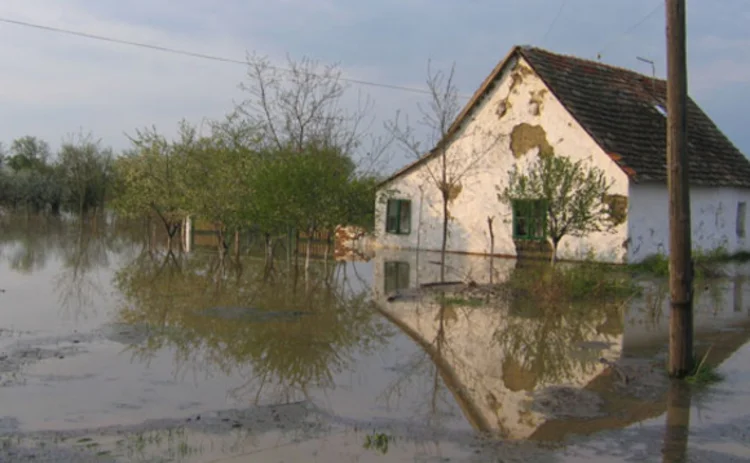
Flooded farm house

The expiry of the Statement of Principles is a year away, and the industry is looking for a replacement to cover the impact of flooding. Two ideas have been floated, but which will sink and which will swim?

Precious little time remains before the 12 year-old ‘sticking plaster' known as the Statement of Principles expires, a fact that has not escaped insurers or politicians as the race to identify a long-term solution to flood risk intensifies.

The changing of the guard will affect industry bosses as well as homeowners, and the spotlight has begun to sharpen on the most effective way to provide affordable and accessible insurance cover for the 200 000 homes in England and Wales classified as situated in ‘high risk' areas.

A combination of global climate change and a deepening economic crisis has led to a list of grim financial predictions concerning the future impact of flooding.

The latest Environment Agency figures reveal that the cost of a major coastal flooding event could reach £16bn by 2040 and that spending on national flood defences must be increased by £20m each year to at least £1.04bn annually by 2035.

These findings underline the increased sense of urgency for new and sustainable flood risk solutions and have resulted in proactive industry responses in the form of Marsh and Guy Carpenter's Project Noah and the Association of British Insurers' Flood Re proposal.

The concept of the private sector-backed Project Noah is to invite insurers to place the flood risk elements of their household books into a central pool, seeking £14bn of reinsurance capital.

Its pricing model would enable insurers, therefore, to transfer residential flood risks, less a small retention, into the international reinsurance market.

Meanwhile, the ABI has devised plans for an arrangement where policyholders in high flood risk areas would be liable for premiums up to a certain level, beyond which - a yet to be defined ‘affordable level' - the cost of premiums would be shouldered by a pooled fund to be paid for by an industry-wide levy.

Bullish remarks
Those behind the creation of Project Noah confidently launched their flood solution on a tidal wave of optimism and bullish remarks.

In April, Hutton Swinglehurst, head of flood risk at Marsh and Guy Carpenter, said: "We have tested Project Noah with some of the UK's largest insurers, as well as leading global reinsurers, who believe that this state-of-the-art model provides an innovative solution to an intractable problem."

However, despite the confident stance adopted by the Project Noah team, initial industry support for the proposed solution has wavered.

Indeed, accusations that insurer backing is thin on the ground began to circulate almost as soon as Project Noah was launched as a viable model.

Early criticism came from the ABI's assistant director of property, James Dalton, who reproached Marsh for side-tracking the debate over replacing the Statement of Principles.

Elsewhere in the industry, there is an atmosphere of uncertainty concerning whether Marsh's concept has gained the support needed to become a viable solution.

Guy Lawrence, underwriting director at LV, encapsulates the mood among his market peers, saying: "It's widely accepted that some form of risk transfer mechanism would benefit customers and insurers alike.

"While both options have their supporters, our perception is that the ABI proposal has broader support among insurers than Project Noah."

When quizzed on what may prevent the Marsh model being implemented, Lawrence adds: "The cost of risk transfer to reinsurers. Also, the rival ABI risk sharing proposals. Ultimately there may only be room for one solution in the market."

The consensus suggests that ‘widespread industry support' for Project Noah may perhaps be something of an exaggeration.

As if to emphasise the point, Guy Williams, risk expert at insurance and reinsurance software provider Agencyport, adds: "It has some support but not as much as Marsh is implying.

"Note that Marsh has a vested interest in Project Noah, also Marsh and Guy Carpenter are part of the same group."

According to Russell Higginbotham, Swiss Re UK chief executive, the ramifications of insurer indifference could make Project Noah unworkable.

He says: "Noah works on the basis of an insurance company agreeing to cede the flood risk coming from all its policy holders. If insurers are unwilling to do this, and Noah does not reach critical mass, it may not be viable."

So, how have Project Noah bosses at Marsh and Guy Carpenter responded to the negative and unsupportive feedback? The answer is embedded in compromise.

Appearing to soften his stance on the individual strength of Project Noah, Swinglehurst outlines his updated take on the prospects of his model as a viable alternative to the Statement of Principles, revealing that talks are ongoing with the ABI about developing a collaborative offering.

He explains: "The general consensus remains that a reinsurance facility is certainly part of an industry solution and there's an appetite from the reinsurance industry to keep participating in some way.

"What we're doing at the moment is trying to work with the industry through the ABI; we're not suggesting reinsurance is the entire solution, but we feel it is an important component.

"We're dealing with a problem that has multiple aspects and multiple stakeholders. The industry solution has to accommodate those and we don't think there is a one-size-fits-all answer.

"The conversations we're having with the ABI and its members revolve around how we come to an industry-wide solution. Maybe it could be a blend of ideas already put forward."

The British Insurance Brokers' Association, which advocates Project Noah, is equally upbeat in terms of making progress on a joint flood proposal alongside the ABI.

Graeme Trudgill, head of compliance at Biba, says: "We're looking at a hybrid; the ABI had its composition and Biba had Marsh's Project Noah. Now it is a question of what the government wants and what insurers are going to accept.

"Discussions took place at last month's Biba conference with the key players, and we are making some really good progress on developing a hybrid. It could provide the two key things we want: availability for properties across the UK and fair pricing."

An ABI spokesman confirmed that talks are ongoing with "other market players" in a bid to secure affordable and available flood cover for UK residents. However, it has refused to abandon its own Flood Re model and has vowed to push ahead with talks at government level.

So, what is the government's current position in the flood debate? An update from the Department for Environment, Food and Rural Affairs was expected by 20 June, but it appears as though a statement will be delayed as discussions continue to gather momentum.

A Defra spokeswoman told Post that the government continues to sympathise with the concerns of brokers on flood cover, stating: "We have not yet arrived at an agreement, but discussions with the insurance industry continue to be constructive and we are working together to reach a solution that is practical and affordable for households.

"We're mindful of those on lower incomes living with the risk of flooding. That's why we're considering ways to keep flood insurance affordable for those who might struggle most with premium increases.

"Our priority is to prevent flooding in the first place and our £2.17bn investment will protect more than 145 000 homes by 2015."

Tentative optimism
News of the Defra delay in issuing its latest flood proposal has come as little surprise to Trudgill, who maintains that extended timeframes are to be expected when dealing with such an historically complex issue. But he remains confident that recent governmental talks have proved fruitful.

He says: "The government can only do so much. At a recent ABI event Caroline Spelman [Secretary of State for Defra] said that ‘insurance brokers have come forward with some innovative proposals'. That's fantastic to hear because we know that we are making a sensible contribution which could be part of the solution.

"We're hopeful the government will make some sort of contribution, and believe its interest lies with those people in areas of depravation and low income homes in high risk flooding areas.

"There have been discussions and we've met with Richard Benyon the flooding minister and all the relevant officials at Defra and Treasury level. It's just a question now of the government crystallising everything we've talked about."

But what happens if the industry cannot find an adequate solution? The simple answer is a shift towards an open market.

Trudgill continues: "Ultimately, if we don't get a solution it's going to go open market. Biba has 130 members that specialise in flood insurance. That includes brokers like Bureau Insurance Services who go out and conduct a proper flood risk survey.

"The question is whether that's how the market is going or whether we get some form of reinsurance programme in place that will offer wider protection?"

Some form of pooled solution would presumably be the preferred option for those 200 000 homeowners - 546 000 according to Defra - at significant risk of flooding, as it is accepted that an open market would inevitably see premiums soar and could make cover difficult or impossible to obtain.

On rumours of alternative industry ideas, Lawrence responds: "Apart from the ABI's proposals, we're not aware of any, other than to revert to a free market. This would, in all likelihood, result in cover being much harder to come by if you live in a flood risk area."

Such is the determination to ensure that householders are not left high and dry, or low and wet as the case may be, talk has even started to turn to the possibility of renewing the increasingly soggy sticking plaster that is the Statement of Principles.

Defra minister Richard Benyon has already dismissed the concept of a renewal as a non-starter, a view that seemingly represents the mood among most, if not all, major insurers.

Higginbotham presents a half-hearted appeal to resurrect a new and improved Statement of Principles, although he admits that the practicality of any proposal may be doomed to failure.

When asked whether a renewal of the agreement could be a viable option, he answers: "Possibly, but to do so would need all insurers to be party to the agreement to prevent dislocations and to enable a level playing field.

"Such an arrangement would still likely leave the larger, established players at a disadvantage, so may in reality be difficult to achieve, but that is not to say we shouldn't try."

Elaborating on why the Statement of Principles should not be renewed and why major players are opposed to this, Zurich property claims director Jon Cawley provides some background, stating: "It was seen as very much a temporary solution so the market could continue, people could get insurance and reputations were secured for preserving the market.

"In 2002, it was agreed that we needed to find a more sustainable solution. All parties were in agreement that we had to move on from what was initially agreed.

One issue that soon became apparent was unfair competition, in the form of new entries to the market that are not party to the original agreement and were, therefore, at an advantage. Historic insurers were carrying those risks while start-ups were able to cherry pick."

Lack of commitment
Meanwhile, there has been much talk concerning the government's commitment, or lack of it, to bolstering UK flood defences. State funding of flood defences has dropped by a sizeable £95m since 2010/2011, which, given the current economic downturn, is hardly surprising and has not particularly riled many market commentators.

Lawrence argues that ministers may have other flood-related priorities when questioned on his view as to whether the government ought to bolster the nation's flood defences, stating: "In an ideal world, yes. However, in the real world, there is a limit to what can reasonably be done, particularly in the current economic climate.

"Where money is being spent on defences, it must be carefully prioritised for maximum benefit. Also, it's important that government focuses on other initiatives, for example tightening planning controls on flood plains."

All things considered, there clearly remains a long and winding road ahead, albeit one the industry must finish walking by 30 June 2013.

Only users who have a paid subscription or are part of a corporate subscription are able to print or copy content.

To access these options, along with all other subscription benefits, please contact info@postonline.co.uk or view our subscription options here: https://subscriptions.postonline.co.uk/subscribe

You are currently unable to copy this content. Please contact info@postonline.co.uk to find out more.

Q&A: Nikki Lidster, Zurich

Zurich UK’s head of SME Nikki Lidster talks to Insurance Post about the firm’s growth in 2025, its plans for 2026, and how it revamped its products this year.

Broker Review of the Year 2025

A softening market put downward pressure on brokers revenue in 2025 but businesses that embraced digital breakthroughs and delivered exceptional service have succeeded in holding on to their clients in a competitive market.

Most read articles loading...

You need to sign in to use this feature. If you don’t have an Insurance Post account, please register for a trial.

Sign in
You are currently on corporate access.

To use this feature you will need an individual account. If you have one already please sign in.

Sign in.

Alternatively you can request an individual account here