

Marsh’s Edel Ryan on whether a government backed scheme will be the X Factor for live events


With normality beginning to make a return and the government having rolled out ‘Freedom Day’ on 19 July Edel Ryan, head of strategic business development, UK and Ireland for sport, entertainment and media industry at Marsh, asks if we can expect the come-back of the much anticipated live events industry to fuel growth in the contingency insurance market?
The live events industry was among the first to be impacted by Covid-19 in March 2020 and is set to be one of the last to reopen its doors.
With Wembley filled with more than 60,000 football fans for both the semi-finals and final of the Euros, and with live music giants reporting the US fully open, it certainly feels like the end of the shutdown is in sight.
Early feedback from events that have taken place under the government’s Events Research Programme suggest that only a small proportion of event-goers have gone on to be infected with the virus.
This, together with the UK’s successful national vaccine distribution programme, means ticket sales have sky rocketed around the country and hundreds of events have sold out, despite ongoing uncertainty as to whether they will be able to go ahead.
Whether testing for the virus among mass audiences is able to solve the challenge is still being examined, organisers are facing rising financial pressures; never before has so much attention been given to event cancellation insurance.
The contingency market has been decimated over the last 16 months, with the double blow of record losses estimated in the region of $6bn to $8bn (£4.3bn - £5.8bn) and almost no new revenue due to numerous international lockdowns.
As a result, insurance rates have increased on average by 50%, and the inability to provide viable communicable disease cover to clients remains.
Government-backed
Throughout the pandemic, a number of government-backed insurance schemes have been introduced around the world, with the UK’s Film and TV Restart Scheme being a stand-out performer internationally.
With no insurance available and many productions on pause, the compensation fund has allowed cameras to keep rolling in what has been a pinnacle moment in enabling an industry to adapt and continue creating content for our screens.
The £500m Departure for Digital, Culture, Media and Sport scheme – which Marsh administers on behalf of the Treasury – is designed to plug the gap left by a lack of available insurance and covers coronavirus-related losses for cast member and crew illnesses, as well as filming delays and disruptions caused by Covid-19.
The Chancellor of the Exchequer, Rishi Sunak, has reported that the scheme has welcomed over 600 productions and is expected to create more than 45,000 jobs. When it was first announced in July 2020, the original plans were intended to accept applications until the end of December 2020. However, DCMS has repeatedly extended the deadline and the scheme remains live and open for applications, attracting productions to the UK otherwise intended to have been produced overseas.
The benefactors of this scheme are not exclusive to the production industry and the film and TV economy, but also include the insurance industry.
Meeting the criteria for a successful application into the scheme requires a production company to provide evidence of their production insurance arrangements. This data has been less widely reported, despite the broking and insurance industry experiencing a significant boost in revenues in this sector, which simply would not have been realised were it not for the fund’s existence.
Add the detail of no Covid risk transfer to the market and the commercially viable fee to access the fund for clients, there can be no doubt as to the success of the scheme all-round.
Nimble
The independent analytics from the modelling of industry-supported data have determined the sheer size of the £500m fund, and learnings from the scheme itself will play a pivotal role should the DCMS pursue further extensions beyond its current scope.
If any industry has also proven it can adapt and be nimble in challenging times it is the live entertainment industry; the same can also be said of the contingency insurance market.
The combination of the vaccine rollout, the success of the pilot events, pent up demand, and the anticipation of Freedom Day, were all swaying to benefit the live entertainment industry’s comeback.
Whether live music predictions for record years in 2022 and 2023 translate into a different type of record for the contingency industry remains to be seen.
Together, we have a great opportunity to do what we do best, and help our clients get the show back on the road.
Only users who have a paid subscription or are part of a corporate subscription are able to print or copy content.
To access these options, along with all other subscription benefits, please contact info@postonline.co.uk or view our subscription options here: https://subscriptions.postonline.co.uk/subscribe
You are currently unable to print this content. Please contact info@postonline.co.uk to find out more.
You are currently unable to copy this content. Please contact info@postonline.co.uk to find out more.
Copyright Infopro Digital Limited. All rights reserved.
As outlined in our terms and conditions, https://www.infopro-digital.com/terms-and-conditions/subscriptions/ (point 2.4), printing is limited to a single copy.
If you would like to purchase additional rights please email info@postonline.co.uk
Copyright Infopro Digital Limited. All rights reserved.
You may share this content using our article tools. As outlined in our terms and conditions, https://www.infopro-digital.com/terms-and-conditions/subscriptions/ (clause 2.4), an Authorised User may only make one copy of the materials for their own personal use. You must also comply with the restrictions in clause 2.5.
If you would like to purchase additional rights please email info@postonline.co.uk
More on Broker

Ardonagh merges global MGA businesses to create $3bn platform Orvia
Ardonagh Group is to merge all of its international managing general agent businesses under the Orvia Underwriting brand creating a platform that controls $3bn (£2.25bn) of gross written premium.

Diary of an Insurer: Surewise’s Stuart Bensusan
Stuart Bensusan, business development director at Surewise, on early starts, wearing every departmental hat going and the coronation chicken sandwich he hasn’t deviated from in 10 years.
Why the future of broking isn’t just about placing insurance
View from the top: Tom Danson, managing director of corporate and health & employee benefits at Brown & Brown, argues that brokers must move beyond insurance product silos and build their advice around how businesses actually experience risk.
Ghost broking is evolving and so is the IFB's response
Trade Voice: As ghost brokers scale increasingly sophisticated scams, Ursula Jallow, director of the Insurance Fraud Bureau, reveals how the insurance industry is aiming to stay ahead of the threat.

Howden's pet launch; Brown and Brown's grad programme; Flood Re's chair
Friday Round-Up: Insurance Post wraps up the major insurance deals, launches, investments and strategic moves of the week.
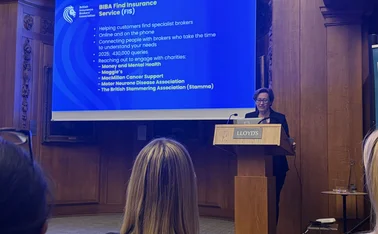
Biba chair calls on insurers to commit to signposting
Caroline Barr, chair of the British Insurance Brokers’ Association, has called on insurers to commit to signposting customers to specialist providers when the market fails to meet their needs.
Penny Black’s Social Diary: Hiscox and Howden's hole in one
Penny Black has been out and about again, notebook in one hand and canapé in the other, keeping a keen eye on the insurance industry’s more whimsical moments.
Jensten CEO Organ exits with Buesnel named successor
Rob Organ is to step down as CEO of Jensten Group, with Clive Buesnel appointed as his successor from 2 November 2026, subject to regulatory approval.