Bloodstock: Beating the odds
The going is tough for bloodstock insurers, with overcapacity, pressure on rates and a tendency towards self insurance. Jane Bernstein reports on the financial pressures involved in the industry.
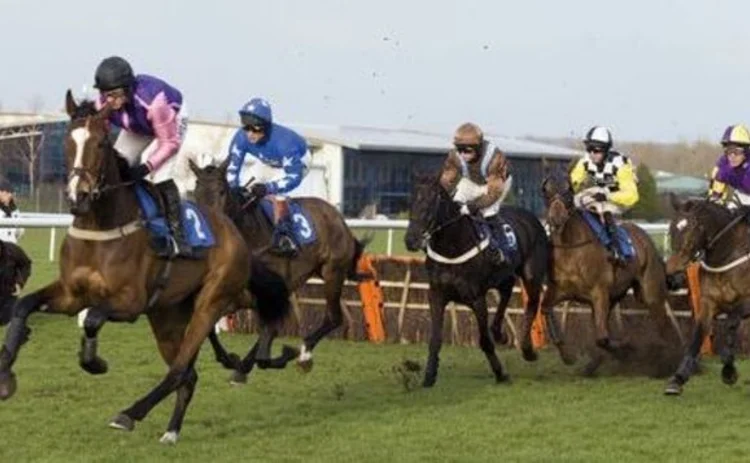
Royal Ascot season has arrived but this year it may not just be the rain threatening to dampen the enthusiasts' spirits. The horse racing industry is facing a number of hurdles — including falling prize money sums and a continued decline in thoroughbred prices. For bloodstock insurers, the going could become increasingly hard, with pressure on rates and an increasing tendency towards self insurance.
Problems for racehorse owners inevitably have an impact on the bloodstock insurance market — as financial pressures mean clients are likely to be more careful about their insurance spend. One of the major talking points in the horse racing community currently is the ever-declining prize money sums. Earlier this year, the president of the Racehorse Owners Association, Paul Dixon, warned that racing was "in a crisis" after a further collapse in levy income. Mr Dixon put forward the view: "We cannot ask people to buy and keep racehorses when they are getting only just over £1000, less than a month's training fees, if they win a race."
David Ashby, managing director of Amlin Plus — Amlin's bloodstock and equine service company, says prize money is currently much more valuable in France than it is in England. "There is a move among some racehorse owners, and indeed trainers, who are now investigating moving their horses to France to compete where the prize money is much higher on average than in England," he observes. So will that have an impact in terms of clients seeking insurance abroad? As far as Amlin is concerned, Mr Ashby responds: "There may be an impact. But we insure over there already so I wouldn't envisage it being a significant issue."
Falling values
Owners have also had to contend with falling values associated with horses. As Chris Williamson, managing director of Willis' bloodstock division, explains: "Bloodstock values are down significantly — partly due to the economic climate but also due to some industry factors such as overproduction. Prize money concerns will also have an impact."
There may, however, be some cause for optimism on the horizon and Phil Needham, bloodstock portfolio manager at QBE European Operations, observes: "Bloodstock values did drop significantly but the signs are that this has bottomed out and in Australia and New Zealand we are even seeing values increasing again in certain areas."
However, there is no doubt that these have been difficult times for the bloodstock industry and the race has not yet been won. One of the more worrying trends for insurers and brokers currently is a move towards self insurance. Philip Nelson is managing director of the bloodstock division at Lonmar. He comments: "Self insurance is a factor worldwide as are those clients who, for example, are cutting back their insurance costs by only insuring their top two or three horses, where previously they had insured all 10 or 12 owned."
Mr Ashby points out that, unlike motor insurance, it is not compulsory to insure your racehorse. He emphasises the importance of maintaining a good relationship with clients who opt to self insure. "If you continue to have a business relationship with them, they will generally come back to you after a period of self insurance," he observes.
Mr Needham believes self insurance is something the market will have to come to terms with. "Clients are looking to save money in all areas including insurance," he comments.
Certainly, the high cost coverages appear to be feeling the effect of this trend already. Mr Williamson points in particular to first season infertility coverage. "This has always been a relatively expensive coverage because it's a high risk area. What we are seeing is that people who would have insured that in the past, are sometimes now electing to self insure that risk," he observes. This is not true across the board, however, and Mr Williamson adds: "Where there is a particularly valuable stallion going to stud, the larger operations will tend to consistently insure those risks."
The question is, what can the industry do to attract and retain clients in this difficult climate and how important is innovation and creativity currently? Mr Ashby responds: "At Amlin, we think it's more important than ever and we have developed some new schemes over the past 12 months, which have been favourably received."
There is a view that as people look more critically at their premium spend, those who do not choose to self insure are more likely to shop around. Mr Williamson observes that it varies from client to client but believes it should still come down to quality of service. He adds: "It is about quality of security as well — and a willingness to pay claims. Clients who have had a favourable experience in the past — dealing with insurers that have promptly serviced claims — are likely to maintain their relationship. In many cases, there is a flight to quality in these situations. It is incumbent on the broker to realise that even in the current climate, it is not always about price."
Need for innovation
The need for innovation and the ability to differentiate among bloodstock brokers and insurers is particularly pronounced given the current over-capacity in the market. Few would disagree with the argument that there are currently too many underwriters chasing a smaller book of business. Guy Morrison, chief underwriting officer of global equine at XL Insurance, says: "Over-capacity is a big problem in the London bloodstock insurance market. The obvious deduction from this is that some capacity needs to dry up, but it is hard to predict when and how this will happen."
Mr Needham believes over-capacity remains the key issue in the market and that a focus on service standards is, therefore, more significant than ever. He comments: "Service standards have always been important and never more so than now. It is key that you are the preferred market of choice for brokers and agents. Strong relationships with brokers and agents that have been built up over time have stood QBE in good stead. It's important not to overlook the basics too, like being available to brokers and clients when they need you. This can make all the difference."
Julian Lloyd, bloodstock underwriter at Hiscox, attributes much of the over-capacity to insurers wanting to write alternative lines to catastrophe exposed business — and looking to specialty risks to underwrite. He predicts: "Few players will be profitable in this environment and many will retreat after large losses." Again, those who are in it for the long term need to find a way to achieve loyalty from their insureds. "Hiscox has been underwriting bloodstock risks for more than 20 years, we focus on niche areas and have built up a loyal group of clients who value the service we give. We underwrite competitively but profitably," says Mr Lloyd.
Despite an abundance of players in this market, there appears to be little appetite for consolidation. In November last year, XL Insurance announced it was strengthening its equine capabilities with the acquisition of an underwriting and claims team from London-based Unicorn Underwriting — a subsidiary of THB Group. But largely over the last 12 months, merger and acquisition activity has been noticeable by its absence.
The various issues at play within the bloodstock industry are being compounded by a difficult economic environment. The combined effect of the many challenges currently facing this industry has meant further pressure on prices, in what was already a soft market.
Downward pressure
Mr Nelson explains: "The bloodstock insurance market was soft prior to the credit crunch. Since then falling values and excess in underwriting capacity have resulted in downward pressure on rates. These factors have compounded to produce the most challenging market conditions for both underwriters and brokers alike for many years." He adds that the problem is exacerbated by a fiercely competitive US domestic market. "US income to the London market is a fraction of what it used to be," he observes.
An extended period of low premiums has also taken its toll on loss ratios. As Mr Needham emphasises: "With over-capacity resulting in rates being under pressure it is inevitable that loss ratios have deteriorated. Irrespective of rates, claims do not stop occurring."
One issue that receives particularly mixed responses is that of fraudulent claims. Anecdotal evidence suggests the bloodstock market has not suffered as much as other areas of insurance when it comes to dubious claims. Mr Morrison comments: "We are always vigilant and thorough in our claims adjusting process, but I am not aware that the current market conditions have resulted in any increase in fraudulent claims." While Mr Needham adds that the main issue is ensuring that horses are insured for their true market value.
Increase in fraud
That is not to say that this sector is immune from fraud and some
increase in activity is to be expected, given the continued impact of the credit crunch. Mr Ashby believes there has been an increase in fraudulent claims in the equine market in the last 12 months - and that these largely fall into two categories. He explains: "There are the 'out-and-out' fraudulent claims. And there are those that are 'casually fraudulent', whereby a horse is injured but people don't put as much time, effort and expense into rehabilitating it as they would if the market was rising and the horse still retained a substantial intrinsic value."
These are undoubtedly difficult times for the bloodstock sector but the fences are not insurmountable. It is not just about waiting for the economy to recover or for issues within the horse racing community to resolve themselves. Those brokers and insurers that do not want to be classed as 'also rans' will need to focus on excellent service and innovative products that respond realistically to the problems faced by their clients.
Leisure horses
While the bloodstock sector battles with falling values, a soft market and a tendency towards self insurance, the leisure horse market faces its own challenges. In particular, insurers and brokers have to plot a course between a demand for lower premiums and the reality of rising veterinary costs. David Buckton, equine director for South Essex Insurance Brokers answers some key questions.
What are the main concerns currently for the leisure horse sector?
The leisure horse market is driven by veterinary fees and the main challenge lies in the ever increasing costs of treatments. These are becoming much more sophisticated — to the extent that the eventual costs of some surgeries and diagnostic procedures may be higher than the available insurance limits.
How far has the recession aggravated the existing issues?
People do want to get their premiums down. So, for veterinary fee cover, they'll accept lower limits and higher excesses. But the problem is that veterinary costs are going up all the time. There is an argument that we should be providing higher limits to cover the higher costs of some procedures and that will undoubtedly come. But at the moment, it would be very hard to persuade the average horse owner to pay the premium that sort of cover will require.
Do insureds tend to be loyal as clients?
Are there any tendencies towards self insurance, as there are in the bloodstock sector? Policyholders do hold up well — largely because they are particularly concerned about the potential costs of vets fees and treatments. Given the harsh economic times, is it likely that fewer people will choose to buy horses for leisure purposes and that consequently there will be fewer people to insure? We do get fewer enquires currently but the people who are contacting us definitely want the cover. Whether the decrease in enquiries is down to fewer people buying horses or whether it is because they are happy where they are and not shopping around, remains to be seen.
Is this sector experiencing increased fraudulent activity?
There has not been a notable increase in fraud. We're not seeing any significant increase in theft claims. Horses do get stolen but theft claims are not a big issue for our industry. We are also not seeing increasing pressure from clients to have horses put down on 'humane grounds'. Leisure horses are pets and owners invest a great deal of emotion in them and they want to look after them.
A market under stress? Click here for more on the equine insurance sector.
Only users who have a paid subscription or are part of a corporate subscription are able to print or copy content.
To access these options, along with all other subscription benefits, please contact info@postonline.co.uk or view our subscription options here: https://subscriptions.postonline.co.uk/subscribe
You are currently unable to print this content. Please contact info@postonline.co.uk to find out more.
You are currently unable to copy this content. Please contact info@postonline.co.uk to find out more.
Copyright Infopro Digital Limited. All rights reserved.
As outlined in our terms and conditions, https://www.infopro-digital.com/terms-and-conditions/subscriptions/ (point 2.4), printing is limited to a single copy.
If you would like to purchase additional rights please email info@postonline.co.uk
Copyright Infopro Digital Limited. All rights reserved.
You may share this content using our article tools. As outlined in our terms and conditions, https://www.infopro-digital.com/terms-and-conditions/subscriptions/ (clause 2.4), an Authorised User may only make one copy of the materials for their own personal use. You must also comply with the restrictions in clause 2.5.
If you would like to purchase additional rights please email info@postonline.co.uk