Environment: The importance of environmental impairment liability cover
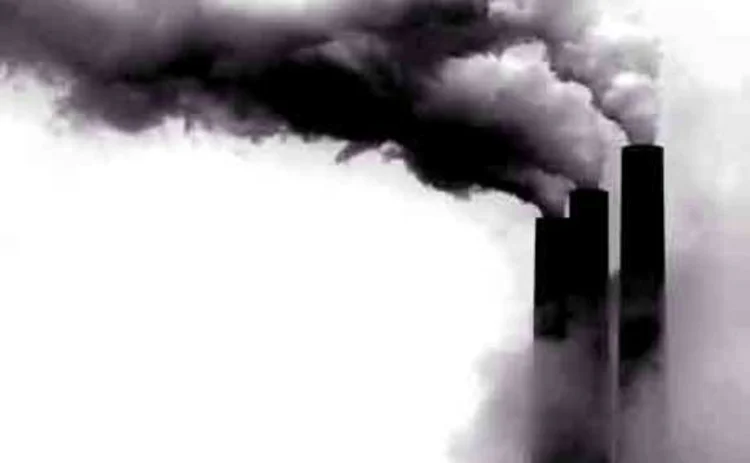
With environmental legislation becoming ever more onerous and liabilities ever more costly, businesses are beginning to wake up to the importance of having environmental impairment liability cover.
The subject of environmental liability has risen up the corporate agenda in recent years, following the European Environmental Liability Directive in 2009 and the arrival of the Environmental Civil Sanction Order in 2011.
Potential costs can be significant given the requirements for complementary and compensatory remediation, as well as initial clean-up.
The latest research by risk management association Airmic on the casualty market reveals that roughly the same number of respondents are buying EIL cover this year as last, however, Chartis has noticed a much sharper uptake.
There has also been a trend towards high limits being purchased for environmental exposures, an indication that companies are becoming aware of the risks and potential costs that might incur.
In addition, there is a shift away from one-off purchases associated with mergers and acquisitions to annual repeat business.
However, there is a long way to go. Airmic’s research reveals that around a quarter of insurance buyers feel that EIL has no relevance to them. In the light of risk managers deeming EIL a growing risk in the next five years, it is remarkable that only 64% of respondents have had conversations with brokers about cover for their environmental risk exposures.
Undoubtedly, in the current economic climate when every item of expenditure is under scrutiny, additional premium spend will be viewed very carefully. However, there are other reasons businesses may not be covering their environmental risks.
Many companies mistakenly believe that environmental issues stem primarily from sudden and catastrophic accidents, and only in the high-risk industry sectors such as utilities or chemicals.
There is also still a lack of clarity around whether potential environmental exposures are covered under general liability policies.
All companies at risk
Many companies may not believe they are more exposed now than in previous years due to the widespread press coverage of catastrophic events. The toxic sludge incident in Hungary in 2010 is an example where the scale of the damage reinforced the idea for many companies that environmental risks only apply to firms in certain sectors.
This is simply not the case. Companies and organisations across the spectrum - from car dealerships, to hotels, schools, property developers and financial services firms - may find that something more routine such as a long-term leak can lead to a gradual polluting of the environment, which can cost hundreds of thousands of pounds to remedy.
In a recent incident, a school’s heating tank leaked with the discharge spreading downstream to a waste water treatment plant, leading to high costs for investigation, sampling and legal defence.
In another case, a plant that produces derivative tomato products discharged fuel oil into a stream after a pipe in a heating exchanger cracked. The pollution spread to a nearby river and surrounding vegetation. Local authorities were called and clean up and investigation costs totalled almost €1m (£836 000).
In a third incident, a producer of pastry products was left facing costs of £800 000 after equipment failure led to the release of cream into a river. This resulted in a biochemical oxygen demand greater than that for untreated sewage, causing significant damage to flora and fauna.
Businesses also need to be aware of any historical exposures that they may be liable for. In a highly industrialised area, companies may unwittingly own land or buildings on what previously was an industrial site that is now contaminated.
Business may also believe EIL cover is irrelevant due to the mistaken belief that general liability products provide sufficient cover against environmental exposures. Considerable confusion exists as to the range of liabilities, where coverage on different policies stop and start, and the potential costs.
Part of this confusion stems from the decision in Bartoline v RSA (2006). Following a fire at Bartoline premises in 2003, chemicals and fire-fighting foam contaminated two nearby watercourses.
Bartoline tried to claim on its public liability policy, but the judge found that the policy did not cover liability to repay costs incurred by the Environment Agency. Following this, many general liability polices added an extension to address this shortfall in cover.
It is not surprising that 42% of respondents to the Airmic study believe that all of their environmental risks are covered. However, the breadth of environmental liabilities is much wider, which means that companies have exposures that fall outside even the broadest policies.
With the introduction of legislation driven by the ELD that gap became bigger. It is important that company directors examine these issues in-depth and seek advice to make well-informed decisions on the need for EIL cover.
Reputation at risk
Increased public awareness of environmental issues means a lack of tolerance towards polluters. Maintaining a positive brand reputation is important for any company but, although Airmic members say that the insurance industry could do more to help address reputational risks, the link to purchasing EIL cover has not been made.
Education and raising awareness of the risks, as well as what the cover provides, should be key areas of focus for brokers and providers.
In the event of an incident, it is imperative that companies feel that they can call on the right experts. Failure to comply with environmental law or to maintain appropriate operational standards can result in large fines and, in extreme cases, imprisonment for those responsible.
Company directors need to make sure that the business they are running is compliant to avoid putting it, and themselves, at risk.

Tales from the archive: 2010
The toxic sludge leak in Hungary in 2010 led a number of risk management firms and insurers to question the activity of their policyholders.
Aon Risk Solutions has warned companies to take the Environmental Liability Directive seriously, following a toxic sludge leak in Hungary. Under the ELD, all companies have a liability and many, because of the nature of their operations, do not have to be at fault if the environment is damaged due to the actions of a company.
Simon Johnson, Aon Risk Solutions' environmental director for the UK, Europe, Middle East and Africa, said: "While most companies are good corporate citizens and take risk management with regards to the environment extremely seriously, occasionally accidents or incidents beyond anyone's control can happen.
"Under the ELD, which has some extremely strong teeth, it is entirely possible that an accident such as the tragedy in Hungary could ultimately lead to the total collapse of the company at fault if they do not have suitable insurance coverage in place.
"In this instance, there is a serious threat to the environment and for contamination including the Danube, which could lead to serious environmental damage in other countries.
"If the company responsible for the original damage were to collapse, it is not unimaginable to have a scenario in which one country seeks another to pay for the subsequent costs of clean up. Current estimates are that it will take at least a year and tens of millions of euros.
"It is vital that companies are explicitly aware of the risks their operations pose and the financial exposure they face should something go wrong, no matter how remote the possibility. When working with our clients we advise them to take a comprehensive environmental insurance programme."
Only users who have a paid subscription or are part of a corporate subscription are able to print or copy content.
To access these options, along with all other subscription benefits, please contact info@postonline.co.uk or view our subscription options here: https://subscriptions.postonline.co.uk/subscribe
You are currently unable to print this content. Please contact info@postonline.co.uk to find out more.
You are currently unable to copy this content. Please contact info@postonline.co.uk to find out more.
Copyright Infopro Digital Limited. All rights reserved.
As outlined in our terms and conditions, https://www.infopro-digital.com/terms-and-conditions/subscriptions/ (point 2.4), printing is limited to a single copy.
If you would like to purchase additional rights please email info@postonline.co.uk
Copyright Infopro Digital Limited. All rights reserved.
You may share this content using our article tools. As outlined in our terms and conditions, https://www.infopro-digital.com/terms-and-conditions/subscriptions/ (clause 2.4), an Authorised User may only make one copy of the materials for their own personal use. You must also comply with the restrictions in clause 2.5.
If you would like to purchase additional rights please email info@postonline.co.uk