The challenges of Cyclone Debbie
Cyclone Debbie was the costliest natural catastrophe to hit Australia for six years, while the scale of the event spurred innovation among insurers writes Nicky Burridge.
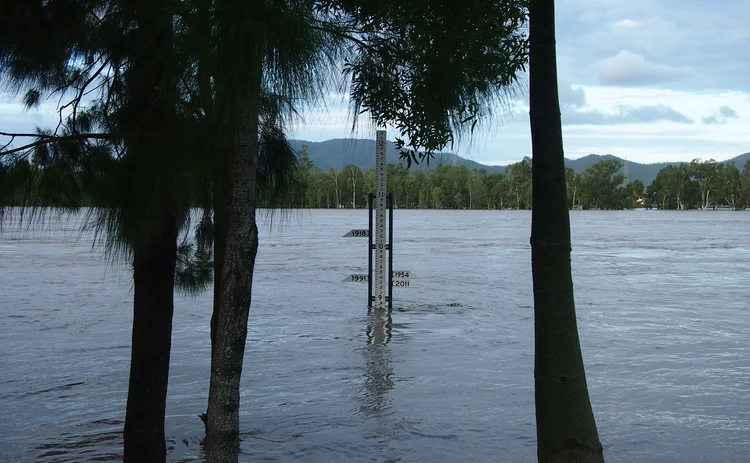
The category 4 severe tropical cyclone, which hit the Queensland coast on 28 March, led to total industry losses of A$1.45bn (£862m), making it as costly as Cyclone Yasi in 2011.
Insurers have been inundated with over 60,000 domestic claims and more than 7,800 commercial ones, according to the Insurance Council of Australia.
In a positive for the industry, despite the remote locations of many of the claimants, 65% of claims have already been paid out.
While insurers have dealt with a huge volumes of claims, a large proportion has been covered by reinsurance.
Global reinsurer Swiss Re saw profits for the first half of 2017 slump by more than a third in part as a result of losses associated with Cyclone Debbie, with the reinsurer paying out claims of around $360m (£272m).
Berkshire Hathaway Reinsurance Group has also reported it suffered a $115m loss from the event, due to reinsurance and quota shares, including a 10-year deal with IAG, under which it receives 20% of IAG’s gross written premiums and pays 20% of its claims.
Claims’ challenges
The severity of the cyclone, which impacted a wide area across Queensland and New South Wales and reached as far as New Zealand, created significant challenges for insurers.
Derek Martin, Allianz Global Corporate & Specialty regional head of claims, Pacific, reflects: “This was the widest area of devastation we’ve seen for a long time.
“Restricted access to impacted areas for safety reasons as well as impassable roads made assessing losses impossible in a lot of areas for some days.”
He adds that thousands of homes were without electricity, making it difficult for the insurer to communicate with both policyholders and assessors.
Martin explains further: “There are also a finite number of assessors and hydrologists in the country, so the large number of properties that needed to be assessed created challenges across our industry.”
Craig Summers, executive manager event services, at Suncorp, says the insurer received more than 19,000 claims as a result of Cyclone Debbie, and has finalised two-thirds of them in less than five months.
Summers comments: “We have had thousands of claims managers, assessors and trade suppliers on the ground supporting customers and helping the communities impacted to rebuild.”
Like Suncorp, Allianz also put in place special measures to cope with the spike in claims, with staff working increased shifts and policyholders able to lodge claims round the clock, either online or by telephone.
Mark Ronan, chief claims officer for Aon Risk Solutions Australia, says Aon and insurers came to an agreement that for small level losses, policyholders could effectively self-assess their losses by obtaining two or three independent quotes for damage, with insurers making direct payments into their bank accounts.
Ronan adds: “Essentially, as much red tape as possible was removed from the claim assessment process with a view to settling as many claims as possible very quickly.”
Innovation
The scale of the event also sparked innovation among insurers, with Suncorp using drones for the first time in Australia to assess the damage caused by a major weather event.
Summers comments: “The drone imagery gave our teams important insights into the extent of the damage in areas that were still inaccessible due to closed roads and floodwaters.
“With this information, we could better coordinate our response so our teams could hit the ground running.”
He adds that the insurer also used social media to a greater extent than previously, both during and after Debbie.
“It enabled us to give customer advice and help in real time, from advising them on locations of mobile customer teams to tips on what to do to clean-up after events.
“This was the first time Suncorp used embedded teams directly after a disaster to relay key information and stories through social media.”
Ronan adds that drones also enabled loss adjusters to survey the depth and impact of flood waters.
He explains: “Often, differences of opinion arise to the extent of the reach of flood waters and also whether the damage was solely caused by flood waters or surface water run-off, which evoke materially different responses under insurance policies.”
Allianz utilised a portal that enables it to communicate communication its repairers or loss adjusters, giving it full visibility of the progress of repair work.
Martin says: “We also have an innovative fulfilment process for food spoilage or contents replacement claims that means we can provide funds by way of electronic store cards that allow eligible customers to immediately purchase goods without waiting for any funds to have to clear the bank.”
But he adds: “It’s not all about technology. Allianz has a mobile customer help caravan that we deployed to the impacted area as soon as it was deemed safe to do so, which gives our customers the option of speaking to an Allianz claims team member in person.”
The team is able to lodge claims, make emergency payments on the spot and arrange alternative accommodation if it is required.
Government support
The high level of damage caused by Cyclone Debbie has led to new calls for a government-backed mutual fund to be set up to provide cyclone cover for people in affected areas.
Allianz has been suggesting the establishment of a government-backed reinsurance facility, similar to the UK government’s Flood Re, since 2012.
Martin says premiums would still be higher than average, but not so unaffordable that homeowners are forced out of insurance.
He points out that having flood cover for an average house in a very high flood risk area can increase annual home insurance premiums by up to around 20 times, making it unaffordable for many people.
Martin continues: “Concerns have also been raised about the affordability of home insurance premiums in cyclone-prone areas of north Queensland, which can be more than five times a normal premium.”
Ronan agrees: “It is unacceptable for existing communities to be left with the prospect of financial ruin purely because they cannot secure commercially reasonable insurance cover.
“We need to provide a viable alternative to such communities.”
However Summers believes a government mutual would not address the main problem, and he would like to see more investment put into disaster mitigation in high risk communities instead.
Summers adds: “The evidence shows preventing natural disasters through mitigation lowers the cost of insurance, protects communities and builds stronger economies.”
As the recovery continues insurers, homeowners and businesses will learn lessons from Debbie and hopefully next time everyone will be even more prepared.
The Claims Club Asia-Pacific is hosting the Claims Conference Sydney on 29 August at the Radisson Blu hotel
Only users who have a paid subscription or are part of a corporate subscription are able to print or copy content.
To access these options, along with all other subscription benefits, please contact info@postonline.co.uk or view our subscription options here: https://subscriptions.postonline.co.uk/subscribe
You are currently unable to print this content. Please contact info@postonline.co.uk to find out more.
You are currently unable to copy this content. Please contact info@postonline.co.uk to find out more.
Copyright Infopro Digital Limited. All rights reserved.
As outlined in our terms and conditions, https://www.infopro-digital.com/terms-and-conditions/subscriptions/ (point 2.4), printing is limited to a single copy.
If you would like to purchase additional rights please email info@postonline.co.uk
Copyright Infopro Digital Limited. All rights reserved.
You may share this content using our article tools. As outlined in our terms and conditions, https://www.infopro-digital.com/terms-and-conditions/subscriptions/ (clause 2.4), an Authorised User may only make one copy of the materials for their own personal use. You must also comply with the restrictions in clause 2.5.
If you would like to purchase additional rights please email info@postonline.co.uk