

Instanda’s Shipley on why meritocracy should replace metrics

Sara Shipley, chief human resources officer at Instanda, on the power of no longer chasing metrics but instead genuinely seeking talent in all its forms.
Throughout my career, I have often witnessed organisations focusing too heavily on diversity metrics. This approach, unfortunately, often led to higher turnover rates
Only users who have a paid subscription or are part of a corporate subscription are able to print or copy content.
To access these options, along with all other subscription benefits, please contact info@postonline.co.uk or view our subscription options here: https://subscriptions.postonline.co.uk/subscribe
You are currently unable to print this content. Please contact info@postonline.co.uk to find out more.
You are currently unable to copy this content. Please contact info@postonline.co.uk to find out more.
Copyright Infopro Digital Limited. All rights reserved.
As outlined in our terms and conditions, https://www.infopro-digital.com/terms-and-conditions/subscriptions/ (point 2.4), printing is limited to a single copy.
If you would like to purchase additional rights please email info@postonline.co.uk
Copyright Infopro Digital Limited. All rights reserved.
You may share this content using our article tools. As outlined in our terms and conditions, https://www.infopro-digital.com/terms-and-conditions/subscriptions/ (clause 2.4), an Authorised User may only make one copy of the materials for their own personal use. You must also comply with the restrictions in clause 2.5.
If you would like to purchase additional rights please email info@postonline.co.uk
More on Technology

Sapiens’ Hannay says AI progress requires firms to hire ‘disrupters’
The industry must find disrupters with divergent thinking to work alongside people with years of experience as AI continues to develop, believes Sapiens’ chief revenue officer James Hannay.

Big Interview: Hardeep Gulati, Duck Creek
Following Duck Creek’s acquisition of AI-native underwriting platform Send, CEO Hardeep Gulati outlines the efficiency gains he expects from bringing the businesses together and his ambitions to double revenue in the next four to five years.
Winners of the Insurance Post Claims and Fraud Awards 2026 revealed
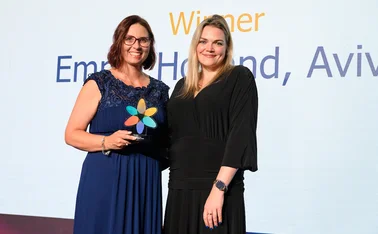
Aviva, Bamboo Connect, DWF Law and DAC Beachcroft were all multiple winners at the Insurance Post Claims and Fraud Awards held last night (1 October) at The Brewery in London.

WTW’s Anderson says agentic mentoring will be vital for industry
Agentic AI mentoring will help any future knowledge gap among insurance workers and encourage critical thinking said WTW’s global technology leader for insurance technology Duncan Anderson.

How ChatGPT far from killing PCWs may help them grow
After the launch of insurance apps on ChatGPT, Scott McGee analyses where it has the upper hand on price comparison sites, where it needs to catch up, and how the future of distribution will settle.

Synthetic ID fraud on the rise in AI era
AI is helping fraudsters generate synthetic IDs on an industrial scale, posing a growing threat to insurer onboarding and risk models.
Winners of British Insurance Technology Awards 2026 revealed
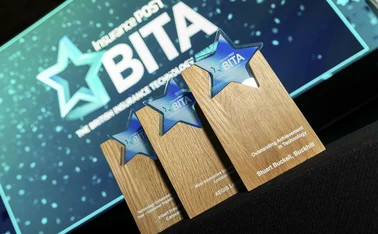
Domestic & General, Mind Your Business Group (InsureTec.com) and DynaRisk were all two time winners at the British Insurance Technology Awards held last night (24 September) at The Brewery in London.

Can insurance stay human in an AI world?
Diversity of human thought is essential to ensuring that the artificial intelligence the insurance industry adopts today doesn’t replicate any bias or discrimination from the sector’s past.