
Why treating insurance like bin bags is a fraud risk


Trade Voice: Matthew Connell, director of policy and public affairs at the Chartered Insurance Institute, argues treating insurance like any other commoditised purchase could push customers into fraud, wittingly or not.
We tend to think of motor policies as among the simplest of financial products, bought in a highly commoditised market.
The Chartered Insurance Institute’s Trust Index shows that customers rate the
Only users who have a paid subscription or are part of a corporate subscription are able to print or copy content.
To access these options, along with all other subscription benefits, please contact info@postonline.co.uk or view our subscription options here: https://subscriptions.postonline.co.uk/subscribe
You are currently unable to print this content. Please contact info@postonline.co.uk to find out more.
You are currently unable to copy this content. Please contact info@postonline.co.uk to find out more.
Copyright Infopro Digital Limited. All rights reserved.
As outlined in our terms and conditions, https://www.infopro-digital.com/terms-and-conditions/subscriptions/ (point 2.4), printing is limited to a single copy.
If you would like to purchase additional rights please email info@postonline.co.uk
Copyright Infopro Digital Limited. All rights reserved.
You may share this content using our article tools. As outlined in our terms and conditions, https://www.infopro-digital.com/terms-and-conditions/subscriptions/ (clause 2.4), an Authorised User may only make one copy of the materials for their own personal use. You must also comply with the restrictions in clause 2.5.
If you would like to purchase additional rights please email info@postonline.co.uk
More on Risk Management

Q&A: James Round, Lumley
James Round, head of business development at Lumley, speaks to Insurance Post about his new role, the HNW market, and how Lumley is building out its B2B side.

Throwback Thursday: Satellite insurance attempts take-off
Insurance Post’s Throwback Thursday steps back in time to October 1991 to remind you what was going on this week in insurance history when our award-winning publication's editor Alyson Rudd examined space insurance.
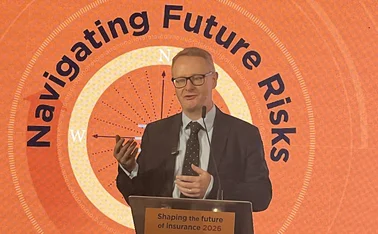
CII CEO raises concerns over AI and entry-level insurance roles
Matthew Hill, CEO of the Chartered Insurance Institute, has warned that the automation of entry-level tasks could change how future insurance professionals develop their skills and judgement.

60 Seconds With... Scenario’s Jarrod Johnson
Jarrod Johnson, managing director of Scenario Risk Partners, is the captain of safety superheroes and would like to be Robin Hood.

Insurance Post Census exposes employment progress and problems
While insurance may have more women reaching CEO and C-suite roles than ever before, Insurance Post’s 2026 Census exposes how progress is not being experienced evenly across the workforce.

Prince William’s Earthshot finalists target climate risk solutions
Prince William’s Earthshot Prize finalists have been using insurance to help vulnerable communities manage climate risks, offering lessons for UK insurers looking to close the protection gap.
Time:To – LIIBA’s Croft on AI opportunities
Artificial intelligence allows insurers to move beyond once-a-year renewals to continual risk assessment and mitigation, according to Chris Croft, CEO of the London & International Insurance Brokers’ Association.

Salmonella outbreak highlights recall preparedness gaps
Insurance experts have warned that insurers should be confident in their readiness in the event a food contamination event takes place, amid the UK’s salmonella outbreak.