Legal eagle

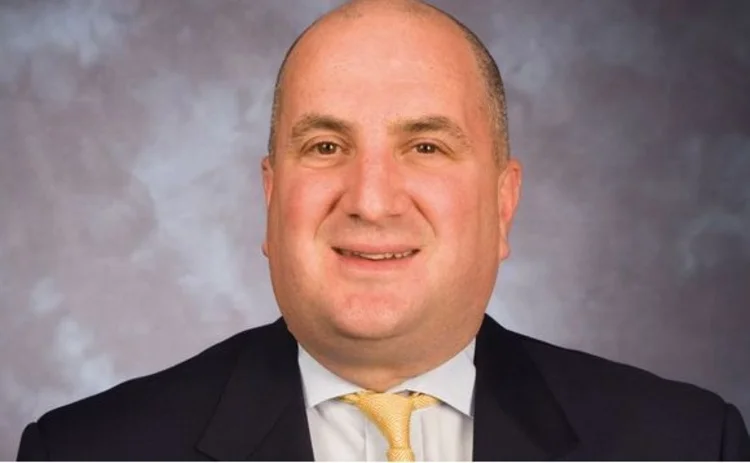
Alan Levin

Katherine Blackler talks to Alan Levin, a partner specialising in (re)insurance law at US firm Edwards Angell Palmer & Dodge, about his career and the challenges facing the reinsurance market.

As one of the top six insurance lawyers in the US (according to Expert Guides legal directory 'Best of the Best (2009)) Alan Levin is a hard man to get hold of.

Since spending a summer doing work experience at Clifford Turner, Levin has developed a firm expertise in the (re)insurance sector as he found himself "fascinated by the complexities of the (re)insurance world."

However, Levin has not limited his expertise to (re)insurance. Over the years he has also practiced general, corporate insurance, regulatory and transactional law. He notes that the practice of reinsurance law is different from that of general insurance with a much smaller pool of expertise: "Reinsurance practice historically had been a small group of practitioners who understood the business while other types of law are more open to general practitioners."

This small pool of expertise may not be growing at any great rate however. Here at Reinsurance we are being more frequently approached by more general legal firms looking to get involved in the reinsurance markets. Levin has also noticed this trend and has seen more legal firms looking to compete in the dispute side of reinsurance law: "On the dispute side large firms with big commercial litigation departments have made an effort to obtain this type of work." He also admits that some more general insurance lawyers may also have the skills and knowledge necessary to successfully practice reinsurance law.


Changing times

It is not just the practitioners of reinsurance law that are changing. Levin notes that the practice of reinsurance law itself has changed somewhat since the 1980s and that, as an industry, we have become a lot more litigious.

He also believes that as losses have risen disagreements are less likely to be settled without both parties calling in the lawyers. He explains: "We have gone through a period where everybody with surplus was willing to take reinsurance risks. As loss has mounted the ability to resolve differences of opinion without disputes has changed drastically. In addition, the amount of risk in some cases has become astronomical."

With the number of cases being bought continuing to rise Levin believes the evolution of the regulators has had its role to play in bringing about changes in the practice of (re)insurance law. Although, he adds: "It is not so much a case of increased regulation as a case of financial standards and collateral."

Alternative dispute resolution (ADR) is a much debated topic amongst reinsurance lawyers (see Reinsurance Insight, September PDF edition) at present but Levin notes that not many reinsurers are viewing ADR as an attractive alternative.

When asked if dispute resolution clauses should be added to reinsurance contracts as standard Levin is wary. "Dispute resolution clauses should not necessarily be added to reinsurance contracts," he says, "ADR does not always a low a fully vetted discussion of the facts with an understanding of custom and practice. However, it should always be considered as an alternative."


Variety - the spice of life

As one of two partners from the (re)insurance practice at EAPD, Levin gets to see a wide variety of cases from different domiciles. As reinsurers are increasingly doing business on an international basis he notes that the increased globalisation of business has had an effect on the nature of reinsurance law. Levin explains: "It makes compliance more difficult with all of the various state and national country laws that need to be taken into account. Some regions in particular are more complex, for example dealing with the collateral rules in the US requires an understanding of who your trading partner is. The rules with respect to credit for reinsurance in the US are driven by state law. In addition, each country has its own rules with respect to credit for reinsurance."

However, Levin does not believe that there are any single events which have bought about these changes in the nature of (re)insurance law. He says: "I think the difference comes in cycles when we have a massive misrepresentation such as PwC, Unicover, and asbestos. Those types of big events that affect the market financially always cause issues that the next generation has to deal with."

In reinsurance law disputes are often resolved long after the original event and therefore, with the addition of time often taken in the appeals process, adaptations in law following events are often slow to come about. Younger reinsurance lawyers can therefore often find themselves part of a team on cases for events that happened before they were involved in the market.

As cedents begin to see increasing claims and fraud related to the global economic crisis Levin notes that it will be at least three to five years before we see the effects on the reinsurance sector. Therefore, it may be a while before we see any kind of backlash to the crisis in terms of reinsurance law. "It's too early to tell," he explains, but warns reinsurers must "pay attention."

One area of activity in the reinsurance market that is effecting the activity of lawyers is mergers and acquisitions. Levin expects more consolidation to appear in the reinsurance market in the near future. He notes that reinsurers need to be careful to pay attention to compliance with the law and local regulators in all regions they are operating in when considering a merger or acquisition.

Levin says: "M&A processes have become more complex. If it is a purchase of the shares there is the negotiation of a share purchase agreement and then there is the regulatory approving in the state of domicile of the reinsurer. In addition, one has to comply with each of the state laws where the reinsurer is licensed or accredited."

Levin also notes that he expects to see more new entrants into the reinsurance market for as long as consolidation continues: "Capital markets seem to like this business and there will be new entrants into the reinsurance markets where we have seen consolidation."


Difficulties

Levin has received much recognition for his work but his career has not been without challenges. He acknowledges that it takes a lot of work to break into such a small elite group of lawyers as those who work the international (re)insurance circuit. For the future, Levin wants to continue to grow the (re)insurance practice within EAPD.

As with all areas of reinsurance, attracting the next generation is a challenge for insurance law specialists looking to expand their practices. Levin notes that he is not seeing many young lawyers looking to get involved in reinsurance law but believes the way to attract more young people to the industry is through mentoring.

Levin concludes the interview with some food for thought: "Breaking into a global area of practice takes a lot of stamina and fortitude. Clients look for depth, experience and understanding of not just the law, but the business. It has reminded me to make sure that knowledge of the industry is passed on and a renewed generation of professionals should be welcome."

Levin at a glance


Why (re)insurance law?

I spent a summer at the law firm of Clifford Turner. I was fascinated by the complexities of the insurance and reinsurance world and, therefore, I made that my focus in law.

What early challenges did you face in your career? Breaking into a global area of practice takes a lot of stamina and fortitude.

What was the most complex case you worked on? Representing Phoenix Life Insurance Company in the Unicover disputes. The massive amount of insurers, reinsurers, and retrocessionaires involved in this complex matter is what made it so complex. In addition, the massive amount of paper that had to be reviewed and analysed.

What is the strangest piece of business you have been involved in? Structuring coverage for celebrity body parts.

What would your advice be to a young reinsurance lawyer starting out today? Read everything, understand everything and push the envelope with respect to custom and practice.

Alien vs. Domestic


One area which has caught Levin's eye recently is the battle between the alien and domestic markets in the US with respect to collateral. This has become a hot topic amongst reinsurance law practitioners surrounded with much debate. He notes: "There are rules with respect to posting collateral to take credit for reinsurance. This is a very hot issue between the alien and domestic markets. In addition, there is a debate going on about domestics reinsuring with offshore affiliates.

Biography


October 1994: Started with EAPD as a partner

1988-1994: Associate at LeBoeuf, Lamb, Green & MacRae

1985-1988: Associate at Schatz & Schatz, Ribicoff & Kotkin


Alan has been recognised as being one of the six top insurance law practitioners in the US, and one of the top 35 practitioners worldwide, by the Expert Guides legal directory 'Best of the Best (2009)'.


Alan is based in Hartford

(Connecticut) and New York.

Only users who have a paid subscription or are part of a corporate subscription are able to print or copy content.

To access these options, along with all other subscription benefits, please contact info@postonline.co.uk or view our subscription options here: https://subscriptions.postonline.co.uk/subscribe

You are currently unable to copy this content. Please contact info@postonline.co.uk to find out more.

Throwback Thursday: Howden saves insurers millions

Insurance Post’s Throwback Thursday steps back in time to November 1975 to remind you what was going on this week in insurance history when Alexander Howden, the brokerage created by CEO of Howden Group’s David Howden’s great-great-great grandfather, boasted how much he was saving insurers.

Top 50 Reinsurers of 2025 revealed

Swiss Re’s adoption of IFRS 17 has propelled it to pole position on this year's Top 50 Reinsurers ranking, which Christopher Pennings, financial analyst at AM Best observes, highlights how the new accounting standard continues to reshape global reinsurance standings.

Q&A: Jonathan Gray, Pool Re

Jonathan Gray, chief underwriting officer at Pool Re, discusses the impact of recent changes at the state-backed terrorism reinsurer and how its helping businesses manage risk.

Most read articles loading...

You need to sign in to use this feature. If you don’t have an Insurance Post account, please register for a trial.

Sign in
You are currently on corporate access.

To use this feature you will need an individual account. If you have one already please sign in.

Sign in.

Alternatively you can request an individual account here