

A question of aggregation
The first of two articles discusses a House of Lords case which considered whether claims could be aggregated
The question before the House of Lords in Lloyds TSB General Insurance Holdings v Lloyds Bank Group Insurance Co. Ltd [2003] UKHL 48, as a preliminary issue, was whether various companies in the TSB group could aggregate losses in order to recover under a bankers composite insurance policy in respect of payments made by the TSB companies to settle claims brought against them for breaches of the Financial Services Act 1986.
The breaches complained of were that investors had been persuaded, by the TSB companies' sales representatives, to transfer from their employer's occupational pension schemes to personal pension schemes without adequate advice about the risks, advantages and disadvantages of doing so.
The main reasons for this mis-selling appears to have been the inadequacy of the training and monitoring of the representatives by the companies employing them. These failures themselves also constituted breaches of the obligation to provide training schemes for representatives and to make arrangements for monitoring their performance to ensure that they complied with the required code of conduct.
Mis-selling claims covered
About 22,000 claims for mis-selling had been settled by the TSB companies for more than £125m ($200m) in total. There was no doubt that each claim fell within the cover given by the policy for financial loss caused by a breach on the part of the assured of the provisions of the 1986 Act and, as was the case in this instance, rules and regulations made by any regulatory authority or self-regulatory organisation pursuant to the provisions of the act.
However, the policy provided for a deductible of £1m for "each and every third-party claim". That meant that unless it was possible to aggregate the claims in some way, it would be impossible to recover under the policy as none of the individual claims exceeded £35,000.
The TSB companies had argued, successfully, in the underlying litigation that the following "aggregation clause" permitted them to do just that: "If a series of third-party claims shall result from any single act or omission (or related series of acts or omissions) then, irrespective of the total number of claims, all such third-party claims shall be considered to be a single third-party claim for the purposes of the application of the deductible."
Mr Justice Moore-Bick, at first instance, had said that the purpose of an aggregation clause was "to enable two or more separate losses covered by the policy to be treated as a single loss for deductible or other purposes when they are linked by a unifying factor of some kind".
That, as Lord Hoffmann observed in his decision in the House of Lords, "seemed to be a fair description", pointing out that the unifying factor was often a common origin in some act or event specified by the clause.
However, he emphasised that much turned upon the precise nature of the act or event which, for the purposes of aggregation, the clause treated as a unifying factor.
The more general the description of that act or event, the wider the scope of the clause. So, for example, as Lord Mustill remarked in Axa Re (UK) Plc v Field [1996] 1 WLR 1026, an "event", was "something which happens at a particular time, at a particular place, in a particular way" while a "cause" was less constricted. It could be a continuing state of affairs or the absence of something happening. The choice of language by which the parties designate the unifying factor in an aggregation clause was thus of critical importance.
Lord Hoffmann, in the present case, pointed out that the unifying factor in the aggregation clause was a common cause, but that cause had to be a "single act or omission" or, by the extension in parenthesis, a "related series of acts and omissions". So the question turned upon the meaning of an "act or omission" or "related series of acts or omissions".
A single claim
Mr Justice Moore-Bick had held that an "act or omission" included any acts or omissions "of the kinds described in the insuring clause". This included the TSB companies' failure to establish training schemes for their employees and to monitor their performance.
He concluded that these breaches were an act or omission or series of acts and omissions within the meaning of the aggregation clause and that they had been the cause of all the 22,000 claims. So they could all be aggregated and treated as a single claim for the purposes of the deductible.
The Court of Appeal disagreed. It drew attention to the definition in the policy of "act or omission" as a breach "as described in the insuring clause". The relevant part of the insuring clause referred to a breach "in respect of which civil liability arises on the part of the assured".
The Court of Appeal concluded that an "act or omission" must be something that constituted the original claimant's cause of action. It could not mean an act or omission that was causally more remote.
Lord Hoffmann agreed with the Court of Appeal on this particular point, saying that the language of the aggregation clause, read with the definition of "act or omission", showed that the insurers were not willing to accept as a unifying factor a common cause more remote than the act or omission which actually constituted the cause of action.
An act or omission could qualify as a unifying factor in respect of more than one loss only if it gave rise to civil liability in respect of every loss. In the present case the act or omission which gave rise to the civil liability in respect of each claim (failure to give best advice to that investor) was different from the acts or omissions giving rise to the other claims.
Yet, the Court of Appeal had then construed the words in parenthesis - "or related series of acts or omissions" - to produce the result which it had rejected in its construction of the primary words "single act or omission", they had said that acts or omissions could be "related" and form a "series" if they had a "single underlying cause" or common origin or if they were "the same omission" which had occurred on more than one occasion. On this basis it had dismissed the appeal.
This result seemed to Lord Hoffmann to be paradoxical. It meant that the parties had chosen a narrow unifying factor - in the shape of an act or omission which gave rise to the civil liability in question - as the opening and, it had to be assumed, primary concept to act as unifying factor. However, they had then, by a parenthesis, produced a clause in which the unifying factor was as broad as could be wished.
It sufficed that all the claims had a common underlying cause or the breaches of duty were the same, which Lord Hoffmann took to mean sufficiently similar. In his opinion this construction was allowing the tail to wag the dog. It was not reasonable to understand the parties as having intended the parenthesis to stand the rest of the clause on its head.
Lord Hoffman's thinking will be outlined further in the next Reinsurance, along with the only other reasoned speech in the unanimous decision of the House of Lords, that given by Lord Hobhouse. Click here for a pdf of this story
Only users who have a paid subscription or are part of a corporate subscription are able to print or copy content.
To access these options, along with all other subscription benefits, please contact info@postonline.co.uk or view our subscription options here: https://subscriptions.postonline.co.uk/subscribe
You are currently unable to print this content. Please contact info@postonline.co.uk to find out more.
You are currently unable to copy this content. Please contact info@postonline.co.uk to find out more.
Copyright Infopro Digital Limited. All rights reserved.
As outlined in our terms and conditions, https://www.infopro-digital.com/terms-and-conditions/subscriptions/ (point 2.4), printing is limited to a single copy.
If you would like to purchase additional rights please email info@postonline.co.uk
Copyright Infopro Digital Limited. All rights reserved.
You may share this content using our article tools. As outlined in our terms and conditions, https://www.infopro-digital.com/terms-and-conditions/subscriptions/ (clause 2.4), an Authorised User may only make one copy of the materials for their own personal use. You must also comply with the restrictions in clause 2.5.
If you would like to purchase additional rights please email info@postonline.co.uk
More on Commercial

Fraudster fails to pull wool over Ifed’s eyes
City of London Police’s Insurance Fraud Enforcement Department is investigating suspected fraudulent insurance claims over the alleged theft of more than 650 sheep.
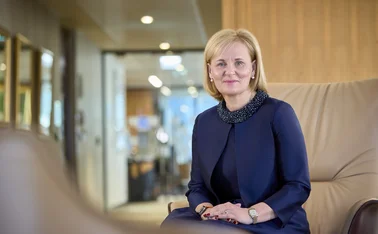
What next for Aviva and insurance’s greatest Dame?
Editor’s View: Emma Ann Hughes considers the remarkable turnaround of Aviva under Dame Amanda Blanc and asks what comes next for the insurer and its formidable group CEO.
Throwback Thursday: Royal retreats from Moscow
Insurance Post’s Throwback Thursday steps back in time to October 1991 to remind you what was going on this week in insurance history when Royal International was reconsidering its plans for a Moscow-based insurance company.

Q&A: Nick Dinsdale, Peach
Nick Dinsdale, underwriting director at Peach, speaks to Insurance Post about the firm’s new hire, AI in underwriting and Peach’s growth plans.

CFC report highlights gap in cyber awareness and understanding
Research from CFC has found that while SMEs are aware of the threat of cyber-attacks, most misunderstand the threats they face and the protection cyber insurance provides.

How AI is redefining the art and science of underwriting
As artificial intelligence adoption expands across underwriting, Marcel Le Gouais examines how a more complete picture is emerging of where automation ends and human judgement remains.

Big Interview: Simon Hunt, HDI
Simon Hunt, CEO of HDI UK and Ireland, reveals how he is looking to grow the corporate and specialty lines insurer by launching a new Lloyd’s syndicate and expanding in areas including energy, cyber and healthcare.
Penny Black’s Social Diary: Aviva’s trams and Earnix’s sushi
Penny Black has been out and about again, notebook in one hand and canapé in the other, keeping a keen eye on the insurance industry’s more whimsical moments.