Why Britain’s e-scooter limbo is costing lives and money
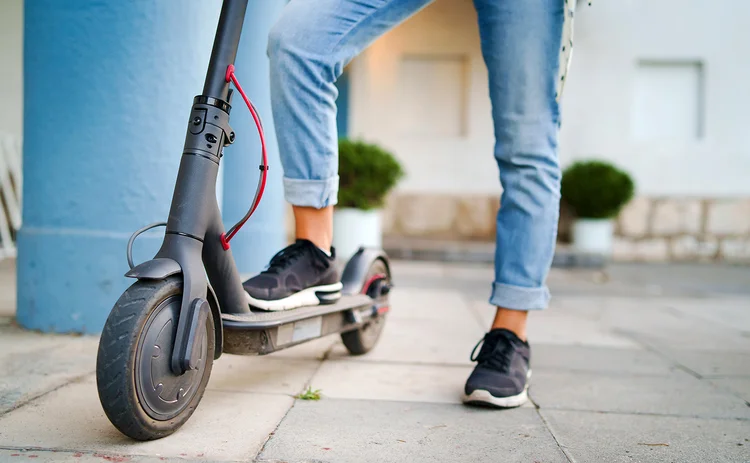
Electric scooter

Trade Voice: Sue Brown, chair of the Motor Accident Solicitors Society, argues that six years of regulatory dithering over e-scooters has left injured people paying the price, and that further delay is becoming untenable.

Britain’s unresolved e-scooter problem is no longer simply an argument about nuisance, pavement riding or antisocial behaviour. It is becoming a significant road safety and insurance issue. 

The blame must fall squarely on successive governments who have allowed this issue to develop during six years of regulatory dithering and delay.

Government-backed rental trials, launched in 2020 as a supposedly temporary experiment, have now been extended until May 2028, whilst a legislative framework for micromobility vehicles has still to be suggested, let alone agreed.

There are around one million privately owned e-scooters in the UK, although the true number is likely to be significantly higher. Yet they remain illegal to ride on public roads, cycle lanes and pavements. 

Online and high-street retailers continue to sell them daily with obscure or vague warnings about their legality.

Insurance gap

As stated by the Motor Insurers’ Bureau and the Metropolitan Police, anyone riding a privately owned e-scooter in public is automatically driving uninsured because there are currently no insurance products available for private e-scooters.

Privately owned e-scooters remain illegal to ride on public roads, cycle lanes and pavements.

When an uninsured rider causes serious injury to someone else, however, the absence of insurance does not make the liability disappear. 

The MIB can be required to compensate the innocent victim and the MIB is funded through a levy on motor insurers, and of course any increase in the cost of claims increases premiums for insured motorists.

The consequences of this regulatory limbo are increasingly measurable in deaths and serious injuries, but also in costs ultimately borne by motorists.

Casualty figures

The latest Department for Transport figures make sobering reading. 

In 2025, there were 1,477 casualties, with 1,162 being e-scooter users themselves, 10 deaths and an adjusted estimate of 484 seriously injured casualties, up from 1,390 casualties and six deaths in 2024. 

235 pedestrians were casualties in e-scooter collisions in 2025, of whom 54 were seriously injured. Even these figures may understate the problem. DfT cautions that non-fatal e-scooter casualties are among those most likely to go unreported.

Recent medical research has added to those concerns. 

A study published in August found that e-scooter riders sustained proportionately more head and internal injuries than cyclists and motorcyclists, highlighting the potential severity, and therefore cost, of the claims that can result.

A warning

The Association of British Insurers warned the Transport Select Committee as far back as 2020 that, because the MIB can be required to compensate victims where an uninsured e-scooter is involved, ordinary motorists could ultimately find themselves paying through higher insurance premiums. 

MIB says almost £47m was paid out on micromobility claims in 2025 alone.

Other organisations, including MASS, echoed these concerns. The costs warned about have certainly materialised.

ABI analysis subsequently estimated that uninsured micromobility riders, including e-scooters and e-bikes, were generating approximately £50 million a year in bodily injury costs. 

More recent MIB figures put the accumulated incurred cost of e-scooter and e-bike claims at £108 million between 2015 and May 2026, with the number of claims increasing 73% between 2023 and 2025. One catastrophic injury claim alone reportedly resulted in compensation of £20 million.

The costs are accelerating rapidly. MIB says almost £47m was paid out on micromobility claims in 2025 alone.

Blind spot

E-scooters are not the only emerging problem. E-bikes expose another hole in the regulatory framework. 

Around 150,000 are now sold each year, yet the DfT admits its road casualty statistics cannot even separately identify e-bike deaths and injuries. 

Legal electrically assisted pedal cycles are treated broadly like conventional bicycles, but illegally modified or overpowered machines can fall into the motor vehicle regime under the Road Traffic Act 1988, requiring registration, tax and insurance. 

Ministers have acknowledged concerns about non-compliant e-bikes, including their use within the gig economy, and commissioned further research. Injuries from non-compliant e-bikes leave the MIB, and ultimately premium-paying motorists, meeting the cost when uninsured riders seriously injure someone.

Furthermore, it was recently reported that about 14,000 hire e-bikes in London owned by Voi are not covered by third-party insurance in case of crashes. Its e-scooters for hire are insured as required by law.

There is also a wider societal cost. The London Fire Brigade attended a record number of e-scooter and e-bike fires in 2025, resulting in two fatalities, taking the total number of fatalities in London from these types of fire to five since 2023.

Signs of movement

After years of regulatory drift, however, there are finally indications of movement. 

In January, the government reiterated its commitment to legislative reform for micromobility vehicles, and ministers have acknowledged the present position is unsustainable and indicated that regulations for private e-scooters are being considered. 

Despite micromobility legislation being absent from the latest King’s Speech, by June the government had gone further, committing to the creation of a new low-speed zero emission vehicles category and confirming that it plans to consult on e-scooter regulations over the coming year.

Recent weeks have brought a conspicuous increase in media, legal, medical and insurance-sector attention to e-scooter injuries, child casualties and compensation costs. The uncomfortable statistics are becoming harder to dismiss as an emerging problem.

Responsible legalisation

E-scooters may well deserve a permanent place in Britain’s transport mix. Prohibition, while widespread use continues in practice, is plainly not a sustainable long-term policy. Legalisation must come with responsibility

Speed and power limits, minimum age requirements, identification, enforceable construction standards and the question of insurance all deserve serious consideration.

But after six years of trials, the case for continuing regulatory ambiguity is increasingly difficult to sustain. There were warnings years ago that somebody would have to pay for that ambiguity. We now know who is paying: injured people and, ultimately, Britain’s motorists.

This is no longer a niche technology awaiting regulation. Britain has allowed a market of around a million privately owned vehicles to develop while their normal intended use on public roads remains both illegal and uninsurable.

For six years, regulation has failed to catch up with reality. During that time people have been killed and seriously injured, compensation costs have exceeded £100 million and a share of the financial burden has fallen back upon motorists. 

We are way past the question about whether e-scooters require a comprehensive regulatory regime. The question is more when further delay by the Department for Transport becomes a national scandal.

Only users who have a paid subscription or are part of a corporate subscription are able to print or copy content.

To access these options, along with all other subscription benefits, please contact info@postonline.co.uk or view our subscription options here: https://subscriptions.postonline.co.uk/subscribe

You are currently unable to copy this content. Please contact info@postonline.co.uk to find out more.

How AI can make FNOL faster and more customer-centric

Irene Davies-Foo, associate director and business expert lead at Woodgate & Clark, outlines how artificial intelligence can transform first notice of loss by accelerating triage, improving data capture and ensuring customers reach human support faster when they need it most.

How AI is making insurance fraud harder to detect

Artificial intelligence is transforming organised insurance fraud, making it faster, cheaper and more sophisticated to commit, which DWF Law's Lauren France & Craig Budworth notes leaves insurers under growing pressure to strengthen detection and prevention.

FCA looking to address issues on claims definitions

Andrew Ruddle, the Financial Conduct Authority’s interim head of the department for insurance market analysis and policy, has said the regulator is looking at addressing issues about different claims definitions within insurance.

Most read articles loading...

You need to sign in to use this feature. If you don’t have an Insurance Post account, please register for a trial.

Sign in
You are currently on corporate access.

To use this feature you will need an individual account. If you have one already please sign in.

Sign in.

Alternatively you can request an individual account here