Q&A: David Bonehill, Ecclesiastical
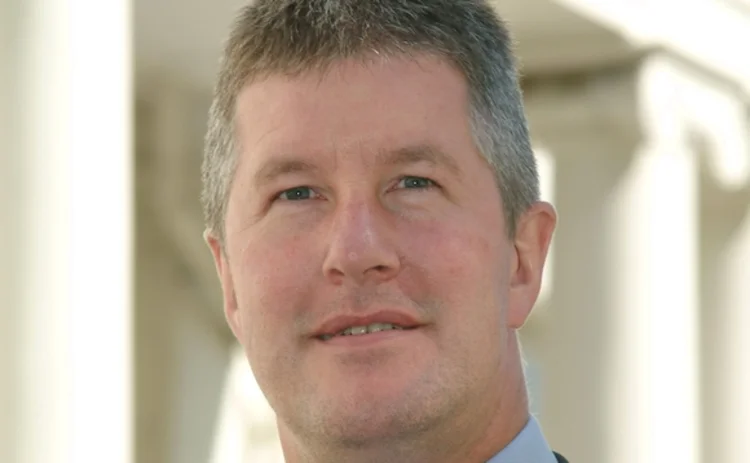
Ecclesiastical claims director David Bonehill was awarded the Achievement Award at the eighth Post Claims Awards. As technology is transforming claims, he predicts tech giants will enter the market, probably in the motor or home arena.
You won the Achievement Award at the Post Claims Awards 2018. What did this mean to you?
It was completely unexpected. Ecclesiastical had been very successful on the evening. We had been awarded the Post Claims Customer Care Award and the Training Award. For me to receive the Achievement Award topped off a great evening for us. I was really thrilled and really quite humbled to receive the award from my peers. It was totally unexpected, but I was absolutely delighted to have been recognised in this way.
CV
2005 to date
Claims director, Ecclesiastical
2002 to 2005
UK & Ireland property claims manager, Chubb
2000 to 2002
Claims operation manager, Norwich Union
1999 to 2000
Liability claims manager, CGU
1997 to 1999
Customer service manager, Commercial Union
1995 to 1997
Branch claims manager, CU
1984 to 1995
Various roles, CU
1982 to 1984
Northern Star Insurance
1980 to 1982
JH Minet & Co
1978 to 1980
Bradford & Pennine
How are the talents and skills needed to be successful in claims changing?
In insurance and in claims particularly, the landscape not only has, but is changing significantly. It is important that we are all alert to that.
There are high expectations now from customers for technological-based services. Gone are the days of nine to five. They expect speed of response and almost a personal experience in a very simple form. Customers’ demands are changing and we need to respond to those. We can probably all relate to that, being customers ourselves.
Technology is also key, not only in insurance, but across society. In the claims arena, there are lots of changes going on such as smart homes, the use of drones in claims, driverless cars and artificial intelligence.Insurers are already starting to grapple with this. There’s no doubt about it, the required skills are changing and will continue to change. The Chartered Insurance Institute is starting to adapt its training programmes to match that. I am the immediate past master of the claims faculty at the CII. About 18 months ago, we produced a career ladder for our members that set out an indicative career path. It set out the roles within a claims department, what you will be doing in those roles, and what skills and behaviours you will need to be successful before you can move on up that ladder.What are the key regulatory issues and challenges for claims departments in 2018?
The current big change the market is preparing for is the Insurance Distribution Directive, which comes into force in October. People who sell or advise customers will have to go through at least 15 hours of continual professional development. That is something CII members have done previously, but it will be new to a lot of insurance people. They will have to document and prove what continual development they have gone through each year.
The main impact on our people is around development. Most if not all insurance companies are alert to that at the moment. I am hoping that will just be formulating and documenting what currently happens.
We have also got the General Data Protection Regulation, which came in this year. That brings with it a lot of challenges for insurers in terms of data minimalisation and what that really means. We have been doing a lot and the industry has been doing a lot for quite some time now to be prepared for that. We are learning as we go forward with GDPR. It is a continual learning process. That always brings its challenges.
Bonehill on his career highlight
There have been quite a few highlights. One that immediately springs to mind is in 2011: there were the catastrophic earthquakes in Christchurch in New Zealand. Ecclesiastical had a lot of exposure to heritage and other properties out there. It’s fair to say that the whole country was overwhelmed by the sheer scale of the damage. I was sent out there to help our local teams in Australia and New Zealand and had to create very quickly a team of experts who were able to respond positively to our customers and deal with the unprecedented complexities that the whole market faced. I was very fortunate to secure the services of some great people from the UK, but also from other territories. We had some fantastic outcomes on what was a real catastrophe for New Zealand. I learnt an awful lot in terms of how to respond to these types of catastrophes and ensuring that if this were to ever happen again, we have robust plans and procedures in place.
Will technology giants like Facebook, Amazon, Apple and Google enter claims? What could this mean for the market?
New entrants to the market such as Google, Amazon and others is inevitable. There’s lots of speculation. I am sure they will enter the market in some shape. It’s not clear what form they will enter the market. I suspect it will be the home and motor arena that they focus on. They will cause disruption to traditional insurers, there is no doubt about that.
They will use technology and they will use it in the claims arena to triage claims and handle claims. A high percentage of low-value attritional claims I expect to be settled immediately, which is great from a customer perspective. Being able to validate the claim properly, do all the fraud checks, and settle it with the support of technology. That brings around a change in the dynamics of a claims department. Different skills will be required, but there is still a human focus.
Yes, they will remove some of the attritional claims, but those more complex claims, we will still need good technical people demonstrating the right behaviours with the support networks in place. It is a combination. But will they disrupt what happens today? Without doubt they will.
Bonehill on being with Ecclesiastical for 13 years
Ecclesiastical is owned by a registered charity. Our profits are distributed across deserving causes in society. This makes us really unique in financial services and really very special. It is something that makes me proud to work for the company and gives me a real purpose to know that not only are we helping our customers, but are also having an impact on helping so many people across all walks of life who are in real need. We have set ourselves a target of delivering £100m by 2020 for our owners to distribute to good causes. We are well on track to deliver this ambitious objective. It is a special organisation, which is why I am still here.
You knew you wanted to work in insurance when you were still at school. How should the industry be attracting a new generation of talent?
I’ve been in insurance now for about 40 years but it doesn’t feel like it. I started off with a company called Bradford & Pennine Insurance. I did work experience in its claims department during the school holidays and enjoyed it so much that after my exams I went back there.
We can market ourselves better to people who are maybe coming out of school or university. We have some great stories to tell in claims and in insurance and the role we play and bringing to life the risk transfer mechanism. The CII does a lot with schools and universities, as do insurers, but we need to do a lot more in that space.
We need to use media better. We are pretty good during and in the aftermath of a major event, talking about the good work insurers do and the claims departments particularly, but we could and should bring more positive stories to life for consumers on a more regular basis.
You were chair of the CII’s claims faculty last year. How important is chartered status?
Having chartered status is so important. It helps build trust and demonstrate trust with consumers and opportunities for people looking to move into the profession. We need to be seen as competent, knowledgeable and always displaying ethical behaviours. Chartered status is critical to that, be it corporate status or individual status. At Ecclesiastical, I have the personal status, but my organisation has the corporate status; 87% of my claims team hold an appropriate professional qualification, and many more are studying.
Consumers take it seriously. If you look at other chartered organisations, such as chartered accountants or actuaries, they are seen as trusted. That is the direction that our profession needs to move in and indeed is moving in.
Only users who have a paid subscription or are part of a corporate subscription are able to print or copy content.
To access these options, along with all other subscription benefits, please contact info@postonline.co.uk or view our subscription options here: https://subscriptions.postonline.co.uk/subscribe
You are currently unable to print this content. Please contact info@postonline.co.uk to find out more.
You are currently unable to copy this content. Please contact info@postonline.co.uk to find out more.
Copyright Infopro Digital Limited. All rights reserved.
As outlined in our terms and conditions, https://www.infopro-digital.com/terms-and-conditions/subscriptions/ (point 2.4), printing is limited to a single copy.
If you would like to purchase additional rights please email info@postonline.co.uk
Copyright Infopro Digital Limited. All rights reserved.
You may share this content using our article tools. As outlined in our terms and conditions, https://www.infopro-digital.com/terms-and-conditions/subscriptions/ (clause 2.4), an Authorised User may only make one copy of the materials for their own personal use. You must also comply with the restrictions in clause 2.5.
If you would like to purchase additional rights please email info@postonline.co.uk