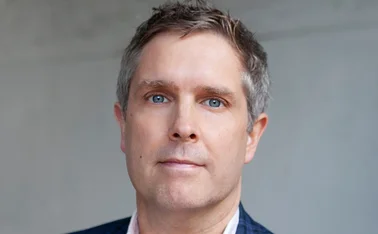
Benedict Burke: Greater collaboration essential for nat-cat response

burke-benedict-cila

Recently elected Chartered Institute of Loss Adjusters president Benedict Burke tells Post what he hopes to achieve in his year at the helm of the organisation.

Benedict Burke wants loss adjusters to rise above the many challenges facing the sector and be “proud and shout” about their achievements during his tenure as president of the Chartered Institute of Loss Adjusters.

“I don’t think we are as good as we should be about promoting all of the great things we do. If you think in terms of the technical expertise that we bring to the market and the response we have to catastrophes – it is the adjusting communities that are at the forefront of the claim response,” Burke says.

“I want to make sure the industry is proud, continues to be proud, and shouts more about what it is capable of doing as a collective.”

This objective is just one of many initiatives on Burke’s agenda as CILA president, a role he took over from Mike Jones on 16 October and one that he will balance alongside his day job as Crawford & Company global markets head.

burke-hobbies

Historical ties

Burke has had a long history with the institute – starting with completing the qualifications it offers – but officially began “giving back” around seven years ago when he was elected to the CILA council.

“I have benefited so much from the CILA and the adjusting world and it was time, as an elder in the village, to contribute back,” Burke says.

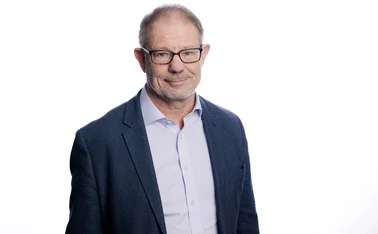
Malcolm HydeHaving served as chair of the CILA’s international special interest group and as deputy president prior to his appointment to the top job, Burke believes the CILA is currently in the best place it has been for years.

“[CILA executive director] Malcolm Hyde (pictured right) and his team do a really positive and progressive job – they commit so much energy. They think a lot about the future and they bring ideas. It is not a trade body so it has to work with employers in support of its members. It can be a tricky navigation, at times, but they do a very good job of it,” Burke says.

He is also full of praise for his deputy president; SCOR global business solutions claims head Jonathan Clark.

“He is a well-regarded strategic thinker, and he is going to help around the further drive and momentum of the initiatives we need to take. I’m really pleased with the way the institute is looking right now, despite all of the challenges within our sector, which are real.”

One of the objectives Burke hopes to achieve as president is to emphasise the value of loss adjusters, “encourage resilience”, and create a case for growth in the markets that they serve – both mature and emerging.

“The way I describe how to create that resilience, how to generate the momentum we need in the institute to promote the growth and to demonstrate the value is, first of all, staying true to the need for the continuation of technical qualifications,” he explains.

This relates to the increasing trend for loss adjusters to develop specialisms in, for example, aviation, marine, product liability, or high-net-worth claims. Because of this, Burke hopes to create more technical support from the CILA for its members.

“That is why the special interest groups have emerged and are very important because they are supporting the CILA branding around professionalism, know-how and experience. We will continue on that theme,” he adds.

burke-workedPromoting growth

The emphasis on emerging markets ties-in with Burke’s focus on promoting growth and supporting insurers in the parts of the world where they are extending their presence, for example, Latin America, Eastern Europe and Asia-Pacific.

“The international reputation of the CILA and its qualified members gives certainty, competence, fairness, and the continued essence of impartiality as being the centre of what we do.

“As insurers continue to put capital into these markets, they want to have honest partners that they can trust,” he says. “The adjusting profession does that, and does it very well. We will be continuing with the promotion of our international capacity as a profession.”

While the reputation of the CILA remains strong, Burke is aware the insurance industry’s standing often does not mirror this. The claims process, in particular, is frequently blamed for the negative perception consumers have of the industry.

“If we are looking to move and create greater public trust then, as an industry, we should recognise that one of the ways of creating that is through more progressive training. When the public meets the agencies and the adjusters who are executing the insurer promise, they are meeting the people who are properly, fully, appropriately trained and appropriately qualified,” he says.

In Burke’s opinion, this extends to the broader claims industry matching adjusters in the qualifications they hold and, he adds, the CILA can help with this.

“As an industry there should be real accreditation against the varying claims roles. The CILA can offer support to that. Our qualifications are open so the industry can come to the CILA and sit those qualifications. By doing so, it is a kite mark, it is an evidencing of the value of the institute but also one where the public can trust more individuals because there is accreditation.”

Indeed, the loss adjusting workforce is an area Burke is passionate about championing in his presidential year.

Candy Holland at Post's Disaster Risk and Response Forum - insurers pay a customer immediately after a major eventHe is keen to continue the work of past-presidents Candy Holland (pictured, left) and Jones in promoting greater diversity and inclusion in the loss adjusting workforce.

“I am absolutely of the view that if we are to be trusted by the public we need to reflect back to that society and those communities,” he says.

“There it is an unconscious bias and it needs to be tackled. I’m not going to resolve that in a year but I can bring a voice to that initiative and public support. I want to do that and I will do that.”

He praises Holland for establishing a ‘women in adjusting group’ and says the CILA can learn from that work to potentially set-up other similar initiatives.

“We will understand how to collaborate with other industry partners who want to do similar things, for example, Lloyd’s. We’ll take those learnings and apply that to other diversity initiatives.”

burke-wordsNew talent

Continuing the CILA initiative of fostering new loss adjusting talent is also on Burke’s agenda – particularly the retention of apprentices and graduates coming into the profession.

“We are looking to evolve support mechanisms and support initiatives for employers that are clearly working hard in those areas,” he says.

The capacity of the loss adjusting sector is a topic Burke has previously been vocal about and something he intends to champion as the CILA president.

In particular, he recognises a need for greater industry collaboration to respond to a future major natural catastrophe, such as the 2007 floods in the UK.

“In 2007 terms, the amount of insured damage was more than £3bn. The adjusting capacity today is not at the same level, so it has to be used more intelligently and in a collaborative context. That is the call I made as deputy president of the CILA and I will continue to make it as president,” Burke says.

“There comes a time where, as a whole, [the industry] needs to recognise
that the point of differentiation that insurers often see through claims could, if they continue in pursuit of their own siloed response, cause the industry as a whole to suffer,” he explains.

“The capacity is there but, at the very peak of demand, there could be some issues. It is about adjusters coming together as companies to think innovatively about how they can support the industry together. This has got to be a positive thing to do and, ultimately, this is about the customer.”

Burke is realistic about compliance challenges surrounding collaboration, including anti-trust and competition laws, but says there has been a positive response from other parts of the industry around the call for collaboration.

“The senior claims staff and insurers that we deal with day-in day-out get this. I definitely believe there is an acceptance that through a more collaborative framework the industry prospers as a whole.”

Burke is also acutely aware of the need for loss adjusters to stay relevant amid the evolving nature of the job in relation to new technology.

While he describes technology as an enabler for adjusters he is quick to emphasise that they must be aware of data protection and compliance as a data breach would be harmful to the sector’s reputation.

“There is nothing that will do more harm to a brand than a data breach. The type of data we have is huge. We have to use technology and respect it to protect the sources of the data flows that we have – and must continue to have – to do our job,” Burke explains.

Technology can also work to put the customer at the heart of the claims journey, for example, allowing access to the claims file, he says.

“Sharing information and photographs, video streaming and discussing a claim through a video link – these are opportunities for the customer to contribute to the claim outcome, which technology enables.”

burke-cv

It is going to be a busy presidential term for Burke with an ambitious agenda and a set of priorities to work towards – but his passion and enthusiasm for the sector should give the CILA’s members confidence he is the right person for the job.

“It’s been a fantastic world to work in and develop a career in and I would do it again, if I had my chance,” he says.

Speaking to Post at the Federation of European Risk Management Associations Forum in Venice earlier this month, Burke said it is such events that make him excited about the future of the industry.

“When you come to places like this and meet people in the market [who are] thinking innovatively and creating solutions for complex markets it is fascinating and I still love it.”

Only users who have a paid subscription or are part of a corporate subscription are able to print or copy content.

To access these options, along with all other subscription benefits, please contact info@postonline.co.uk or view our subscription options here: https://subscriptions.postonline.co.uk/subscribe

You are currently unable to copy this content. Please contact info@postonline.co.uk to find out more.

Building homes back better after floods

With the Environment Agency warning one in four homes is now at risk of flooding, the latest Insurance Post Podcast explores what the insurance industry is doing to make properties more resilient from storms.

Most read articles loading...

You need to sign in to use this feature. If you don’t have an Insurance Post account, please register for a trial.

Sign in
You are currently on corporate access.

To use this feature you will need an individual account. If you have one already please sign in.

Sign in.

Alternatively you can request an individual account here