

Post Blog: UK riots and loss of trade
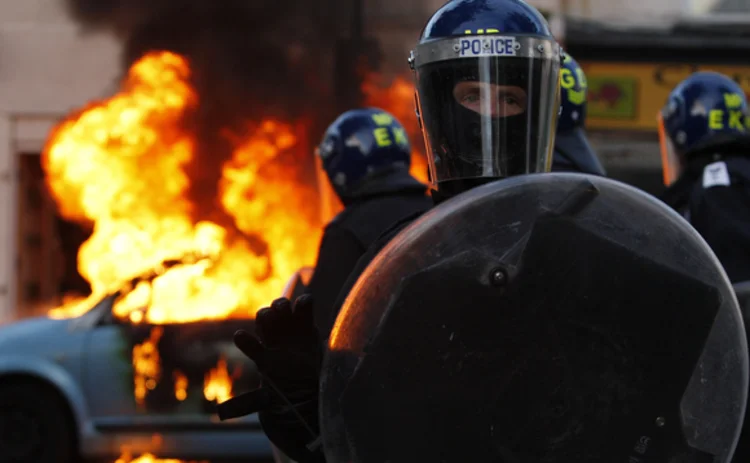
Some six months after the widespread rioting hit the UK, the position on loss of trade remains unclear.
The English riots of August this year brought to public attention a law which has been on the statute books for some 135 years.
The Riot (Damages) Act 1886 provides that those whose property is damaged or stolen by persons "riotously and tumultuously assembled" may address a claim for compensation to the local police authority.
There have been significant differences of opinion though about whether the Act still has a role to play. Some people feel that already overburdened taxpayers shouldn't be called on to meet some a bill which could run to hundreds of millions of pounds.
Others think that the individuals and businesses who were victims of the riots should have their losses shared by society at large, and that the compensation provides invaluable support for businesses in riot-prone areas, which might otherwise find it impossible to obtain affordable insurance.
Despite this debate, it is clear that there will be a liability on the police, and ultimately on the taxpayer. What is much less clear is just what 'losses' the Act covers, and in particular whether there will be compensation for consequential loss, such as lost trade.
A sizeable proportion of the claims against the police will turn on the answer, and the insurance industry is particularly interested, given that it will otherwise bear the cost where victims have business interruption cover.
The Act gives no clear answer, stating simply that compensation shall be payable "to any person who has sustained loss by [relevant] injury, stealing, or destruction", and that the police authority, once satisfied that damage was caused by rioting, shall "fix such compensation as appears to them just".
The government and affected police authorities have made clear statements that "non-material losses, such as interruption to trading" will be excluded. Hardly surprising, you might say, but no legal justification for this position has been advanced.
So what have the courts said? The Act was passed in 1886, and you might expect that the issue would have been considered since then.
Frustratingly, there is no clear court authority. But does this mean that claimants have not previously pursued BI losses, or that the point has not been litigated because the police authorities have historically paid BI claims?
Anecdotal evidence suggests that such claims have been accepted in the past.
To date (it is reported) only a bare minimum of material damage claims has been paid. Some administrative delay is inevitable in dealing with claims on this unprecedented scale, but this may also indicate consternation behind the scenes around how exactly the claims should be assessed.
Unless there is a change of stance from the government and the police authorities, it seems inevitable that the courts will have to determine the point. Once claims for BI start being turned down formally, a test case will have to be brought for the court to interpret this Victorian statute.
A great deal of money for insurers, businesses without BI cover, the police, central government, and ultimately the taxpayer will ride on that decision.
However the court ultimately decides, the 1886 Act is overdue for parliamentary debate as to whether it remains appropriate in the 21st century.
Richard Deering is a solicitor and George Mortimer is an associate at DLA Piper.
Only users who have a paid subscription or are part of a corporate subscription are able to print or copy content.
To access these options, along with all other subscription benefits, please contact info@postonline.co.uk or view our subscription options here: https://subscriptions.postonline.co.uk/subscribe
You are currently unable to print this content. Please contact info@postonline.co.uk to find out more.
You are currently unable to copy this content. Please contact info@postonline.co.uk to find out more.
Copyright Infopro Digital Limited. All rights reserved.
As outlined in our terms and conditions, https://www.infopro-digital.com/terms-and-conditions/subscriptions/ (point 2.4), printing is limited to a single copy.
If you would like to purchase additional rights please email info@postonline.co.uk
Copyright Infopro Digital Limited. All rights reserved.
You may share this content using our article tools. As outlined in our terms and conditions, https://www.infopro-digital.com/terms-and-conditions/subscriptions/ (clause 2.4), an Authorised User may only make one copy of the materials for their own personal use. You must also comply with the restrictions in clause 2.5.
If you would like to purchase additional rights please email info@postonline.co.uk
More on Claims

Staff will reject ‘Ask Jeeves’ AI tools if options are limited
Ed Jackson, chief commercial officer at MGA HomeProtect has urged firms not to give staff “the Ask Jeeves equivalent of artificial intelligence” and establish some key principles in how to use the technology from the outset.
How 9/11 still shapes insurance
Editor’s View: On the 25th anniversary of 9/11, Emma Ann Hughes reflects on how the attacks changed terrorism risk, catastrophe modelling and insurance capacity forever and reminds the sector of how it must always help people recover from loss.
Throwback Thursday: Biba’s talent help
Insurance Post’s Throwback Thursday steps back in time to September 1981 to remind you what was going on this week in insurance history when the British Insurance Brokers’ Association responded to demand from members for help with “personnel matters.”

Heatwaves remind us that climate change resilience is crucial
View from the Top: Sarah Brown, risk engineering and resilience director at Axa Insurance UK, explains why the risk posed from regular heatwaves must be better understood in order to mitigate risk.

ABI urges insurers to strengthen support for abuse victims
The Association of British Insurers has produced two guides to help customers and colleagues experiencing economic abuse, setting out steps to support those affected.
Diversity and Inclusion In Insurance Awards 2026 shortlist revealed
Insurance Post can reveal the businesses and individuals who have been shortlisted for the 2026 Diversity and Inclusion In Insurance Awards.
Autoglass warns insurers over risks of excluding windscreen cover
An increase in stripped-back motor insurance products entering the market over the last six months has prompted a warning that customers may not fully understand the financial consequences of choosing policies without glass cover.
Foil appoints Huxley as CEO after Besemer steps down
The Forum of Insurance Lawyers has appointed Mark Huxley as CEO to succeed Laurence Besemer as he steps down after 17 years, effective 1 October 2026.