

The Wray forward

Institute of Risk Managers chairman Simone Wray has clear aims for her new role and with boundless enthusiasm for her subject plans to bring people together with the concept of risk management
Simone Wray's enthusiasm for risk management is infectious - something that will no doubt stand her in good stead as the voice of the Institute of Risk Management for 2008. Having taken over as chairman in December from Cary Depel, she cannot prevent passion or animation enlivening her tone as she talks about the role she evidently already relishes.
As strategic risk manager for Warwickshire County Council, Ms Wray's public sector perspective is perhaps an unusual one for an IRM chair but could well prove important as she seeks to actively engage with its membership. After all, approximately 25% of the institute's supporters work in this field too.
Yet it was only in December 2006 that Ms Wray joined the local authority environment, having discovered risk management in 1989 when she began work at British Telecom. She remembers this period fondly, not least for the personalities and promoters of the profession that she encountered there.
"I never made any precise plans or specific career choice but rather found myself in the world of risk management when I started a temporary position in the corporate risk management team at BT. This role became permanent and I had two great mentors in the individuals I worked with, namely Kip Berkeley-Herring and Ray Mattholie. As head of the team, Ray actively sought to bring together people who would proceed through the formal professional qualification."
Formal qualifications
Passionate about her subject matter she may be, but that does not mean the prospect of multiple years of study to pass the IRM's examinations immediately appealed to Ms Wray. "As a young thing of 23 or 24, I recall my line manager sitting me down and starting to talk about a 'developmental programme', saying I should take this formal qualification in risk management that was going to take three full years. And I remember thinking - 'I don't think so'."
But it was not long before her trademark enthusiasm emerged. "There was gentle encouragement and, with a team of us working together, it introduced a competitive edge. I felt very much the fledgling on the team, working alongside a claims manager, for example, who had been in the industry for 25 years. But I ended up the only one that eventually came through with passes in all subjects. From that point, I chose to move on swiftly to fellowship, being determined to see the process through to its end point. In fact, I just loved it, loved the subject from the beginning."
Her involvement with the IRM was immediate, actively participating in student workshops where she met like-minded people, before joining the board in 1999 and leaving her first meeting with an action plan to develop a five-year business blueprint. Ms Wray has served as an active director ever since, with her most prominent role to date being chairman of the annual Risk Forum event for the past two years. During this time numbers have risen to 400 and despite giving up the reins for 2008 she is optimistic 450-500 will attend this year.
On a professional level, her quick gain of qualifications provided the necessary springboard to apply for a risk manager position at BAE Systems - then British Aerospace - before taking the role of corporate risk advisor at HBS Business Services Group, and later making her move into the public sector.
"That is one of the unique things about the world of risk management and the IRM that I love - its sheer diversity," she says. "You can be anybody, from anywhere, with any background and of any age. It doesn't have a sector-specific profile."
Ms Wray explains that this diversity is reflected in the annual forum's open-ended welcome that extends to anyone with an interest in, and responsibility for, risk.
As for her own ambitions and objectives as chairman of the IRM, Ms Wray concedes that her time at the helm may not give rise to as much headline-generation as her immediate predecessor. However, she is keen to point out why. "Last year was a very hard-hitting, fast-paced one - for example, the putting in place of various international arrangements - so now it's time to stand back and take things forward in a measured way. Otherwise there is a real danger of making promises we can't deliver on."
The international element she refers to involved three significant tie-ups with overseas risk management and insurance organisations - in Sweden, Poland and Malaysia. When interviewed as the new chairman last year, Mr Depel also referred specifically to potential partnerships in the economic powerhouses of China and India. So do these remain on the IRM's agenda?
Overseas territories
"China and India are certainly still on the radar as part of the overall strategy," she responds. "With regard to Malaysia, Tony Auch - who was deputy chair last year - is now living in Singapore, with his job having taken him out there, and he will take a lead on this relationship. There is still a lot of detail to develop further - for example, the Malaysian Insurance Institute is looking at doing some servicing locally and Tony is very much there to support that. So we want to see where this relationship goes before we decide where to head next."
Even though a fourth international partnership may not be imminent, Ms Wray is confident that she will be ready to reveal another before her year is out. "As a board we have agreed a three-year business plan, which provides continuity from year to year. My personal aims as chairman are underpinned by the theme of effectiveness - building an effective team at board level and within the office; looking at the relationships between the two; and increasing engagement with membership."
With regional groups already up and running in Australia, Hong Kong, Dubai, Greece and Canada, Ms Wray jokes that her desire to get "out and about" engaging with members should, perhaps, kick off with a jaunt down under.
So is the IRM experiencing an uptake of membership from overseas territories as a result of the establishment of these joint ventures, which will see the body's qualifications actively promoted? "Obviously we hope they will bring in new members from those regions but the IRM has always been an international organisation. We have students in more than 30 countries studying for either the diploma or the certificate via distance learning, and the use of the internet makes it so much easier to cross international boundaries."
However, it is fair to say that the IRM has been increasingly positioning itself as a global brand with a mission to become the 'leading international institute providing practical risk management education'. This was reflected in last October's unveiling of the new International Diploma in Risk Management (Post, 18 October 2007, p28), launched following the input of 70 academics and practitioners around the world - an initiative set to be mirrored in June with the introduction of the refreshed and upgraded International Certificate syllabus. Both replace the previous qualifications available via the IRM.
An additional benefit arising from these developments, Ms Wray explains, is the spring launch of a virtual reading room for all members, not just students. Better access to risk management information has apparently come top of the IRM members' wish list for two years running and the new facility is aimed at member retention as well as supporting the concept of lifelong learning. It has been developed through working in partnership with the European IRM in Denmark.
In essence this new online facility will enable members to quickly cut the risk management wheat from the inevitable chaff that has proliferated as a by-product of the information superhighway's development.
"You can spend hours trawling the internet and discover some amazing information," says Ms Wray. "And the reason this reading room concept is fantastic is because you will find top-quality information, online, all sitting nicely together in one place. So that little gem you might eventually have found on page seven of your Google search is there, ready and waiting for you. The intention is that this 'room' will evolve and grow as new documents are identified and, in terms of engagement, there is also going to be a members' focus group set up to help refine its content and ensure it remains bespoke to IRM membership."
Given Ms Wray's current public sector perspective, will she be actively looking to up member numbers from practitioners outside private companies? "It's an obvious focus given that I work in the public sector myself," she says, before pointing out that the first membership choice for her counterparts still tends to be that of trade body Alarm - the national forum for risk management in the public sector. However, she would ideally like to see more people opting for dual membership because of the IRM's distinct educational focus.
"There are significant changes taking place in the public sector in terms of the way local authorities are audited on performance, and risk managers are going to have to raise their profile due to the increase in partnership working. When you are bringing together, say, five different organisations to provide a shared service, you potentially have five different risk managers. Consequently, practitioners are going to have to fine-tune their skills, knowledge and expertise in order to raise their game and rise to the top."
Ms Wray is confident that the IRM can simultaneously serve the differing needs of public and private sector risk managers because, ultimately, the skills and approaches are generic. It is only the context that is distinct. The IRM also has growing experience of running vehicles that can allow the drilling down into discreet elements where necessary. "Special interest groups are the perfect way of dealing with individualisms within the subject of risk management, and the number of SIGs and regional groups within the IRM has risen from five to 21 in the past 18 months. Within the public sector, there are already a lot of best practice groups and that's one of the biggest differences I've come across since moving from the private sector. In the latter, risk managers tend to share through associations like the IRM - it's one of the main membership benefits. But within the public sector there is real 'open' sharing; it's not just about concepts and principles but sharing the practical tools, methodologies and approaches being used."
It is not only the practice of knowledge-sharing where she feels the public sector is arguably more advanced than the private one - albeit the latter holds concerns over loss of competitive advantage. Evidencing risk management and documenting a greater level of detail have also increasingly become required in the public sector and could benefit private entities going forward.
"The public sector is quite prescriptive in terms of the regulatory framework in place, whereas the private sector has a more open-book style of guidance under Turnbull with a choice of frameworks, which can be confusing," she explains. "Even if local authorities have different cultures, the one thing every entity in the public sector has in common is a published set of aims that everybody is working towards, which is where the effective sharing and working together comes from. As a consequence, there is a much greater need to evidence the day- to-day detail of risk management; it is not enough to just produce an over-arching statement on risk and governance, and there will only be greater emphasis on this going forward. In the private sector, things are much more subjective in terms of realising the benefits."
Ms Wray concedes that moving from one sector to the other does have its challenges. "Obviously, a lot of things were alien initially; instead of working to a board of directors I report to a cabinet and full council - of which there are 64 members in Warwickshire. Suddenly you are dealing with people's political aims and objectives, not necessarily a coherent corporate strategic vision. In some ways this is more demanding because you are constantly having to put forward a convincing argument for proactive risk management."
But this is a test of communication she is evidently ready for: "The public sector is wrestling with the view that it is risk averse, so I am busy going around Warwickshire telling everyone it's quite alright to take risks. And that's one of the things I love about my role - the job of selling risk management. You see people come into a workshop, sit down and you just know they would rather be anywhere else on the planet.
After all, let's face it, risk management doesn't sound like the sexiest subject matter. They really don't know what to expect, but as you run the workshop, people suddenly begin to engage, and this facilitation of communication is one of the greatest benefits of bringing people together with the concept of risk management."
Away day
Facilitating more constructive and creative communication is not just an objective she reserves for colleagues and IRM members. Ms Wray reveals that one ambition for the year is to persuade the board of directors to participate in a form of 'away day'.
"At the moment there are 17 board members who come together, once a quarter, to provide strategic vision and direction and an oversight of IRM operations. And it can be frustrating because there simply isn't enough time to discuss everything we would like to; by the time these board meetings come around they are full of agenda items.
There is a lot of talent at board level, talent that is constrained in some ways because of the infrequency of our meetings and the sheer number of things that have to be addressed during them. So I would like to create a window of opportunity this year for us to get to know each other more as a team; get those ideas, visions and strategies out on the table."
She explains how this desire ties in with her advocacy of soft skills for risk managers: "You can have all the technical knowledge, methodology and process in the world but this is of negligible value if you don't have the skills to make a coherent argument and sell your subject in a way that people understand."
Only users who have a paid subscription or are part of a corporate subscription are able to print or copy content.
To access these options, along with all other subscription benefits, please contact info@postonline.co.uk or view our subscription options here: https://subscriptions.postonline.co.uk/subscribe
You are currently unable to print this content. Please contact info@postonline.co.uk to find out more.
You are currently unable to copy this content. Please contact info@postonline.co.uk to find out more.
Copyright Infopro Digital Limited. All rights reserved.
As outlined in our terms and conditions, https://www.infopro-digital.com/terms-and-conditions/subscriptions/ (point 2.4), printing is limited to a single copy.
If you would like to purchase additional rights please email info@postonline.co.uk
Copyright Infopro Digital Limited. All rights reserved.
You may share this content using our article tools. As outlined in our terms and conditions, https://www.infopro-digital.com/terms-and-conditions/subscriptions/ (clause 2.4), an Authorised User may only make one copy of the materials for their own personal use. You must also comply with the restrictions in clause 2.5.
If you would like to purchase additional rights please email info@postonline.co.uk
More on Personal

Aviva’s Cunningham tackles translating fraud for boards
Kat Cunningham, head of underwriting counter fraud at Aviva, said insurers need to change how they discuss insurance fraud with their boards, shifting the focus from operational performance to its wider business impact.
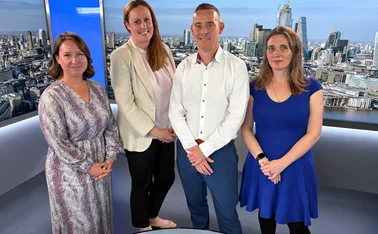
Is heritage building insurance ready for the future?
As climate risks increase, severe weather events become more frequent and restoration techniques and building materials become increasingly specialised, insurers face growing challenges in protecting the UK’s heritage properties.

Ageas’ Middle on using AI to make insurance accessible
The challenge and “exciting” opportunity for personal lines insurance will be using artificial intelligence to make coverage more accessible, said Ageas UK’s CEO Ant Middle.
Close Brothers to ‘double down’ on commercial insurance
Close Brothers Premium Finance plans to “double down” on commercial insurance as part of its strategy to 2030, following its decision to withdraw from high-volume, aggregator-led personal lines business.
UK motor insurance shopping jumps, but switch rates steady
UK motor insurance shopping peaked in the first half of 2026, with an average of 403,000 consumers shopping every day between January and June, according to LexisNexis Risk Solutions.

BIA 2026 winner Q&A: Policy Expert chief claims officer Gary Barker
Gary Barker, chief claims officer, explains how moving from an outsourced solution to an in-house one laid the foundations for Policy Expert having significantly faster claims resolution than the industry standard by blending tech, expertise and proactive support.

Property claims average hits £10,000 amid subsidence surge
The average property insurance claim hit £10,000 in the third quarter of 2026, due to rising repair costs and extreme weather, which drove up claims severity, according to the Association of British Insurers.
Aggregator boss to lead review of NHS productivity and AI
Compare the Market CEO Mark Bailie is set to lead an independent review of NHS productivity and the potential for artificial intelligence to help improve healthcare services.