Gangs of Bermuda

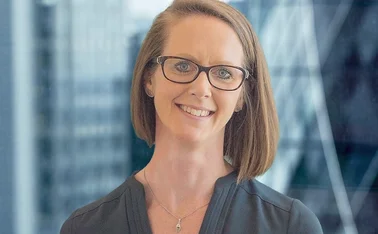
Native Bermudian journalist Sarah Titterton paints a vivid picture of the realities of life in Bermuda - from the colourful, Bermuda shorts-wearing natives to the work-hard, play-hard expatriates, who are all "one big, buzzing family"inhabiting this tiny rock

There is a group on the social networking website Facebook entitled '65 000 Alcoholics Clinging to a Rock'. While not entirely accurate, it does provide a small snapshot into life on the island otherwise known as Bermuda - which is, as we know, a world leader in the reinsurance industry.

Bermuda is a 21-square-mile island in the middle of the ocean with a population the size of a town. On a global scale, we are a dot. Very few know anything about us other than the Bermuda Triangle (it's not true) and Bermuda shorts (yes, people wear them - and yes, pink ones - and you know what? I think they're sexy!).

Luckily, there is one distinct group who do know something about Bermuda: those who work in the (re)insurance industry. But can you put faces to the names? There is an awful lot of money and business flowing in and out of Bermuda, but what is working within Bermuda's reinsurance industry really like?

Style council

Bermuda has always been unique, and the international business sector is no different. If you're English, for example, you might not be used to being termed a 'snappy dresser'. In Bermuda, however, your pin-striped suits and 'big-knot' ties would put you at the top of the style hierarchy - above the Americans (who are generally pretty sloppy) or the Canadians (who often manage decent shirts or pants, then promptly ruin the effect with awful shoes), or even the Bermudians themselves (after all, we're the ones who invented Bermuda shorts in the first place).

The sheer fact of Bermuda's size exerts a massive influence over life on 'the Rock' in general, and on the international business sector in particular. As a 20-something underwriter at a company in London or New York, for example, it is unlikely that your chief executive officer (CEO) is going to know or remember your name. In Bermuda, says one such 20-something underwriter, "I met my CEO within a week, and he recognised me in the wine bar (and knew my name) the next week."

Granted, she admits, a larger company such as Ace or XL might not see such familiarity between its big fish and the underlings. However, it is not uncommon: a data modeller at a well-established reinsurance company says his CEOs "are just like anyone else - out to have a drink or a meal. They're not these elitist, unapproachable high-ups." This dynamic relaxes people: "It really helps break down this inaccessible feeling that one can get in a larger city."

The relaxation is emphasised by the nature of office culture. "We have to get more formal once we leave the office - like when we go to the wine bar. Otherwise, we'd get kicked out," says one underwriter. Admittedly, that is an extreme example, but even at the established monarchs of the business in Bermuda, "when people get very serious, it generally means something is not going well".

Make no mistake, though, jeans and wine bars do not equal a lax approach to work itself. "They only employ top people who they can trust to get their work done," explains one underwriter. "It's work hard, play hard. And it has to be fun with the amount of time people spend at work." The dynamic is at once relaxed and demanding, says one analyst. "We play foozball, but work until 11pm."

Happy-hour social life

This relaxed approach, combined with the island's small size, means that social barriers within the industry are largely non-existent, both within companies and without. As previously noted, it is not uncommon to find yourself drinking alongside your CEO at happy hour on a Friday evening. It is also not uncommon for you to find yourself in the exact same bar as the rest of the entire industry - a situation you would be rather startled to find yourself in were the bar located in London.

Happy hour at the Fairmont Hamilton Princess Hotel, for example, has been a regular watering hole for years for Bermuda's reinsurance industry, as well as for its lawyers, politicians, accountants and journalists.

From the frequent mention of the phrase 'wine bar' already in this article, you may have ascertained that Bermuda's wine bars - one of which is in a prime location on the so-called 'Insurance Row' (Bermudiana Road, where the Ace's and XL Capital Ltd's global headquarters are located) - are popular destinations.

The crowd tends to move with the season: a new bar called 'Ten' was popular this winter, for example, but now that summer has arrived, the party has shifted en masse back to the gardens of the Hamilton Princess, and its 2007 competition, 'Live in the Gardens' at the Botanical Gardens.

That being said, the pace of the social life in Bermuda is not the frantic, headlong rush often seen in London or New York - especially for those working at start-up companies. "We work long hours and start early, and we take our responsibilities too seriously to show up hung-over or tired the following morning," says one underwriter.

She adds: "Right now, we're making a list of good actuary points and bad actuary points for our chief actuary. He's wearing an unmatching outfit today - good actuary point. Were he to say something cool, that would be a bad actuary point." Clearly, in Bermuda's reinsurance industry, people gain perspective on life very quickly: they know how to work hard, but pretension - unlike in other financial centres - is, for the most part, a mythical creature.

The communal nature of the social scene ensures that division along company or national lines is all but non-existent. "Happy hour is a great leveller," comments one data analyst. Americans, Canadians and the English are one big happy family in Bermuda - going to the same places, socialising with the same people, joining the same sports teams, experiencing the same ups and downs of island life.

There are few distinctions between the nationalities, it being difficult to tell (apart from accent) who is from where and how long ago a person arrived on the island. "Quality of sunburn is usually a good indicator," the data analyst observes.

The next best thing

Similarly, there is no sense of hierarchy among the different companies: those working for established businesses like Ace or XL do not, as a rule, look down on class of 2005 start-ups, for example. If anything, the buzz in Bermuda surrounds those start-ups: "Whenever anyone talks about working for Ariel, Lancashire or Validus, everyone wants to know what it's about," says an underwriter. "Mainly because they're looking for jobs there themselves."

The rush of new companies forming on the island means that most people take jobs not for the long haul, but "until something better comes along". And something better, it seems, is always coming along. One Bermudian underwriter admitted to turning away calls constantly - until she realised that she and her company had different goals for her advancement in mind. "I started taking those calls - and before they knew it, I was out the door," she says.

Granted, she is Bermudian, and Bermuda's strict immigration regulations make hopping between the different companies a lot more difficult for non-Bermudians (see page 25). Recently, the Bermuda government put a six-year cap on work permits for expatriates. The move was controversial, with many pundits comparing Bermuda to the Cayman Islands and complaining that the island would not maintain its competitive edge if foreign workers were forced out.

Talking heads

Giants of the industry, however, seemed more positive - XL Capital CEO Brian O'Hara recently said that "draconian" implementation of the work-permit rules could put Bermuda at a competitive disadvantage, but that talks were ongoing between business leaders and the government.

In fact, some industry sources have said the Bermuda government is doing a lot of talking behind closed doors. "The government is well aware of the industry's place within the economy," one CEO said recently. Despite the government's rhetoric - which is largely anti-foreigner - he added: "They are not going to do anything to disturb that balance."

The gulf between the government's politically expedient rhetoric and its actual policies regarding international business does expose one alarming line of fracture in the industry's 'happy family': "I don't admit to being Bermudian, ever!" says one underwriter. "If it comes out, the response is very much: 'Wow, you're Bermudian, you've done well for yourself'. It's like there are very low expectations for Bermudians, so when people come across one who's even half-decent, they'll be condescending."

The disconnection, it appears, lies between the industry and Bermudians themselves. There is resentment on both sides: working-class Bermudians see the beautiful houses (usually paid for with a company housing allowance) and incredible salaries belonging to the expatriates, who they consider visitors in their already overcrowded country, and wonder why it is that they can barely pay their own rent.

On the other hand, comments one expatriate, "maybe those on permits feel better than the locals because they have had to 'earn' their job rather than being born with these opportunities".

Racial divide

This fracture between Bermudians and the reinsurance industry both bleeds in to and feeds off of Bermuda's race issue. Unlike other islands in the Caribbean, which often have populations of roughly 90% blacks and 10% whites, Bermuda faces a nearly 1:1 ratio of whites and blacks - and is one of the few countries in the world to do so.

In a country with a painful history of segregation, that also happens to be both tiny and vastly overpopulated, this means that race is an issue that stares Bermudians in the face every single day.

"I can't pinpoint any examples, but there aren't many black people in our management structure," says one data controller. "Finance, underwriting and legal are mostly white, non-Bermudian," says another. That this is so does not, however, mean that systematic racism is alive and well in Bermuda's reinsurance industry.

The factors helping to create this dynamic are deep, complex, ingrained in Bermudian society and history, and largely independent of reinsurance. Educated Bermudians, black and white, flourish in the industry. The problem, from the Bermudian point of view, is that there are not enough educated Bermudians. The state of Bermuda's education system, many argue, is in part a legacy of its racial past - but only in part.

Several people agree that women face the same barriers native Bermudians do: "There's definitely an element of (gender discrimination)," says one underwriter. "There aren't enough women in the top roles. But I think that's slowly changing." As is, most believe, the balance between Bermudians and non-Bermudians within the industry.

So, despite these fractures, the defining characteristic of Bermuda's reinsurance industry remains that as characterised above: one big, buzzing family, working hard and playing hard. Not quite 65 000 alcoholics clinging to a rock, but certainly not the City of London either. Bermuda has always been another world - and for the reinsurance industry, that world is, quite simply, a good one.

Only users who have a paid subscription or are part of a corporate subscription are able to print or copy content.

To access these options, along with all other subscription benefits, please contact info@postonline.co.uk or view our subscription options here: https://subscriptions.postonline.co.uk/subscribe

You are currently unable to copy this content. Please contact info@postonline.co.uk to find out more.

Q&A: Andy Wright, Resnova

Andy Wright, co-founder of a new consultancy firm, Resnova, speaks to Insurance Post about his time at Tesla and Zego, why he wanted to set up a consultancy firm, and why he thinks the next wave of insurtech funding could be coming from China and the Middle East.

Throwback Thursday: Howden saves insurers millions

Insurance Post’s Throwback Thursday steps back in time to November 1975 to remind you what was going on this week in insurance history when Alexander Howden, the brokerage created by CEO of Howden Group’s David Howden’s great-great-great grandfather, boasted how much he was saving insurers.

Top 50 Reinsurers of 2025 revealed

Swiss Re’s adoption of IFRS 17 has propelled it to pole position on this year's Top 50 Reinsurers ranking, which Christopher Pennings, financial analyst at AM Best observes, highlights how the new accounting standard continues to reshape global reinsurance standings.

Q&A: Jonathan Gray, Pool Re

Jonathan Gray, chief underwriting officer at Pool Re, discusses the impact of recent changes at the state-backed terrorism reinsurer and how its helping businesses manage risk.

Most read articles loading...

You need to sign in to use this feature. If you don’t have an Insurance Post account, please register for a trial.

Sign in
You are currently on corporate access.

To use this feature you will need an individual account. If you have one already please sign in.

Sign in.

Alternatively you can request an individual account here