Top 100 UK insurers supplement: A man for all seasons
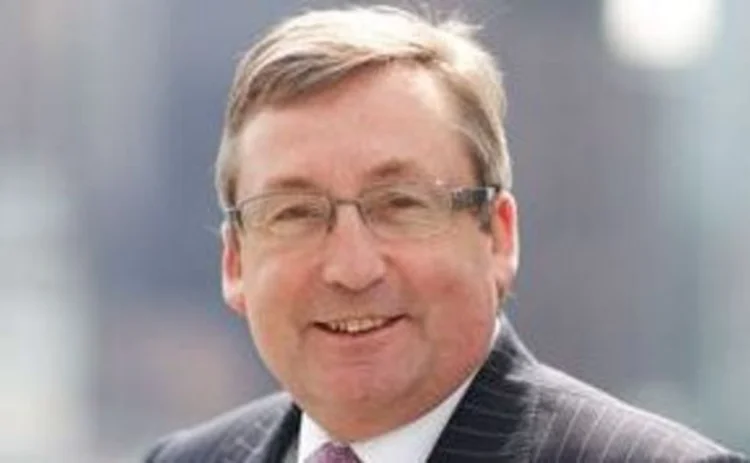
Barry Smith

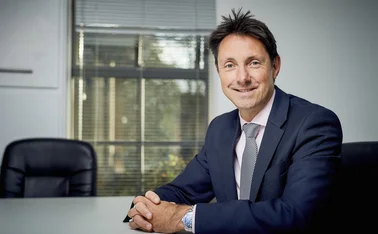
As CEO of Ageas UK 
for the last decade, 
radical changes in 
distribution, more 
intelligent use of 
capital and the 
financial turmoil 
are just a few of the changes Barry Smith has witnessed.

Remaining at the top of a company in any walk of life for a decade is impressive, and general insurance is no exception. A sweep of the current market shows that Admiral’s Henry Engelhardt and Esure’s Peter Wood are still going strong at the companies that they founded in 1993 and 2000 respectively, but not many can claim to have reached such a milestone.

Another who has reached this impressive mark is the CEO of Ageas UK, Barry Smith, although he is first to admit he didn’t think he would: “You don’t ever think you will be somewhere five or 10 years later. You hope you will be, but we all hold the same insecurities and wonder if we will 
be successful.”

He credits his success in part to the fact the business was already in good shape following the merger of Bishopsgate Insurance and Northern Star Insurance Company in 2000: “I was fortunate in some ways because the business [then known as Fortis] was already successful when I went there. It was a bit smaller and shaped differently, but it was not in any way in crisis. And hopefully we have taken a good operation and made it better.”

His decade at the helm has certainly seen some major changes, especially in recent years with the acquisitions of Out Right, Kwik Fit and Castle Cover in the last three years, plus its joint venture with Tesco (see timeline).

“[Ageas] was principally a single product, single channel company [in 2001]. It was a typical 80/20 business – 80% of the revenue was private car and 80% of our products were distributed through brokers. It also had a good DNA in travel,” he says.

“But over time the scale and breadth have changed. Scale in terms of our premium and where we are in the market; and breadth in terms of the nature of what we now cover having morphed from a car insurer into a major personal lines player, which is progressively moving into the commercial lines space. We have also launched a protection business.”

Despite these changes, Smith insists it has not all been revolution. “From an Ageas viewpoint, people say there has been a lot of change in terms of scale and shape, but underneath it we have been steadfast in our commitment to a strategy which is underpinned by a commitment to quality.”

Continuity
He continues: “The people that work here are another constant. Some have been with Ageas for 40 years. It is often only when people retire that you see how much they have invested in the business, and this helps illustrate that continuity.

“When someone new comes in, they do so for a reason, whether it is strategic or the availability of neccessary skill sets.”

Smith adds: “Because of this continuity we haven’t been through many of the difficulties some companies have experienced from a people perspective. That doesn’t mean we haven’t faced issues, but we have been able to build some stability.”

The same cannot be said of the market over the decade, however: “People might say it is a tough market now but I can’t remember people ever saying it was an easy one. Having said that, things do appear to have come to a head recently. You only have to look at Solvency II and the deployment of capital, as well as the issues linked with the wider financial markets such as the Eurozone and banking crises. There are a lot of macro issues presently impacting on firms such as Ageas,” he explains.

Outside of this he believes the biggest change for insurance has been in terms of distribution, something Ageas has 
been at the forefront of with its acquisition of mobile technology specialist Text2Insure, as well as embracing the possibilities 
of a multi-distribution platform through aggregator-friendly brokers and 
well-known brands.

“A lot has changed over 10 years in terms of innovation and the delivery of propositions. The UK is quite far advanced with regards internet distribution, and the accessibility of broadband has been the single biggest influence and catalyst for that.”

Smith believes there will be no let up in this, but stresses technology is not the only difference: “There has been a change in the shape of the market in terms of the positions of the major players. There are now three broad categories: home-based insurers, European insurers, and then others. If you had asked me where I thought things would go 10 years ago I would have said that there would be more investment from the US into the UK and, while there have been some examples, it is not as prevalent as I would have predicted.”

A trend that the market is seeing instead is insurers considering more carefully the books of business they have and the risks they are willing to write. “What we have seen is people changing position in the market based on these experiences, although some people may say that is too little too late.”

Specialism
He believes there is still plenty of capital in the market but that the more savvy players are only allocating it where they can get a good return. “We have seen more firms deciding to specialise in certain product areas and this is something that will continue in the future. It is difficult for insurers to be masters of all they touch, so instead many are focusing on becoming specialists, and competing in a limited number of markets.”

He adds: “The competitive force in the market is still very strong and what that means is that if you do an average job and achieve an average result, it is not going to be satisfactory.”

In his decade at Ageas, Smith has seen a lot of legislation and regulation introduced which has had a direct or indirect impact on the market. And although he is loathe to criticise any of it, he admits it has taken time for some of its consequences to be fully played out.

“It is easy to say things haven’t worked but over time you see that things have changed. The area of uninsured driving has seen progressive legislation and positive changes have happened although it has taken time.

“There is a genuine view that in the UK we seem to have to do more than other territories, in that our regulator executes legislation in a more onerous way than is seen in rival countries.

“The upside of this is when you hear other people’s perspectives on the UK, they comment that this rigorous execution means the country is viewed positively when it comes to governance and risk management. So there is an upside, but I’m not sure it balances out.”

Smith has also witnessed some major claims events in his time at the top, including 9/11 and widespread flooding across the UK, and firmly believes the industry needs to co-operate to improve its image: “We need to work more closely together on these issues because, while major events offer opportunities for insurers to gain a competitive advantage, it will only be for a short period.

“Yet the impact on the wider reputation of the insurance market is very real indeed. So the big question is how do we marshal all our resources together in order to help portray what we deliver in a more 
favourable light?”

The less than impressive public perception of insurance is one of the things that has not changed in Smith’s 10 years at Ageas, although he explains there are positive signs things may be turning: “We all struggle with how to create a more positive view of insurance in the eyes of the public. Often positive experiences somehow collectively end up as a negative, yet the overwhelming level of satisfaction is hugely encouraging.

“And when it comes to influencing others and building understanding of the genuine issues, there have been some good examples recently. Uninsured driving is one where there has been a positive agenda with Department for Transport and the Home Office.”

But he says there may still be some way to go on matters such as flooding and the Statement of Principles as people are not ready to listen to what insurers have to say on these matters: “We must make sure that we are heard, and that the general public fully understands how insurance adds real value to customers, businesses and families, and ultimately supports the UK economy.”

A smaller community
Another area in which Smith highlights little change in his decade at Ageas’ helm is the size of the UK insurance sector: “The numbers might be big in terms of cash, premiums generated, products and customer needs, but in reality we are a small community that works closely together in different ways. That is a real feature and a strength of the insurance market.”

Smith’s 10 years culminated in Ageas winning the British Insurance Award’s Insurer of the Year award for a second time. Although he says it is not for him to comment on why his firm won out against the competition, the fact it has successfully partnered with so many others may have had an influence on the result: “I hope the judges of the BIA would say a lot of people work with us and hopefully we deliver for them. Hopefully we are delivering above the norms and out of that people have confidence in us.”

Looking to the future Smith believes the market still has some tough times ahead: “A period of calm is not on our radar; the ongoing need to have common purpose is key. We need to build teams and balance out pressure of consistent delivery and the pace of change. If happy days were yesterday, we are not going back there.”

And with this in mind what advice does he have for future CEOs to retain the talent the market has? “The principals of team are important and it is key to retain some grey hairs and continuity. If change happens at the top it is difficult to have a consistent strategy and execute it; retaining people that have knowledge of the firm as well as those that have specialisms for the future is essential.”

But despite saying he loves the industry and has enjoyed his tenure at Ageas, Smith concludes that he doesn’t plan to stay for another decade: “In 10 years time one thing I know is that I won’t have to wake up and ask what is the weather like today?”

Barry Smith CV
2001 - present:
CEO, Ageas UK
August 2009 - present: member of Global management Committee, Fortis Group
1999 - 2001: Director, Axa Insurance
1995 - 1999: Executive director, AA Insurance (operations director prior to executive director role)
Pre 1995: Various director and senior management positions in financial services industry.

Only users who have a paid subscription or are part of a corporate subscription are able to print or copy content.

To access these options, along with all other subscription benefits, please contact info@postonline.co.uk or view our subscription options here: https://subscriptions.postonline.co.uk/subscribe

You are currently unable to copy this content. Please contact info@postonline.co.uk to find out more.

Most read articles loading...

You need to sign in to use this feature. If you don’t have an Insurance Post account, please register for a trial.

Sign in
You are currently on corporate access.

To use this feature you will need an individual account. If you have one already please sign in.

Sign in.

Alternatively you can request an individual account here