

This article was paid for by a contributing third party.

Roundtable: Total loss in transition – EVs, costs and capacity

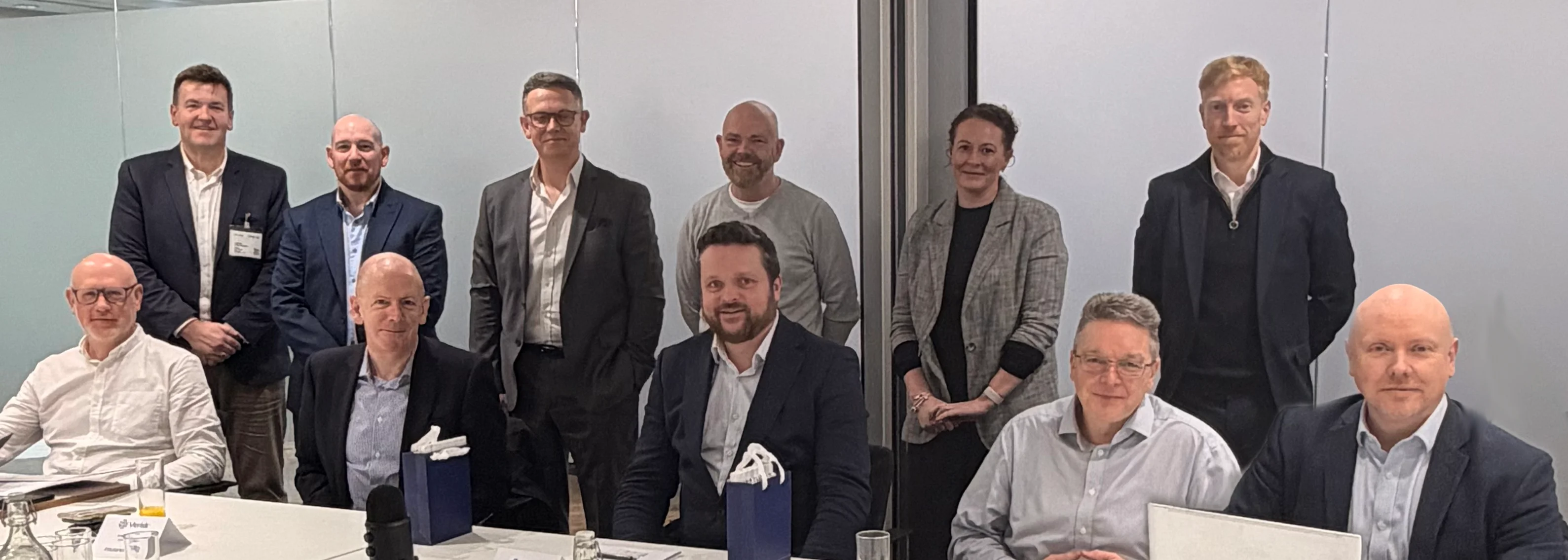
Total loss decisions are becoming more complex as EV technology, rising repair costs and shifting vehicle values reshape motor claims. At a recent Insurance Post roundtable in conjunction with Verisk, industry experts debated whether current validation and valuation approaches remain fit for purpose. Laura Miller reports.
Roundtable attendees:
- Shaun Hopkins, Motor supply chain manager, Axa UK
- Joseph O’Connell, Claims director, Acorn Insurance
- Tom Sullivan, Senior claims and solutions expert, Swiss Re
- Charlotte Western, Operations manager, Crawford TPA
- Richard Graham, Head of claims (corporate and commercial), Howden
- Mark Ferguson, Head of claims suppliers and partnerships, Aioi Nissay Dowa
- Andrew Hooker, Head of technical, Solus (Aviva)
- Andy Churm, Head of motor repair services and transformation, Direct Line
- Mike Juniper, Claims management executive, Aon
- Doug Woodley, Head of insurance and strategic insight, Thatcham Research
- Matt Thorby, Head of motor, Verisk Claims
New cars, especially electric vehicles (EVs), have parts that are expensive to repair and require an advanced level of skill from technicians to diagnose and fix damage. In some cases experienced repairers are yet to be retrained in the most up-to-date technology required to carry out this work, leading to prohibitively costly delays.
This convergence of factors, among others, is forcing insurers to reassess the benchmarks about when to declare total loss, while still being mindful of sustainability compliance and, most fundamentally, customer care.
With the Financial Conduct Authority (FCA) watching – following its Motor Insurance Claims Analysis multi-firm review, published last year – all insurance sector participants are keen to understand the direction of travel for total loss.
Claims frequency down, complexity up
The FCA, in its July 2025 paper, analysed motor insurance premiums and claims cost trends from 2019 to 2023. It found a slightly declining claims frequency but a significant real terms increase in the cost of claims, reflected with a slight lag in similarly significant premium rises. In short, it can be argued claim frequency is going down, but claim complexity, if measured by cost at the very least, is going up.
As a case in point, Andrew Hooker, head of technical at Solus (Aviva), said his firm is doing fewer but more complex repairs: “The days of a simple car are long gone. The simple repairs just don’t exist anymore.”
The days of a simple car are long gone. The simple repairs just don’t exist anymore.
Andrew Hooker, Solus
This is not a problem limited to electric vehicles, Richard Graham, head of claims (corporate & commercial) at Howden, added, but extends to all new vehicles: “They’ve all got Advanced Driver Assistance Systems (ADAS) now, pretty much, so complexity has just shot up.”
Complexity with EVs specifically, however, Joseph O’Connell, claims director at Acorn Insurance, said, is creating “a bottleneck of level-three technicians who can handle EV cars”, adding to the time frame to repair – and cost.
Insurers are “struggling to keep pace” with the rate of technological change in the car park, said Doug Woodley, head of insurance and strategic insight at Thatcham Research.
Factors causing total loss decisions
Higher-value and more complex vehicles typically lead to more expensive repairs and higher total loss settlements, the FCA’s report found. Additionally, vehicle write-offs have experienced significant cost increases, driven in part by rising car values. The volume of vehicle write-offs reported by firms also increased between 2019 and 2023. This was mainly due to the expected time delay to get cars repaired due to parts and labour shortages, alongside additional costs such as credit hire, making it increasingly uneconomical to have certain cars repaired. “Certainly EVs are being written off that are mechanically intact,” said Graham. “That’s different to what we’ve had in the past.”
Part of the problem with EVs is diagnosing damage to the battery and high voltage system. Woodley said: “The battery can be many thousands of pounds – and would obviously write the vehicle off if it proves to be damaged and require replacement. But it’s very difficult to understand exactly whether that battery is damaged.”
Matt Thorby, head of motor at Verisk Claims, said over the last two-and-a-half years, he’s heard some insurers talking about “up to 60 percent” of their car parc post-collision “going in the bin now”. He added: “That isn’t just an EV. That’s a broader cost challenge across even some older vehicles without complexity, with the price of parts going up”. All this is fuelling the decision-making on ‘what do I repair and what do I total loss?’, alongside customer retention, customer journey, and experience.
Hooker countered that at Solus (Aviva) they repair “the vast majority of EVs”. But he admitted rising costs are a problem, with new LED headlamps, for example, costing three- or four-hundred percent difference in terms of prices, “and that’s the thing we can’t control”.
Exploring other avenues, “such as green parts”, is a way to maybe keep that vehicle on the road as opposed to total loss, Shaun Hopkins, motor supply chain manager at Axa UK said.
Recycled (or ‘green’) parts could also potentially solve one of the big reasons for total loss decision making – parts availability. Andy Churm, head of motor repair services and transformation at Direct Line, said newer cars, including EVs, are sitting in body shops for as long as eight weeks, while a hire car is paid for “and all of a sudden, your dynamics of the economic model change”.
That’s a good illustration, said Mark Ferguson, head of claims suppliers and partnerships at Aioi Nissay Dowa, of why getting the decision right on total loss “at day one” is so important. He said: “Customers prefer being paid for the total loss on day one. Rarely have we had customers challenge our technical decision making, but they have challenged clarity, delays, so there’s that other element in terms of the customer outcome needs to come into it as well.”
Total loss decisions are also being driven by the creation of “almost throwaway” cars, said Woodley. “They are going to be a total loss just because of the way they’ve been put together. They’ve not been built with repair in mind and the costs of the components to reinstate them, it’s just going to be prohibitive, unfortunately. So we’re starting to see that low-cost EV which just will not get repaired even after a very minor impact.”
We’re starting to see that low-cost EV which just will not get repaired even after a very minor impact.
Doug Woodley, Thatcham Research
Repairer skills shortage
More complex vehicles require greater upskilling of repairers. According to Churm, there is both a repairer skill shortage and an issue with retraining. “Take a technician that’s been repairing a car for 20 years, and you throw some of this technology at him. You’ve got to retrain that individual. That’s probably harder than getting an apprentice and starting with ‘We’re going to work on these EV cars today’. It’s the retraining of the current workforce that gets missed,” he said. Graham pointed out retraining costs “a lot of money”.
Independent body shops will need a lot of support in this area, said Hopkins. But it’s not just the technicians that are lacking, it’s also the vehicle damage assessors and the estimators. “That seems to be another area where the industry is struggling to keep pace with the change in technology,” Woodley said.
Woodley added some smart repairers are extremely busy with private repairs. “People aren’t claiming for the small stuff because of the excesses”, avoiding the insurance route altogether. Tom Sullivan, senior claims and solutions expert at Swiss Re, said a better understanding of whether it is accident frequency going down or just claims frequency would be valuable. He added in China it is less experienced drivers who drive EVs and if that pattern was repeated in the UK, we might see accidents and claims go up.
The future of vehicle security
When it comes to theft trends, Graham said currently EVs and ICE are on a par: “Ford Fiestas, number one most stolen vehicle when you’ve got eco-sports as well. What we’re finding with EVs is it’s the higher sales volume vehicles that are being stolen to be cannibalised. It’s not for resale of those vehicles. It’s the lower end of the market. Similar to what we see with ICE.” Though Woodley pointed out the data shows EVs in fact have the lowest ratio of thefts of any drivetrain class.
Connectivity is the biggest security threat at the moment, Woodley added, but he said that “isn’t just an EV thing, it’s a new vehicle thing”. He said: “That’s where the vulnerability feels like it’s going to come from in terms of all of the ways into a vehicle, not only the vehicle itself, but also the data that vehicle is going to be storing and transmitting between other vehicles and infrastructure.”
Consumers are getting more used to recycled parts. If you are going to total loss a vehicle, [the industry needs to] make sure it’s being utilised in other areas.
Shaun Hopkins, Axa
Areas for improvement?
Could more be done on sustainability goals in the motor industry? Mike Juniper, claims management executive at Aon, agreed this should be a shared endeavour. Juniper said, with the number of EVs increasing and the average age, according to reinsurance market data, for an EV to be made a total loss being just a couple of years, against seven or eight for an ICE vehicle, “there’s going to be a lot of batteries out there without necessarily having a solution around how they are used”.
He added: “I think that would need to be a focus for the industry, the government as well, around what we can do collectively to address those aspects”. For Hooker, giving EVs a second life is a far better bet, because “recycling is going to be very difficult technically to do with the huge diversity of batteries”.
The question, the experts said, is “if you are going to total loss a vehicle, what can we do with that car to make sure it’s being utilised in other areas?” Culturally, consumers are getting more used to recycled parts, Hopkins said: “It’s just becoming a part of life that recycled pieces are becoming more and more prevalent in society, refurbished phones, refurbished laptops, it’s a lot more commonplace now than it’s ever been.”
People are “realising car parts are part of the circular economy”, added Hooker. “It is the utilisation of parts that’s going to be key and how we can tap into that, and I think more insurers are on that journey. It becomes a circle, and hopefully one total loss means another one is avoided as a total loss.”
Sponsored content
Copyright Infopro Digital Limited. All rights reserved.
As outlined in our terms and conditions, https://www.infopro-digital.com/terms-and-conditions/subscriptions/ (point 2.4), printing is limited to a single copy.
If you would like to purchase additional rights please email info@postonline.co.uk
Copyright Infopro Digital Limited. All rights reserved.
You may share this content using our article tools. As outlined in our terms and conditions, https://www.infopro-digital.com/terms-and-conditions/subscriptions/ (clause 2.4), an Authorised User may only make one copy of the materials for their own personal use. You must also comply with the restrictions in clause 2.5.
If you would like to purchase additional rights please email info@postonline.co.uk