

This article was paid for by a contributing third party.

When pricing wags the dog: Pet insurers seek control
Rising veterinary costs, fragmented data and price-led competition are leaving the pet insurance market struggling to stay in control. Industry leaders say collaboration, clearer products and smarter use of data will be key to restoring balance.
Pet insurance has grown quickly, but the market is under strain. Veterinary inflation is rising fast, customers often do not understand what they have bought and insurers are under pressure to balance affordability with meaningful cover.
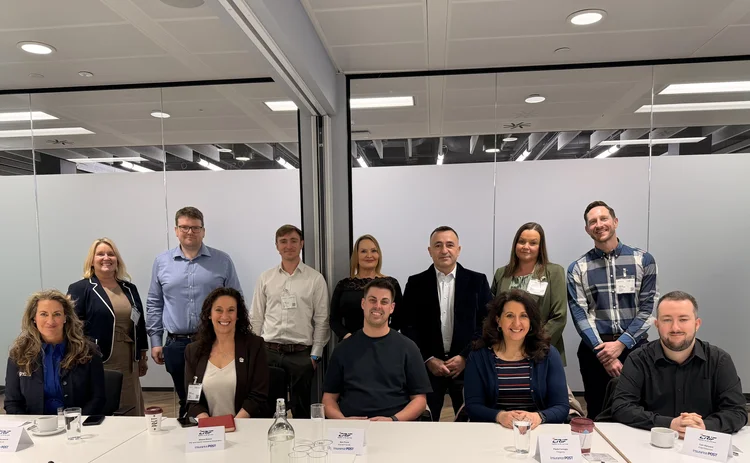
Those tensions ran through an Insurance Post roundtable, held in partnership with Crif, where insurers, MGAs, technology firms and industry bodies debated how animal health products are priced and what needs to change.
A clear theme emerged: the sector has more data than ever, but still lacks the shared insight, product clarity and market discipline needed to turn that information into better outcomes.
Participants:
- Karl Pearse, board director, Pet and Equine Insurance Association, senior customer partnership manager, Crif
- Luca Firrito, head of customer partnerships, Crif
- Ross Hallifax, affinity director, Markerstudy
- Natalie Surtees, COO & co-founder, Tedaisy
- Paola Farrugia, business development manager, Petgevity
- Vicki Wentworth, CEO, Agria UK
- Sharon Brown, founder and CEO, Pet and Equine Insurance Association
- Rachel Mulheron, associate director – pet, Hood Group
- Suzy Middleton, CEO, SEIB
- Peter Butters, chief insurance officer, Waggel
- Tom Banyard, senior pet underwriter, Ergo/Staysure
- Mark Kozlowski, head of pet – pricing, Policy Expert
- Ben Pryce, chief operating officer, Animal Friends
Pricing is becoming more sophisticated
Vicki Wentworth, CEO of Agria UK, said the depth of historical data available in pet insurance remains one of the market’s strengths.
“We’ve been insuring pets since 1890, so we do have 130-plus years of data,” she said. “The first point of call is obviously, how sick does that particular animal get, hereditary-wise and over its age and lifespan, versus a different animal?”
That is now combined with breed information and a wider set of pricing inputs than in the past. Rachel Mulheron, associate director of pet at Hood Group, said underwriting has become far more granular.
“Back in the day, it was literally: what size is it? Small, medium, large. What breed is it? Is it male or female?” she said. “Now the factors have gone up massively.”
Owner behaviour is becoming part of that picture too. Mulheron said two people with the same dog could present very different risks depending on how they feed, exercise and care for it. “It’s becoming much more sophisticated now,” she said.
Ross Hallifax, affinity director at Markerstudy, said pet insurers are increasingly following the path taken by other personal lines markets. “They’ve been using enrichment for years,” he said. “All of those data sources will come in.”
Mark Kozlowski, head of pet pricing at Policy Expert, made the same point more bluntly: “We will use anything we can get hold of” if it produces a credible trend.
Data is key to pricing, and with siloed data I think we’re going to take longer to get to that point where we can actually price things in.
Sharon Brown, founder and CEO, Pet and Equine Insurance Association
The bigger issue is siloed data
Participants agreed that richer pricing models alone will not solve the market’s problems if the underlying information remains fragmented.
Sharon Brown, founder and CEO of the Pet and Equine Insurance Association, said the “siloing” of data is one of the biggest barriers to better pricing and better customer outcomes.
“Data is key to pricing, and with siloed data I think we’re going to take longer to get to that point where we can actually price things in,” she said.
She argued the market should learn from motor insurance, where shared datasets have long been used to improve claims handling and fraud detection. In pet, equivalent infrastructure is still missing.
“There also needs to be a single source of truth,” Brown said. “This isn’t just about pricing. This is about animal welfare.”
Suzy Middleton, CEO of SEIB, said better data would also help attract more insurer capacity into a market that can look low-margin and volatile. “If there’s more data in the market, there’s more clarity,” she said.
Complexity is undermining trust
If you think, as pet providers, we are seriously letting consumers down.
Vicki Wentworth, CEO of Agria UK
The discussion repeatedly returned to one stark statistic: 52% of pet insurance complaints are upheld in favour of the customer.
Wentworth called that “the worst statistic out of any insurance” and said it showed the sector is failing consumers when claims are made.
“If you think, as pet providers, we are seriously letting consumers down,” she said.
For her, a major cause is unnecessary complexity. “There are seven different ways in the market that we describe lifetime insurance,” she said. “No wonder customers don’t understand what it is that we do.”
Brown said regulators are already focused on confusing definitions, weak customer outcomes and how hard it can be to switch.
Mulheron also called for much simpler products, especially around pre-existing conditions and time-limited cover. “Most people don’t know what they’re buying,” she said.
Education cannot sit with insurers alone
A related issue is that many customers only discover the detail of their cover when they come to claim.
Paola Farrugia, business development manager at Petgevity, said misunderstanding starts with basic insurance language. “People don’t know, unless they’ve had a claim,” she said.
Wentworth agreed that jargon does not help. “Even ‘pre-existing’ doesn’t actually say what it means,” she said.
Ben Pryce, chief operating officer at Animal Friends, said many customers also underestimate likely treatment costs. In lower-limit products, one claim can wipe out the available cover. “The low-value vet fees piece is a real challenge,” he said.
Mulheron argued insurers should do more at point of sale to flag when customers look underinsured, particularly for higher-risk breeds.
We have to work within the industry, and that includes not just pet insurance, that includes the vets.
Natalie Surtees, COO and co-founder, Tedaisy,
The roundtable also debated the role of vets in those conversations. Farrugia questioned whether practices can realistically interpret every insurer’s wording in detail. But Natalie Surtees, COO and co-founder of Tedaisy, said responsibility cannot sit solely with insurers.
“We have to work within the industry, and that includes not just pet insurance, that includes the vets,” she said.
Clearer products and better customer communication are essential, but vets also have a role in prompting practical conversations about limits, exclusions and likely treatment costs.
AI may help, but only if products are clearer
AI was discussed as both an opportunity and a risk.
Wentworth warned that AI will only reflect the quality of the material it is given. Put three policy wordings into a model, she suggested, and it may return three different interpretations of similar cover.
Surtees said Tedaisy is already using AI to help customers navigate policy wording and get quicker answers. Early performance was mixed, but had improved rapidly over the past six months.
AI may make policy documents easier to navigate, but it will not solve the underlying problem if products remain inconsistent and overcomplicated.
Vet inflation is forcing a rethink
The biggest pressure on the market remains the rising cost of veterinary care.
Mulheron said veterinary inflation is running at about 15% year on year, before age or claims history are taken into account. “We’re in a situation where we can’t contain those costs,” she said.
£17,000 later, I got him back after three weeks. I was quite happy that I was insured.
Paola Farrugia, business development manager, Petgevity
That is fuelling concern about affordability, especially for lower-limit products. Pryce said some policies in the £1,000 to £2,000 range are now “not even insurance,” adding: “Consumers who purchase low vet fee level products can, in some instances, see their cover limits exceeded in a single claim or in short duration. This can make low vet fee products feel more like a contribution product over insurance - while some cover is better than none.”
Tom Banyard, senior pet underwriter at Ergo/Staysure, said the issue is visible in practice: “You go in certain vet practices, and the first question they ask is, do you have insurance?”
Farrugia highlighted the other side of the equation. Recalling a serious claim during lockdown, she said: “£17,000 later, I got him back three weeks later. I was quite happy that I was insured.”
Brown said the economics of veterinary practice cannot be ignored either. Rising treatment capability, growing administration and unrecovered debts all feed back into the wider cost base.
Product innovation will be needed
Several participants suggested the market may need to rethink what pet insurance is actually for.
Peter Butters, chief insurance officer at Waggel, said pet “is more like prepaid medical” than traditional insurance, because claims are not especially remote events over an animal’s life.
Mulheron argued there is a clear gap for catastrophe-style cover with a higher excess for owners willing to self-fund routine costs. “That’s the kind of product I want,” she said. “I’m happy to self-insure up to a certain amount.”
Kozlowski suggested another change: asking customers how much cover they think they need before showing them prices. “As soon as you get the numbers out there with pounds in front of people, that will change their opinion,” he said.
Karl Pearse, board director at the Pet and Equine Insurance Association and senior customer partnership manager at Crif, pointed to a further tension in long-term products: “The coverage goes down year on year,” even though the need for treatment may be rising.
At the moment, the tail’s wagging the dog, isn’t it?
Rachel Mulheron, associate director – pet, Hood Group
Regaining control
Wentworth questioned whether the sector’s drive for acquisition and low prices had helped create products that are too cheap to be truly fit for purpose. Customers focus on premium first, she argued, without understanding what that premium really buys.
That gave force to Mulheron’s closing line: “At the moment, the tail’s wagging the dog, isn’t it?”
The point was wider than price alone. The market is being pushed around by vet inflation, acquisition pressure, inconsistent products and weak data-sharing, instead of shaping outcomes itself. Her answer was better use of telemedicine, AI and video vet support to steer pets away from unnecessary visits and towards faster treatment when they do need care.
With veterinary inflation rising and customer trust fragile, the industry faces a choice: regain control of pricing and products, or risk slower growth, further mistrust and regulators stepping in to force change.
Sponsored content
Copyright Infopro Digital Limited. All rights reserved.
As outlined in our terms and conditions, https://www.infopro-digital.com/terms-and-conditions/subscriptions/ (point 2.4), printing is limited to a single copy.
If you would like to purchase additional rights please email info@postonline.co.uk
Copyright Infopro Digital Limited. All rights reserved.
You may share this content using our article tools. As outlined in our terms and conditions, https://www.infopro-digital.com/terms-and-conditions/subscriptions/ (clause 2.4), an Authorised User may only make one copy of the materials for their own personal use. You must also comply with the restrictions in clause 2.5.
If you would like to purchase additional rights please email info@postonline.co.uk