

This article was paid for by a contributing third party.

Outsmarting fraudsters with connected intelligence
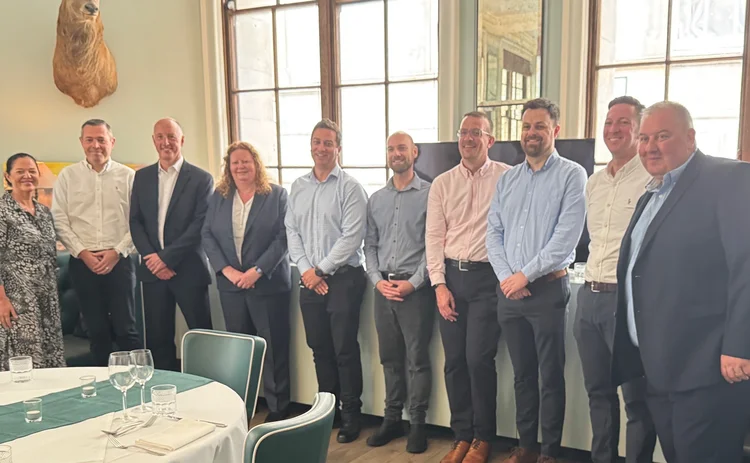
At a recent roundtable hosted by Insurance Post and sponsored by LexisNexis Risk Solutions, insurers explored smarter, connected approaches to fraud.
Insurance fraud is rising and becoming more sophisticated, making it a growing priority for insurers. Fraudsters are increasingly organised, digitally enabled, and globally distributed, forcing insurers to rethink how they detect and define fraud.
At an Insurance Post roundtable sponsored by LexisNexis Risk Solutions, senior fraud professionals from some of the UK’s leading insurers and brokers gathered to share intelligence, challenges and future strategies. Over the course of the conversation, five central themes emerged.
Roundtable participants:
- Ben Fletcher, director of fraud and financial crime, Allianz
- Chris Lee, head of property fraud, Crawford & Company
- Scott Clayton, head of claims fraud, Zurich
- Adele Sumner, head of counter fraud strategy and financial crime, RSA
- Tom Cummings, head of counter fraud, ERS
- James Babbington, claims fraud senior lead, Ageas
- Clare Lunn, group head of fraud, Markerstudy
- Adrian Miles, financial crimes insight manager, Esure group
- Paul Brockway, director of insurance & investments, LexisNexis Risk Solutions
- Paul Trewin, sales director, LexisNexis Risk Solutions
1. Identity fraud: the digital battlefield
Identity fraud has become one of the most urgent concerns in insurance, particularly at the underwriting stage, where many policies are now launched with stolen or synthetic identities. Fraudsters are increasingly bypassing detection tools not by brute force but with precision: exploiting weaknesses in data validation and taking advantage of vulnerabilities across the distribution chain.
Paul Brockway of LexisNexis Risk Solutions explained that the definition of identity fraud is rapidly expanding. Fraud is no longer just about impersonation but includes more sophisticated methods. “The identity fraud challenge appears to be moving across various different touchpoints,” he said. “We’re now seeing account takeover, which was traditionally more prevalent in other financial services.”
The identity fraud challenge appears to be moving across various different touchpoints,” he said. “We’re now seeing account takeover, which was traditionally more prevalent in other financial services.
Paul Brockway, director of insurance & investments, LexisNexis Risk Solutions
Clare Lunn at Markerstudy stated, “The types of fraud haven’t changed dramatically, but the methods of perpetrating it have become more digital.” She cited a 300% spike in scooter-related ID fraud, noting how easy it is to falsify documents or digitally alter damage images using smartphones.
James Babbington of Ageas said identity fraud has moved well beyond crude impersonation. “It’s gone from stealing names from Companies House to people giving up real documents through job adverts – driving licences, passports – then having their identity used to set up policies. We’re seeing really clean synthetic identities. It’s far harder to detect.” Fraudsters also exploit weakness at application stage and know how to bypass insurance checks.
This evolution reflects tighter industry controls. “You can’t just make up an ID and get insured any more,” said Tom Cummings of ERS. “Now they’re using real addresses, real people – and doing it at scale.” The bar has been raised, and fraudsters have responded by getting smarter.
As he pointed out, many victims are unknowingly complicit. Young drivers, for instance, often hand over their details to fraudsters on social media offering “too-good-to-be-true” policies. Babbington added that in some cases these identities are used later to buy dozens of bogus policies after staged accidents.
Behind this is a data ecosystem that continues to be exploited. Lunn emphasised the need for greater public education, especially given the volume of stolen personal information circulating after cyber breaches. “There’s always a victim behind identity fraud,” she said. “We need to help people keep their data safe. Not just as insurers – but as an industry.”
It’s still about staged events, exaggeration and repetition – just dressed up in new formats. The motor model has changed – but the game’s the same.
Scott Clayton, head of claims fraud, Zurich
2. Post-reform claims fraud
The Civil Liability Act aimed to reduce exaggerated personal injury claims, particularly whiplash. But instead of stamping out fraud, it has merely redirected it into new and more complex shapes. Fraudsters have shifted toward high-value vehicle repairs, mixed injuries, and psychological harm.
Scott Clayton of Zurich described how post-reform motor fraud still follows familiar patterns. “It’s still about staged events, exaggeration and repetition – just dressed up in new formats. The motor model has changed – but the game’s the same.”
Babbington noted a striking increase in staged accidents involving only vehicle damage. “Before the reforms, that wouldn’t have made sense. Now it does – a £5k repair can be inflated to £20k. No injury needed.”
Lunn highlighted a spike in claims citing PTSD, tinnitus and concussion after minor impacts. “Even judges are starting to question the legitimacy,” she said, pointing to courtroom fatigue with implausible injury narratives.
Ben Fletcher of Allianz said the apparent post-reform lull was deceptive. “Volumes dropped initially, but that was just fraudsters recalibrating. They waited to see how the courts would rule. Now they’re back with new strategies – bolder, broader, more medically complex.”
The changes are not limited to motor. Chris Lee of Crawford & Company has seen a rise in small commercial property claims – £5k to £10k in theft or damage – where policyholders knowingly test the limits of their coverage. “They know it’s not covered,” he said, “but they’ll try it anyway, just to see what sticks.”
For Adele Sumner of RSA, the concern is that these fraud tactics are spreading across business lines. “It’s not just about fraud by class – it’s the method. Fake documents, synthetic IDs – we’re seeing these are being used across motor, property, casualty. The techniques are migrating faster than our structures are adapting.”
There’s a lot we can learn from wider financial services markets, where near real-time collaboration often stops fraudsters moving from one organisation to the next.
Paul Trewin, sales director, LexisNexis Risk Solutions
3. Integration and collaboration
A recurring frustration – and a growing opportunity – was the persistent siloing of fraud intelligence between underwriting and claims. As fraudsters exploit the full lifecycle of a policy, insurers are working to close the loop internally, bringing teams together to create a holistic view of risk.
Babbington described how Ageas had unified its approach. “We’ve got a centre of excellence now that spans both functions. Our underwriters, claims handlers, broker execs – we’re all involved in fraud discussions. It’s not a claims issue. It’s a company issue.”
At Allianz, operational and strategic integration is now routine. “We have regular operational touchpoints and strategic oversight, including pricing and product forums,” said Fletcher. Is it seamless? No. But it’s far better than it used to be.”
Sumner made the case for redefining investigation strategies altogether. In a digital environment, traditional playbooks no longer apply. “You can’t send an investigator to an address that doesn’t exist, for a company that was made up, bought the policy online, and never intended to claim. You need different people, different tools.”
This shift is also changing the shape of fraud teams. Fletcher observed that successful teams now require a balance of investigative mindset and analytical expertise – people who can not only follow leads but also interpret data patterns and build predictive models. “Curiosity is still key,” he said, “but now it needs to be paired with tech fluency.”
Cummings stressed that integration must also extend to the wider distribution chain. Some digital brokers and MGAs now have more sophisticated onboarding tech than insurers do. “Short-term books are using image validation, face-matching, licence scans – it’s great tech. But we can’t always ingest that data across the rest of our book.”
Lunn agreed, saying Markerstudy works closely with insurer clients, sharing reports, trends, and methodologies. What’s still missing, she said, is downstream claims feedback that would help improve front-end filtering: “We’d love more claims-stage insights fed back to distribution. That would make us an even stronger first line of defence.”
The discussion also highlighted the importance of wider collaboration beyond internal functions. Paul Trewin of LexisNexis Risk Solutions pointed to practices in the banking sector, where contributory networks allow fraud to be flagged and shared across institutions. He noted, “There’s a lot we can learn from wider financial services markets, where near-real-time collaboration often stops fraudsters moving from one organisation to the next.”
Building on this, Paul Brockway emphasised the growing opportunity for cross-sector data sharing between financial services and insurance. “A lot of these identity frauds hit banks and insurance companies,” he noted. “The more joined up it is, the stronger the defence.”
False positives used to be a cost of doing business. Now, they’re a regulatory and reputational risk. We have to cut them down – without missing the fraud.
Clare Lunn, group head of fraud, Markerstudy
4. Fraud tech under pressure
Technology is reshaping the counter-fraud landscape. Tools once reserved for detection are now being deployed to validate claims faster, improve customer experience, and reduce operational cost. But the gains come with challenges – particularly around false positives, bias, and data availability.
Sumner acknowledged the frustration of dealing with tools that generate too many dead ends. “False positives used to be a cost of doing business. Now, they’re a regulatory and reputational risk. We have to cut them down – without missing the fraud.”
Markerstudy’s rapid model development reflects how far the industry has come. “The first machine learning model we built took nine months,” said Lunn. “The last one took two weeks. We can now deploy targeted models quickly, especially if we see spikes in certain fraud types.” But she also cautioned that deploying the same scorecard across applications and claims doesn’t work. “Fraud isn’t one shape. We need to know exactly what we’re looking for.”
Clayton described a shift in how Zurich frames its tech stack. “Our tools aren’t fraud detection tools any more. They’re validation tools with a fraud output. We use them to pay genuine claims faster – and catch the rest as a by-product.”
Cummings stressed that regulators are increasingly unwilling to accept slow or intrusive investigations justified only by vague fraud flags. “You can’t just say something triggered a check any more. If it delays settlement by a month, that’s not acceptable. You need to prove your case quickly.”
When discussing the potential future for financial crime tools, Brockway highlighted the emergence of AI bots in financial crime monitoring – tools that mimic human logic to triage alerts and follow internal rules. “That could shorten the investigative cycle dramatically,” he said, “and take pressure off frontline staff.”
The shared challenge, though, remains data. Several participants noted that insurers don’t always receive the raw, structured data needed to run their models – particularly from brokers or aggregators. “Sometimes we don’t even get contact details,” said Cummings. “It’s hard to flag fraud when you’re only getting fragments.”
Adrian Miles of Esure added that even within the industry, data remains too siloed. “The Insurance Fraud Bureau, vendors, solicitors – we all have pieces of the puzzle. But we’re not connecting them properly. There’s a long way to go before it all sits in one place.”
Trying to stay ahead means you risk investing in solutions for problems that may never arrive. Instead, we focus on recognising changes as they happen – and getting there faster than the fraudster expects.
Adele Sumner, head of counter fraud strategy and financial crime, RSA
5. Fast-following, not forecasting
The roundtable ended with a frank assessment of where the industry stands. No one claimed to be “one step ahead” of the fraudsters – but most agreed that being fast to respond, rather than trying to predict every move, was a more realistic and effective strategy.
Sumner argued that chasing theoretical fraud threats leads to misallocated resources. “Trying to stay ahead means you risk investing in solutions for problems that may never arrive. Instead, we focus on recognising changes as they happen – and getting there faster than the fraudster expects.”
Babbington reinforced the point, saying the real differentiator is responsiveness. “Fraudsters are unpredictable. They adapt to us. So, our job is to spot that adaptation fast and change our approach. That’s where data and feedback loops matter most.”
Clayton added a note of caution, reminding the group that even with the best tools and teams, some fraud will inevitably slip through. “The scariest thing is the fraud you don’t even know is happening. But it’s also what keeps you moving forward.”
Lee summarised the pace of change, stating, “Five years ago we weren’t looking at digital documents the way we are now.” He suggested that while current digital documentation concerns might be addressed in another five years, the industry could also be facing new technologies and challenges that require our attention.
Fighting smarter, not just harder
Fraud is evolving – but so is the insurance industry’s response. The path forward doesn’t lie in chasing every tactic as it emerges, but in building the resilience, intelligence and agility to respond quickly and at scale.
That means embedding fraud thinking into product design, underwriting, distribution, claims, and technology. It means reducing false positives without creating new blind spots. And above all, it means recognising that fraud is not a threat to a department – it’s a threat to the entire business.
We’re not in a clean fight. This is a global, digital challenge, and every time we build a wall, someone’s working on the ladder.
Ben Fletcher, director of fraud and financial crime, Allianz
“We’re not in a clean fight,” said Fletcher. “This is a global, digital challenge, and every time we build a wall, someone’s working on the ladder.”
But with sharper data, closer collaboration – across insurance and wider financial services – and smarter strategy, there’s growing confidence that insurers can not only defend themselves more effectively – but also create a customer journey that’s faster, safer, and harder for fraudsters to exploit.
LexisNexis and the Knowledge Burst logo are registered trademarks of RELX Inc., used with permission.
Sponsored content
Copyright Infopro Digital Limited. All rights reserved.
As outlined in our terms and conditions, https://www.infopro-digital.com/terms-and-conditions/subscriptions/ (point 2.4), printing is limited to a single copy.
If you would like to purchase additional rights please email info@postonline.co.uk
Copyright Infopro Digital Limited. All rights reserved.
You may share this content using our article tools. As outlined in our terms and conditions, https://www.infopro-digital.com/terms-and-conditions/subscriptions/ (clause 2.4), an Authorised User may only make one copy of the materials for their own personal use. You must also comply with the restrictions in clause 2.5.
If you would like to purchase additional rights please email info@postonline.co.uk