New Zealand Earthquakes: Kiwi crisis
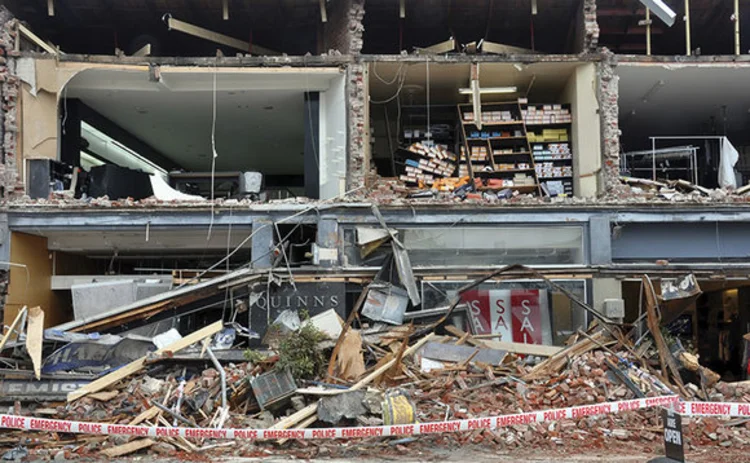
Merivale Christchurch in New Zealand after the earthquake

New Zealand insurers were exposed to intense pressure following the devastating earthquakes in Canterbury in 2010 and 2011. Post investigates the lessons learned from these events for insurers in both New Zealand and the UK

Pigeons now perch on the rafters of Christchurch Cathedral, the high beams left exposed by demolition to the building’s façade after it cracked and crumbled in the magnitude 6.3 earthquake that devastated the city on 22 February 2011.

By that day, hundreds of aftershocks had struck the Canterbury region since 4 September 2010 when, at 4:35am, the area was juddered by a 7.1 magnitude earthquake. The February quake resulted in 185 deaths as well as widespread damage to the city’s homes, businesses and infrastructure.

Now, more than four years on from the disasters, the cathedral sits at the centre of a giant construction site, formerly the central business district. Around 70% of the quake-ravaged buildings in the former central “red zone” are being demolished, with new seismic-compliant structures popping up among empty gravel lots.

The regeneration of the city is paralled in the phase of recovery the New Zealand insurance industry now finds itself following the earthquakes. Claims settlements are drawing to a conclusion and firms are looking to the future to see how lessons learned from the Canterbury event can be built into the industry’s legacy.

The 22 February quake has a significant economic burden. The event ranked ninth in Munich Re’s list of the costliest global insured loss events between 1980 and 2013, at £9.9bn, while the accumulated earthquake events are estimated to have an economic cost of NZ$40bn (£19.5bn), representative of 15% of the country’s gross domestic product.

Unprecedented challenges
The insurance industry faced unprecedented challenges in the wake of the earthquakes: claims volumes soared, companies were required to rapidly scale-up their operations and customer faith in claims handling processes plummeted.

Earthquakes insurer progress on household claims

The country’s dual system for natural disaster claims, involving the state-owned Earthquake Commission and private insurers, was also tested like never before. How it responded to the disaster is one of the key lessons in determining the industry’s approach to the country’s next major loss.

All New Zealand homeowners pay a levy to EQC which provides a $100,000 excess, plus goods and services tax of 15%, for household property claims after a natural disaster. EQC also covers up to $20,000 of contents, and land that is within eight metres of the insured property. Private insurers take on liability for claims greater than the EQC cap, and commercial claims.

After 4 September 2010, EQC triggered its power under the Earthquake Commission Act 1993 to facilitate property repairs for claimants as well as payouts with the establishment of the Canterbury Home Repair Programme. The approach was unique, but the complexity of the Canterbury event meant the usual response of paying settlements was in danger of increasing inflation and competition among organisations for labour and materials.

Across the accumulated Canterbury earthquakes, EQC received household property claims from around 180,000 of the 220,000 homes in the greater Canterbury area. Of those, 24,500 were over the $100,000 cap and transferred to private insurers, according to EQC CEO Ian Simpson.

The fact that properties continue to be transferred from EQC years after the initial assessments were conducted is a source of frustration for private insurers.

Dean MacGregor, Canterbury recovery executive general manager at IAG, the parent company of NZI and State Insurance, explains EQC conducts the initial damage assessment to determine whether liability falls within its $100,000 cap.

“In many cases that has taken longer than would have been ideal and caused the homeowner extra frustration. EQC would assess a property and determine it is repairable and then it might be some time later that there is another event or further damage that was not picked up in the original assessment – and it then becomes a private insurer claim,” MacGregor says.

New Zealand earthquake as it happened

Around 2000 claims have been transferred to private insurers in the past 12 months and Simpson admits claims being deemed over-cap so late in the process has not led to good customer outcomes. “2000 claims compared with an industry managing 24,500 claims is a big number. It is making sure our partners in the insurance industry are aware of what they are receiving and are reserving for it properly [as well as] making sure they are reserving on the basis that they are part of a 180,000 home earthquake – not a 24,500 home earthquake,” he says.

The scale of the disaster for a country of New Zealand’s size inevitably led to resourcing challenges for the insurance sector. On 4 September 2010, EQC was an organisation of 22 people. By that December it had grown to 1000 and later peaked at 1800.

A shortfall in the number of loss adjusters in New Zealand also became apparent. Cunningham Lindsey had around 180 staff in New Zealand prior to the earthquakes which grew to 550 at one stage, according to New Zealand CEO Darryl Cowan. The company deployed adjusters from Australia, Canada, South Africa and the UK to help with the recovery.

IAG also looked overseas to bolster its numbers. “That brings its own challenges because [those people] are not used to working in this environment and they don’t stay for a long time so you have got to have a good process around handovers,” MacGregor explains.

Transparency challenge
Transparency and the sharing of information proved a major challenge for insurers and EQC working side-by-side. MacGregor says, in the early days following the quakes there was a lot of information sharing in an attempt to understand the size of the problem. At that stage, insurers had full access to EQC’s core claims system.

But a privacy breach in March 2013 led to EQC closing down insurer access to its data. The breach meant data from around 9700 claims, including claim numbers and street addresses, were sent to an unintended recipient outside EQC.

Simpson says insurers were more reliant on EQC data than the agency realised prior to it restricting access. “[From] some of the conversations we have had with insurers, they lost one of the few sources of information about their customers in the earthquake sequence – whereas we assumed insurers would have their own database of customers,” he says. “That was more of an impact than we understood at the time but, given the situation we were in, we did not have a lot of choice.”

Personal stories

Dave Walker, Cunningham Lindsey major and complex loss adjuster

What was your work experience in the weeks immediately following the February 2011 earthquakes? “I was part of a team sent out from the UK shortly after the quakes. The city centre was devastated, still cordoned off and controlled by the army. As a loss adjuster, securing an access pass was easy but if buildings were to be entered a visit through the checkpoints was a three person exercise. The aftershocks were continuing so safety was paramount in the vicinity of damaged buildings. Few policyholders were allowed through the cordon to access their businesses since they fled on the day of the quake and demolition often took place without owners or occupiers seeing their assets again.”

How does that compare to now, four years after the event? “Now the cordon is long gone and the eerie quiet of the CBD is history as it becomes a growing construction site generating contract works claims. As the outstanding claim numbers diminish, the complexity of those that remain increases; the engineering reports are longer and the issues are more challenging. The early tolerance of policyholders is wearing thin. All parties are increasingly eager for amicable resolution and frustration reigns at the bottlenecks created by council requirements and the need for geotechnical assessments which are slow to appear due to the still high demand on the professionals involved.”


The breach serves as an opportunity for the government to revisit its protocol of information sharing in a disaster situation, MacGregor says. “[We need to] ask how we could get government to contain information effectively,” he explains.

Sharing information was not the only communication challenge that had to be overcome. Day-to-day communication between EQC and insurers – and between insurers, loss adjusters and brokers – was also tested.

Peter Rose, CEO of government-owned insurer Southern Response, says often, the interaction between EQC and insurers was akin to a “siege mentality”. He continues: “It has been up and down. When it has come down to the lower levels of the organisation they have been of the view that insurers are out to get them and they have put up the barricades.”

Casey Hurren, who works alongside Rose as earthquake strategy manager, elaborates: “[EQC] has been scrambling a bit. When you have an event like the Canterbury earthquakes where you are rebuilding a city, whoever is tasked with the first level of response is going to have an unenviable job. EQC did as best it could in the circumstances.”

Unlike insurers, brokers do not have direct contact with EQC – but they experienced similar communication challenges with insurers following the earthquakes. “Insurers meant well, but in practise it became very difficult,” Allan Davy, director of Avon Insurance Brokers, says. “It took some time for insurance companies to establish a proper claims system.”

The stress of being caught in the middle of the client and the insurer had a debilitating effect on several brokers, including Davy, who suffered a panic attack. “I thought I was having a heart attack. I wasn’t admitted to hospital but I am aware of some brokers who were admitted to hospital with stress,” he explains. “If anyone was to say to me what a broker should look out for, it would be to manage that stress. You do take it personally – you have a personal relationship with your clients.”

Indeed, customer relationships in the aftermath of the earthquakes became strained for most insurers, with Simpson admitting EQC struggled with “a whole range of aspects” around customer service.

An independent report analysing EQC’s customer service, uploaded to the agency’s website last month, said staff interactions with homeowners lacked consistency, timeliness and empathy, and information management was “inefficient and ineffective”. Customer interactions became secondary and did not meet the expectations of EQC’s customers, it said.

Previous reports have published similar findings. An Office of the Auditor General report from October 2013 found inconsistencies in EQC processes and in information provided to claimants. The Office of the Ombudsman has also received 275 complaints about the agency since 2011.

Gaining trust
Asked how EQC is working to regain public trust, Simpson says the agency has to focus on delivery. “We just need to fix the houses and settle the claims. There are a lot of people who have not been treated well and there are a lot who are unhappy. But there are a lot more who are happy because we have settled or fixed [their home].”

EQC would seek to involve community groups more proactively in handling another major event, he says. “There are a group of public leaders from elderly residents’ groups and a group called Cancern who, initially, we treated as detractors – but actually they are vital in terms of getting information out to the community.”

Private insurers also faced customer backlash. Southern Response had two sets of customer protests outside its offices at the end of 2013. “We could have just said, ‘these are just high-profile loud-mouths’ and forget about them. But we didn’t; we recognised they had grievances [and sought to find out] what the grievances are. We have learned from the protests to operate differently,” Rose says.

For brokers, customer criticism occurred around business placed with insurers that left the New Zealand market or failed in the aftermath of the quakes, Davy says. “Some companies decided to leave New Zealand or cut back on what they were prepared to do as far as acceptance or renewal of business, and that left a sour taste.”

New Zealand earthquake big numbersAs he insinuates, the financial burden of the event had a fatal impact for several players. Mutual insurer AMI was one such casualty, an event which led to the establishment of Rose’s Southern Response in April 2012 to handle the collapsed organisation’s earthquake claims.

AMI came unstuck after it failed to increase its reinsurance after the September quake. “The net cost to us from the September earthquake looks like being about $640m. We had reinsurance of $600m and capital of about $300m. The September quake would have damaged profitability but then February came along,” Rose says.

IAG purchased the AMI brand from government in December 2011 but has no involvement in handling its earthquake claims. Ansvar Insurance also ceased writing new business due to reinsurance costs in December 2011 and a new company, ACS Claims, was set up to run off the remaining claims. Ansvar sustained a $900m loss as a result of the earthquake sequence, former ACS general manager John Kenny says. His project completed at the end of 2014 with 98% of claims paid.

Despite these disruptive outcomes for the market regarding reinsurance cover, EQC has faced few issues renewing cover with its panel of reinsurers. The agency has an approximately $4.5bn claim from reinsurers and it has drawn down around $3bn of that so far, Simpson says.

Policy challenges
As well as wider market challenges, issues related to policy wordings and terms also arose during the claims settlement process. Unlike the UK, New Zealand household policies are open-ended, with no maximum sum insured stipulated. This meant every claim was potentially negotiable, which created issues for insurers.

“In terms of the policy conditions, we look to give them an as-new replacement, but that does not mean at any cost; it is a cost we think is reasonable,” Rose says.

Open-ended policies meant uncertainty for reinsurers too, MacGregor says. “It is much harder for [a reinsurer] to define what the aggregate exposure is across the market whereas if you have a defined sum insured you can say what the portfolio is that you insure. On a square metre open-ended policy nobody quite knows how much that is.” Some insurers have now changed their policies to include a defined maximum sum insured, Post understands.

Explaining policy interpretations that were new to the New Zealand market provided a headache for brokers, Davy says, particularly decisions around prevention of access and depopulation.

Personal stories

David Gibbons, Crombie Lockwood Christchurch branch manager

What was your work experience in the weeks immediately following the February 2011 earthquakes? "Manic! Within 24 hours of the 22 February 2011 earthquake, which destroyed our building, we had secured new premises and were fully operational and focused on providing earthquake claims management services to our clients. Our initial focus was on providing advice to clients regarding loss management and mitigation and developing a reliable and efficient claims notification process to insurers. The early establishment of a workable claims management system, which captured relevant information and enabled regular and timely reporting and detailed the status of each claim, was critical."

How does that compare to now, four years after the event? "It hardly seems believable that more than four years have passed since the initial earthquake in September 2010. We continue to be appointed by clients seeking advocacy in respect of unresolved earthquake claims and are very proud of the reputation we have earned in support of our clients.

"The insurance industry as a whole has learnt that claims are the shop window by which clients judge the value of service provided. In most situations collaboration between clients, brokers, loss adjusters and insurers has resulted in optimised claims outcomes being achieved and for this the industry can justifiably feel proud."


With the central city being cordoned off for months, business owners were unable to gain access to their premises and stock which was, in some cases, undamaged. Cunningham Lindsey major and complex loss adjuster Dave Walker adds some claimants decided to forgo their business interruption indemnity period so they could keep trading.

“I had a bizarre situation with a hotel that had damage but was able to open 90% of its rooms. It took the decision to delay its repairs beyond the indemnity period and therefore write off its business interruption cover because occupancy levels were much greater than before,” he explains.

EQC’s unique role as a land insurer also added to the complexity of damage assessments. The earthquakes caused the emergence of liquefaction all over the city; a thick grey sludge that rose out of the ground and covered roads, lawns and driveways.

In many cases, property assessments were stalled as engineering and geotechnical experts understood changes to land and identified areas that were unsafe for rebuilding. Thousands of bore holes were drilled around Canterbury – Simpson says EQC now has a liquefaction risk indicator for every household in Christchurch.

But, as MacGregor explains, the land zoning decisions meant it was hard for insurers to plan for rebuilding homes. “Because private insurers have taken a more active role in the rebuild, we were dependent on those land zoning decisions and there were new building standards that came in along the way that added to the complications.”

Shared property buildings also proved challenging, with multiple units on different titles being insured by separate insurers. “What became apparent was that one insurer could not just go and fix one part of the building in isolation,” MacGregor explains. This led to the industry forming a shared property group with one insurer taking the lead to manage the reinstatement or settlement of the property.

While MacGregor says the group is working well with most properties identified and being managed, the working party also has to manage the “people challenges” associated with shared buildings.

“We recently had an elderly customer who considered her unit was quite liveable and she did not want to move out and said we could get on with [the repairs] when she died. There are also other unit holders there who are critically dependent on each other,” he says.

New Zealand earthquake before and after

Looking to the future
As the rebuild and recovery moves on, the industry is optimistic about the future of Canterbury and the opportunities for the sector as Christchurch city forms its new identity.

Simpson says EQC plans to close the Canterbury Home Repair Programme project office at the end of April leaving a small team to handle the residual 3500 homes that are yet to be scoped. 2015 will also see a focus on the resolution of complex land claims – those now deemed at risk of flooding – with a goal of settling most of those by the end of the year.

There is also a parallel project investigating the future of EQC and the type of organisation that is needed to respond to the next big event. “We are assuming we will remain the first loss insurer and that is a relatively safe assumption,” Simpson says.

Cunningham Lindsey considers the future is bright for loss adjusters, with more contract work and liability claims following the earthquakes. “In five or 10 years’ time Christchurch will be a more vibrant city than it was before the earthquakes and there will be a commercial centre that will attract insurance and claims,” Walker says.

More than anything, it is apparent the industry is proud of the work it continues to do in Christchurch and wants others to learn from the challenges it has faced in handling a natural disaster on the scale of the Canterbury event. Rose says: “The test will be in 10 years’ time, people looking back – the community looking back – and saying, ‘Wow, what a performance in extremely complicated circumstances’.”

This article was published in the 19 March edition of Post magazine.

Only users who have a paid subscription or are part of a corporate subscription are able to print or copy content.

To access these options, along with all other subscription benefits, please contact info@postonline.co.uk or view our subscription options here: https://subscriptions.postonline.co.uk/subscribe

You are currently unable to copy this content. Please contact info@postonline.co.uk to find out more.

Storm damage claims test insurers’ settlement choices

A year of severe storms has strained repair networks and claims operations, which Ben Blain, head of property at Verisk Claims, points out has placed insurers’ settlement decisions, data oversight and ability to evidence fair customer outcomes firmly under the regulatory spotlight.

Why AI should never make insurance claims decisions

As the mass roll-out of artificial intelligence in insurance continues at break neck speed, Ross Sinclair, founder and CEO at embedded insurance technology provider EIP, discusses one area of insurance that AI needs to be kept away from: claims decisions.

Managing the ‘forever risk’ of PFAS

How PFAS, often called “forever chemicals”, is creating one of the most complex and far-reaching environmental risks for insurers today is the topic of the latest Insurance Post Podcast.

Most read articles loading...

You need to sign in to use this feature. If you don’t have an Insurance Post account, please register for a trial.

Sign in
You are currently on corporate access.

To use this feature you will need an individual account. If you have one already please sign in.

Sign in.

Alternatively you can request an individual account here