

Post Europe: View from the Top: recent developments in captive Europe

Traditional captive domiciles in Europe include Guernsey and Gibraltar, as well as, in the European Union, Luxembourg, which is still dynamic and stable, and Ireland, which is in clear retraction. However, new developments are being seen in the market.
In addition to these ‘classic' ones, new domiciles are boosting the market. These new domiciles bring innovation, namely through the publication of very clear regulation regarding relatively new structures, thus allowing promoters to have the necessary credibility and stability to develop creative solutions for their clients.
Protective captive cells are an ‘evolved' form of the rent a captive concept, with the advantage of having segregated cells. These structures being an only legal entity, it is absolutely necessary to have a specific law regulating them so as to ensure the financial independence of core and cells, as well as cells among them.
"Protective captive cells are an ‘evolved' form of the rent a captive concept."
A concept born
The PCC concept was born in Guernsey in 1997, and today there are around 30 jurisdictions with a form of regulation on PCCs, but in Europe Malta is the only EU country with specific PCC legislation, issued in 2004. Already this year a new regulation in incorporate cell companies has been issued - ICCs being what some call an evolved form of PCC as; in this case, each cell is a separate legal entity.
The specific PCC and ICC regime, along with an interesting EU compliant legal, and developed financial system, as well as being cost effective and with high professional skills, means Malta is now considered, as a booming market for the development of innovative alternative risk transfer solutions.
Liechtenstein legislation
Liechtenstein, though not an EU member, is part of the European Economic Area, and also presents some advantages in this sector, having recently issued very interesting legislation. To summarise it it incorporates the best of all worlds, meaning it has specific regulations for insurance companies establishing an equalisation provision as in Luxembourg, an option to distribute dividend as in Switzerland, and an income tax rate of 12.5%, comparable to Ireland.
Other advantages include the ability to write direct insurance business throughout the EU and European Free Trade Association states, non double taxation treaties with EU members, an efficient tax system and flexibility for asset management.
"To summarise it [Liechtenstein] it incorporates the best of all worlds."
Freedom of services
In Malta, being an EU member state, companies can operate in freedom of services as in every member state. Liechtenstein, though not being a member state, still benefits of the regime of freedom of services throughout the EEA area.
Captives are widely used by multinationals and large companies as an alternative risk financing solution, as the recurring costs of operating a captive mean these vehicles are usually only set up by large organizations.
An ideal tool
On the other hand, the PCC solution makes it possible to mid-cap companies to access alternative risk transfer solutions, otherwise too complex and costly. The unique characteristics of PCCs make them the ideal tool for a promoter, for example the broker that wants to offer a complete range of services to its clients.
In this case, the promoter may build solutions setting up cells where the clients will retain part or the whole of their risks, envisaging many possible risk retention/transfer options, which range from fronting to reinsurance in the international market. Each cell will be as the client's ‘own' captive, without the costs of setting up a true/full captive. A cell captive is the best and safest alternative for small to medium-sized companies to retain corporate insurance risks.
"The unique characteristics of PCCs make them the ideal tool for a promoter."
Sophisticated solution
In theory, PCCs can write all branches of business, as long as they have the necessary authorisation, but are ideal for risks such as payment protection insurance, extended warranty, mobile phone insurance, personal accident, and credit insurance.
To bring access to this sophisticated solution should clearly be the aim of brokers looking to aim high.
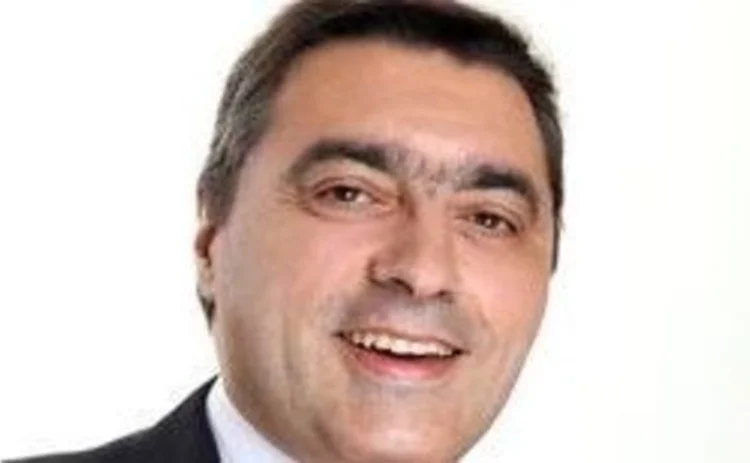
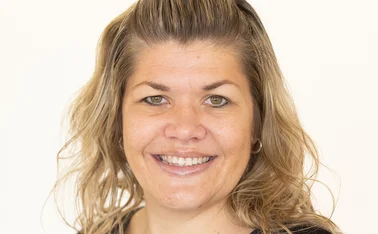
Jose Manuel Dias da Fonseca is chairman of BrokersLink and president of MDS Portugal and Brazil
Only users who have a paid subscription or are part of a corporate subscription are able to print or copy content.
To access these options, along with all other subscription benefits, please contact info@postonline.co.uk or view our subscription options here: https://subscriptions.postonline.co.uk/subscribe
You are currently unable to print this content. Please contact info@postonline.co.uk to find out more.
You are currently unable to copy this content. Please contact info@postonline.co.uk to find out more.
Copyright Infopro Digital Limited. All rights reserved.
As outlined in our terms and conditions, https://www.infopro-digital.com/terms-and-conditions/subscriptions/ (point 2.4), printing is limited to a single copy.
If you would like to purchase additional rights please email info@postonline.co.uk
Copyright Infopro Digital Limited. All rights reserved.
You may share this content using our article tools. As outlined in our terms and conditions, https://www.infopro-digital.com/terms-and-conditions/subscriptions/ (clause 2.4), an Authorised User may only make one copy of the materials for their own personal use. You must also comply with the restrictions in clause 2.5.
If you would like to purchase additional rights please email info@postonline.co.uk
More on Broker

Why tackling ghost broking will require a balanced approach
Trade Voice: Sue Brown, chair of the Motor Accident Solicitors Society, breaks down why addressing the scourge of ghost broking will require a unified response from insurers, regulators, tech firms, and government.
PIB and Howden recruitment trial set for February 2027
The High Court case centred on PIB accusing Howden of poaching a double digit-strong team moved forward last week with a hearing date set for February next year.

Penny Black’s Social Diary: Metal Meets Marsh; Haggie’s buffet
Penny Black has been out and about again, notebook in one hand and canapé in the other, keeping a keen eye on the insurance industry’s more whimsical moments.
Curious case of Aon’s co-CEOs as Page and Kielty exit
Content Director’s View: The appointment of co-CEOs at Aon following Jane Kielty and Julie Page stepping down reignited a familiar debate – is joint leadership ever a good idea? Jonathan Swift examines whether the sceptical reaction was justified.
Q&A: Massimo Cavadini and Pardeep Bassi, WTW
Massimo Cavadini, head of product, pricing, claims and underwriting for Continental Europe at WTW, and Pardeep Bassi, global proposition leader for data science, insurance consulting and technology at WTW, delve into the 2025 European Insurance & Occupational Pensions Authority’s Generative AI Market Survey and whether a rewrite of the rules of insurance analytics is required.

Fair value rules still fail brokers and consumers alike
Four-and-a-half years after the Financial Conduct Authority’s fair value rules arrived, Branko Bjelobaba, principal of compliance consultancy Branko Ltd, argues inconsistent data and vague metrics still make it difficult for brokers and consumers to compare insurance products properly.
Climate change puts brokers centre stage
With floods, heatwaves and subsidence rewriting the rules of risk, Caroline Elliott-Grey, senior product manager for UK and Ireland at LexisNexis Risk Solutions, argues brokers who harness property-level insights can build trust, protect clients and prove their value in a volatile market.

UK holidaymakers put safety first amid Iran war
Geopolitical tensions have made UK travellers prioritise health and safety abroad over finding the cheapest travel insurance policies, according to a survey from broker AllClear Travel Insurance.