

Insurance Act: Get ready for change


The Insurance Act – the most important piece of legislation to affect the insurance industry for a century – will be a catalyst for the sector to abandon out-of-date practices and reassess the way it does business.
The Insurance Act is an opportunity for the industry and its customers to reassess the way they do business and make the transfer of risk work better for all parties.
The upcoming law is arguably the most important piece of legislation to affect the industry for more than a century. It will act as a catalyst to put commercial insurance onto a sounder footing to the benefit of all parties – and not before time.
Since 2010, Mactavish has published four studies, based on more than 1000 consultations with buyers of commercial insurance, their underwriters and brokers. All the reports have been highly critical of the way insurance is transacted. Of course, we met practitioners who were highly professional in their approach.
However, too many relied on sloppy, out-of-date practices.
The Act provides an opportunity – indeed a commercial imperative – to put that right. Those buyers, brokers and underwriters who meet the challenge will enjoy a significant competitive advantage, while those who fail to do so may find themselves in a decidedly unforgiving legal environment.
The Insurance Act has been heralded, rightly, as providing greater protection for policyholders who commit irrelevant breaches of warranty or other inconsequential pre-contract conditions. It is, however, much more than that.
Exactly what it means in practice remains to be seen. The lawyers and the courts will no doubt determine the significance of the Act over the coming years.
Whatever the outcome, we will all need to be vigilant and consider the implementation of the new Act, coming as it does at a time of unique regulatory scrutiny of commercial insurance, where every aspect of the way in which it is advised on and sold is being looked at.

Relevant points
In considering the new legislation, two points are especially relevant.
First, the fair presentation requirements ought to encourage both policyholders and insurers to focus more on the presentation to the benefit of both.
Second, the restrictions on warranties should encourage insurers to think more about what risk they actually wish to cover.
Although the full implications of the Act may not yet be clear, one can still predict the broad outline. The good news for the market as a whole is that the legislation will come down hard on those boards that treat insurance as a commodity where price is everything. There will be a regulatory demand to make policy reliability a key performance indicator. There will have to be greater emphasis on the quality as opposed to the cost of the product, something that we can all warmly welcome.
Practitioners, for their part, will have to become more professional. There will be a greater onus on insurers to analyse the risks they are being asked to accept. Insurers will no longer be able to hide behind the safeguards built into the Marine Insurance Act (1906), which has long protected underwriters from the consequences of insufficiently understanding the risks they accept. Claims will have to be paid, as long as risks have been fairly described.
Just as it is unfair that underwriters are expected to assume risk that has not been properly investigated, it is equally unfair that a lazy underwriter can accept the premium without properly conducting their own due diligence.
Buyers will have to do more to understand the risk profiles of their own businesses, especially those that are changing rapidly, and the nature of the cover they are buying. Among the policyholders consulted, 65% did not review and sign off the information brokers prepared for insurers. We found this to be utterly irresponsible.
Five illustrations of misunderstood risk
• A financial institution moved its compliance function into the marketing department to speed up time to market for new products with profound implications for the quality of oversight. This organisational restructure was not disclosed to the underwriter.
• A very large infrastructure project initially failed to get essential cover for cost overrun because of critical risk reports. The underwriters missed an opportunity because they failed to appreciate that the reports related to operational risk, and not to construction.
• An engineering company in the energy sector disclosed standard contracting terms to insurers without conducting adequate searches on the extent to which operating businesses deviated from these terms. The deviations were very significant.
• A large manufacturer with third-party supplier sites was 90% under-insured because it purchased an unsuitable level of cover.
• A mid-size public sector body was 90% uninsured for business interruption because of incorrect assumptions about the risk.
Partly to look at these issues in more detail, we published our first report in 2010, focusing on retail, manufacturing, construction and financial services. This highlighted how operational risks impacting policies such as professional indemnity, employer’s liability, product liability and business interruption had changed dramatically.
Policyholders were not properly investigating these changes, and their systems for doing so were poor.
Examples included: the consolidation of supply chains and distribution centres; the development of value-added advice around high-end and critical manufactured products; and the branching out into new areas to compensate for declining revenues in traditional areas.
Although the research took place more than five years ago, our experience since then indicates that the shortcomings persist.
Brokers, meanwhile, will have to do more to justify their fees, especially when it comes to ensuring that their clients’ policies pay out when it comes to the crunch.
Just how important that is can be seen in a few statistics gleaned from our research, for which we reviewed more than 750 sets of policy arrangements. In our final report, we took a sample of around 410 companies, of which around 40% had suffered a large or strategically significant loss; 45% of those losses were disputed by insurers, the average time to settlement of the disputed losses was three years and the sum obtained was on average 60% of the claim.
But even these figures fail to do justice to the level of mismatch between buyer expectations and reality. The biggest cause of failure was that the policyholder had not purchased the right cover in the first place – so insurers did not always see these as disputes and did not record them as such.
Main significance
The former Law Commissioner David Hertzellhas commented that the overriding objective of this legislation is to professionalise placement. And that is its main significance. We will see every aspect of the way in which insurance is discussed and sold being examined afresh.
The law currently encourages the ‘take the premium and argue later if there is a claim’ approach that has caused underwriting standards to fall. We hope and believe that the new legislation will encourage better dialogue between underwriters, policyholders and brokers. It presents big challenges. The winners will be those who embrace them.
Bruce Hepburn
CEO, Mactavish
Only users who have a paid subscription or are part of a corporate subscription are able to print or copy content.
To access these options, along with all other subscription benefits, please contact info@postonline.co.uk or view our subscription options here: https://subscriptions.postonline.co.uk/subscribe
You are currently unable to print this content. Please contact info@postonline.co.uk to find out more.
You are currently unable to copy this content. Please contact info@postonline.co.uk to find out more.
Copyright Infopro Digital Limited. All rights reserved.
As outlined in our terms and conditions, https://www.infopro-digital.com/terms-and-conditions/subscriptions/ (point 2.4), printing is limited to a single copy.
If you would like to purchase additional rights please email info@postonline.co.uk
Copyright Infopro Digital Limited. All rights reserved.
You may share this content using our article tools. As outlined in our terms and conditions, https://www.infopro-digital.com/terms-and-conditions/subscriptions/ (clause 2.4), an Authorised User may only make one copy of the materials for their own personal use. You must also comply with the restrictions in clause 2.5.
If you would like to purchase additional rights please email info@postonline.co.uk
More on Broker
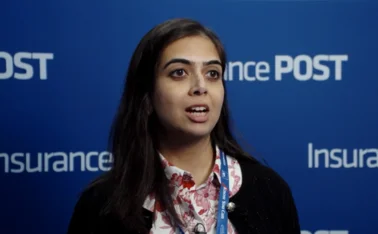
Time:To – Partners &’s Patel on attracting talent
In the latest Insurance Post Time:To video, Isha Patel, group commercial director of Partners &, outlines three things it’s time to do to attract and retain talent.

Biba’s Trudgill on why brokers must embrace AI but retain control
Trade Voice: Graeme Trudgill, CEO of the British Insurance Brokers’ Association, argues artificial intelligence can remove administrative burdens and improve efficiency but professional judgement and human oversight must remain central.

NFP plans further acquisitions to fuel 50% growth
Following the “biggest deal it has ever done” last year, when NFP bought Bspoke, Europe president Matt Pawley has told Post there is much more in the pipeline.

Which? demands social media platforms tackle ghost broking
With ghost broking on the increase, Sam Richardson, editor of Which? Money, calls for tougher enforcement of rules requiring social media platforms to intercept fraudulent adverts.

Ageas steps up fraud education as ID theft fears grow
Ageas is stepping up efforts to educate brokers and policyholders about fraud, after research found nearly three quarters of home and motor policyholders are concerned about becoming victims of identity theft.

Digital charity paradox: doing more with less creates new risks
View from the Top: As donations fall and demand increases, Alana Muir, head of cyber at Hiscox UK, warns charities adopting technology to maximise efficiency need to be aware their reliance on digital systems could leave vulnerable communities exposed when technology fails.

What does Martin have to do at PIB?
Deputy Editor’s View: As Aviva’s Dave Martin is named PIB Group CEO, Scott McGee looks at what the Bristolian will be tasked with when he takes the reins in the new year.

Q&A: Katie Murrell, Miller
Katie Murrell, director of sport, entertainment, corporate, accident and health at Miller, outlines her plans to grow the specialist broker’s business and help event organisers navigate rising cyber, cancellation and climate-related risks.